


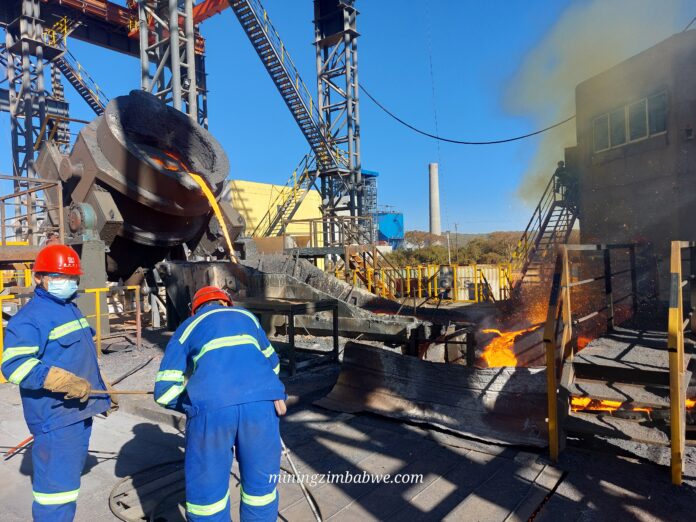
Zimbabwe’s ambitious Manhize Iron and Steel Plant in Mvuma, owned by China’s Dinson Iron and Steel Company, is drawing scrutiny for its environmental impact. While the $1.5 billion project, which aims to produce 1.2 million tonnes of steel annually, promises to boost industrial growth and steel exports, a recent report by South African Resource Watch warns that its heavy reliance on coal-generated power will significantly increase the country’s greenhouse gas (GHG) emissions.
By Ryan Chigoche
Steel production is an energy-intensive process, and Manhize’s furnaces will mainly depend on Hwange’s coal-generated electricity and coke to remove oxygen from iron ore.
This approach will substantially increase carbon emissions, missing an opportunity for Zimbabwe to produce ‘green steel’ using clean energy sources. Given Zimbabwe’s vast potential for renewable energy, particularly solar power, the report urges the government to incentivize investors to adopt renewable energy in steel production adding that doing so would align with the country’s Nationally Determined Contributions (NDC) commitments to cut emissions by 40% by 2040.
“This is a missed opportunity for Zimbabwe to produce ‘green steel’ produced using clean energy, significantly reducing GHG emissions and mitigating environmental impact and global warming. Given the abundance of solar potential in Zimbabwe, the use of renewable energy is a possibility that the country must incentivise investors to adopt if it is to meet its NDC commitments to cut emissions by 40 per cent by 2040.” the organization said.
International examples offer valuable insights for Zimbabwe. Sweden’s Hydrogen Breakthrough Ironmaking Technology (HYBRIT) project a collaboration between SSAB, LKAB, and Vattenfall aims to produce steel using hydrogen and renewable electricity. Similarly, H2 Green Steel, another Swedish initiative, plans to launch a large-scale, fossil-free steel plant in 2024. ArcelorMittal’s Smart Carbon and Innovative DRI projects also employ hydrogen-based reduction and carbon capture technologies to lower emissions. These approaches demonstrate how transitioning to green steel is both feasible and economically viable.
The report also highlights the potential for Zimbabwe to collaborate regionally. While hydrogen is not currently a key focus in Zimbabwe’s industrial strategy, neighboring countries such as Namibia and South Africa are developing export-oriented green hydrogen economies.
According to SARW Zimbabwe could integrate into this regional renewable energy supply chain through SADC cooperation and intra-African trade under the African Continental Free Trade Area (AfCFTA), positioning itself as a sustainable steel producer.


Unlike South Africa, which has incorporated Carbon Capture, Utilization, and Storage (CCUS) in its Integrated Resource Plan (IRP) 2023 to mitigate coal reliance, Zimbabwe has yet to explore this technology.
In the steel sector, CCUS captures CO2 emissions before they enter the atmosphere, storing them underground or repurposing them for industrial use. Incorporating such technologies could support Zimbabwe’s transition toward greener steel production while maintaining economic viability.
As a going concern, the report underscores that decarbonizing Zimbabwe’s steel industry presents both a challenge and an opportunity. While the Manhize Iron and Steel Plant is a major industrial project, its reliance on coal-based energy contradicts global sustainability trends.
By embracing renewable energy and adopting green hydrogen and CCUS technologies, Zimbabwe could align itself with global sustainability efforts and secure new market opportunities for green steel.
 | ReplyForward |