



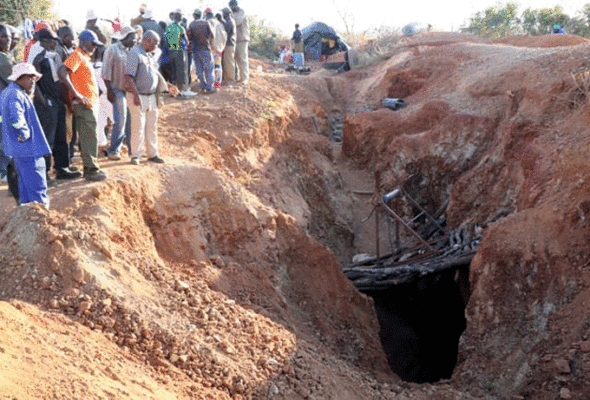

Five individuals, including a heavily pregnant woman and three relatives, tragically lost their lives on Sunday after their Honda Fit plunged into an abandoned chrome mining pit in Shurugwi, highlighting the dangers posed by unrehabilitated mining pits—a longstanding issue that has claimed numerous lives in mining areas across the country, Mining Zimbabwe can report.
By Rudairo Mapuranga
The incident underscores the critical need for stronger mining rehabilitation measures in Zimbabwe.
According to Shurugwi District Development Coordinator Romeo Shangwa, the fifth body was retrieved after water was pumped out of the 30-meter-deep pit overnight, following efforts by the police’s sub-aqua unit. Fortunately, one passenger managed to escape by swimming out of the flooded pit, but the other five occupants did not survive.
While this incident is devastating, it is not an isolated case. Unsecured and unrehabilitated mining pits continue to pose a significant threat to communities near mining areas. Disused pits, often left abandoned after mining activities cease, turn into death traps for both humans and wildlife, as evidenced by this latest tragedy.
The Chamber of Mines of Zimbabwe has long called for the introduction of a comprehensive Mining Rehabilitation Fund, which would mandate mining companies to set aside resources for rehabilitating mined land. Rehabilitation of mining sites involves filling in pits, managing waste dumps, and restoring the land to its natural state or to a safe and usable condition.
This tragedy, among others, has reignited the debate on the urgent need for this fund to be included in the Mines and Minerals Amendment Bill, a legislative step that would hold mining companies accountable for restoring the land once extraction activities are complete.
The Chamber of Mines has emphasized the importance of addressing this issue in the bill, as rehabilitation is crucial not only for preventing such accidents but also for reducing environmental damage. Without a mandatory rehabilitation fund, mining companies may abandon sites without any obligation to mitigate the risks associated with disused pits.
The failure to rehabilitate mining sites has far-reaching consequences, including environmental degradation, soil erosion, and the contamination of water sources. However, the most immediate and devastating impact is the risk posed to human life. Abandoned mining pits, often filled with water, become hazards that can easily trap vehicles, animals, or unsuspecting individuals.
In areas like Shurugwi, where mining is prevalent, local communities face constant danger from unmarked and unprotected mining pits. These areas become even more dangerous during the rainy season when water fills the pits, making them appear less hazardous than they actually are.
The incident in Shurugwi is a stark reminder of the urgent need for mining companies to take responsibility for the environmental and social impacts of their operations. The absence of a regulatory framework enforcing rehabilitation leaves communities exposed to unnecessary risks, while the environment continues to suffer long-term damage.
If implemented, the Mining Rehabilitation Fund could provide a systematic approach to ensuring that mining companies restore mined areas, reducing the risks associated with abandoned pits. By making rehabilitation mandatory and holding companies financially accountable, Zimbabwe can prevent future tragedies and ensure that mining activities are conducted in a more responsible and sustainable manner.
Inspector Emmanuel Mahoko, Midlands Police Spokesperson, stated that the names of the five deceased individuals are yet to be released. However, their deaths serve as a powerful call to action for all stakeholders in the mining sector. It is time for the government, mining companies, and communities to work together to prioritize safety and environmental stewardship, ensuring that no more lives are lost due to neglected mining practices.
The Mines and Minerals Amendment Bill, with the inclusion of provisions for a Mining Rehabilitation Fund, is a critical step in this direction. By taking action now, Zimbabwe can create a safer environment for its people while ensuring that the legacy of mining is one of sustainability rather than tragedy.
Watch: As the vehicle is retreaved from below the disused shaft https://www.facebook.com/share/r/1BP9fzsrq6/

