



Geologists in China may have uncovered what could become the largest gold mine in the world, following the discovery of a massive deposit beneath the Wangu gold field in Hunan Province, Mining Zimbabwe can report.
By Rudairo Mapuranga
Dubbed a “supergiant” find, the ore body is estimated to contain up to 1,100 tons of gold—a figure that, if confirmed, surpasses even South Africa’s famed South Deep gold mine.
The scale of the discovery is staggering—and it’s not just about quantity. Chinese officials report that the gold veins identified so far yield ore with an average grade of 138 grams of gold per ton, far exceeding typical commercial gold mining standards. Many of the rock cores extracted reportedly contain visible gold, a clear indicator of the deposit’s exceptionally high quality.
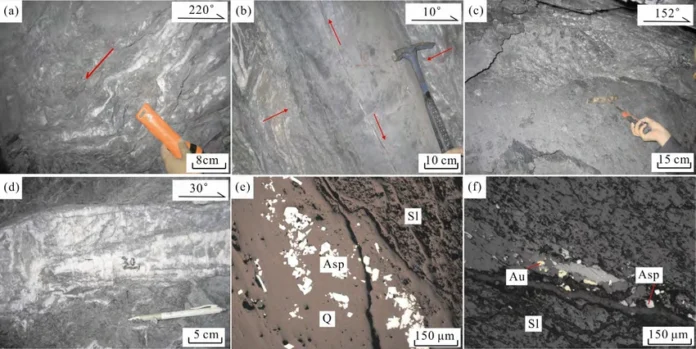
Discovered by a team of geologists using deep drilling and 3D modelling technology, the deposit is located beneath Pingjiang County’s Wangu gold field and extends as deep as 9,800 feet below the surface. Initial tests revealed more than 40 individual gold veins comprising around 330 tons, but computer modelling suggests the entire deposit could contain more than three times that amount, pushing the total value to an estimated $83 billion.
“This find is not just large; it’s unprecedented in terms of depth, grade, and overall scale,” said Chen Rulin, an ore-prospecting expert at the Hunan Geological Bureau.
If confirmed, the new discovery would dethrone South Deep Mine in South Africa, which currently holds the record with 1,025 tons of gold, according to Mining Technology. It would also leapfrog top global mining sites in Indonesia, Russia, Papua New Guinea, and Chile.
A Game Changer for China — and the Global Gold Market
Already the world’s largest gold producer, China accounts for about 10 percent of global production. Yet despite its mining output, China is also the biggest consumer and importer of gold, using nearly three times more gold annually than it produces. This dependence on foreign gold has made the country vulnerable to global price swings and trade dynamics.
The timing of the discovery is particularly impactful, as global gold prices recently surged to $2,700 per ounce, driven by inflation fears and central bank buying. Markets are already reacting to the news out of China, and further developments could have significant ripple effects on global pricing and trade.
More Gold May Be on the Horizon
And the story may not end there. According to Liu Yongjun, deputy head of the Hunan Geological Bureau, additional gold ore has been detected in surrounding zones during recent peripheral drilling activities, hinting that the deposit could extend even further.
China’s ability to exploit this discovery efficiently will depend on the infrastructure and investment directed toward extraction. But if the projections are accurate, this “supergiant” mine could shift the centre of gravity in the global gold sector, placing China not only at the top of the production list, but also in control of one of the most significant reserves in modern history.
To put this into perspective, 233,000 tons of gold have been mined throughout human history—two-thirds of which has been extracted since 1950. The Wangu find represents nearly half a per cent of all gold ever mined, concentrated in a single site.
As China continues to increase its geopolitical and economic footprint, this discovery could become one of the most strategically important resource finds of the 21st century.

