



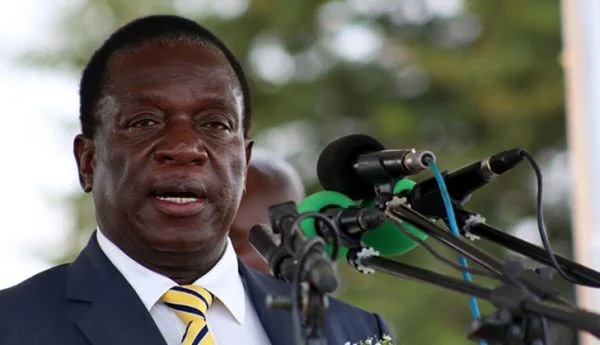

In a powerful declaration of Zimbabwe’s economic direction, President Emmerson Dambudzo Mnangagwa has reaffirmed his government’s commitment to anchoring the national currency in physical gold reserves—while simultaneously acknowledging the crucial role of artisanal and small-scale miners (ASM) in achieving this vision, Mining Zimbabwe can report.
By Rudairo Mapuranga
Addressing the nation through a news interview, the President emphasized that a stable and respected national currency must be backed by tangible wealth, particularly gold.
“A country to be solid, even a currency to be respected, it must have backing of solid gold. We didn’t have this before, and we decided to have it — and physically, here it is,” said President Mnangagwa.
“I believe our currency will now stand on solid ground because it is backed. We cannot continue to have a currency that goes up and down.”
The President’s comments come in the wake of the April 2024 introduction of Zimbabwe’s new structured currency, the Zimbabwe Gold (ZiG), which is backed by reserves in gold, precious minerals, and foreign currency held by the Reserve Bank of Zimbabwe (RBZ). The central bank reported in May that Zimbabwe held $285 million in gold and foreign currency reserves, supporting the initial rollout of the ZiG currency.
From Criminalisation to Contribution: Embracing ASM
In a shift that has drawn praise from across the mining sector, the President also signalled a new policy direction regarding artisanal and small-scale miners—often pejoratively labelled as “makorokoza.”
“Instead of us identifying them as criminals, we are taking them on board as Zimbabweans who are contributing to the economy of the country. We need only to regularise what they are doing and put them into the mainstream of gold production,” he stated.
This landmark statement aligns with ongoing discussions around the formalisation and legitimisation of ASM operations. According to Fidelity Gold Refinery, ASM players account for over 60% of Zimbabwe’s gold deliveries, producing an estimated 22 tonnes in 2023 alone out of the total 38.5 tonnes of national output.
Miners for Economic Development Applaud Vision
Miners for Economic Development (Miners for ED), a national body representing small-scale miners and mining stakeholders, has lauded the President’s remarks as “visionary and patriotic.”
In a statement released by Edmund Dru Kucherera, the organisation’s Vice Chairperson and Spokesperson, Miners for ED expressed unequivocal support:
“We fully support the President’s recent statements recognising the vital importance of artisanal and small-scale miners (ASM) to Zimbabwe’s economic future,” said Kucherera.
“We particularly applaud his decisive plan to anchor the national currency in physical gold reserves, viewing this as a crucial move towards achieving economic stability and fostering national pride.”
Formalising ASM: A National Imperative
Miners for ED outlined the benefits of integrating artisanal miners into the formal economy, a stance that aligns closely with government goals:
Boosting transparent and sustainable gold output
Increasing tax and royalty contributions to the fiscus
Improving mine safety and environmental standards
Reducing poverty through job creation and economic empowerment
The organisation also called on financial institutions, government agencies, and communities to rally behind efforts to support ASM and ensure they have access to financing, equipment, legal mining claims, and electricity.
A New Era for Economic Stability
The gold-backed ZiG currency, supported by growing gold reserves from both large-scale and ASM producers, is already generating confidence in economic circles. Analysts note that tying the value of money to physical assets such as gold can curb inflation, reduce currency volatility, and promote savings.
The ZiG replaced the embattled Zimbabwe dollar (ZWL) at an exchange rate of 1 ZiG to 2,498 ZWL, and the RBZ has committed to maintaining a 100% reserve backing to defend its value.
Kucherera added:
“This strategy marks the beginning of a new era where Zimbabwe’s currency, grounded firmly on tangible gold reserves, can achieve lasting stability. This will encourage investment, promote savings, and safeguard citizens’ purchasing power.”
Harnessing Zimbabwe’s Mineral Wealth
Zimbabwe is home to more than 60 gold belts and over 4,000 recorded gold deposits, many of which remain underdeveloped or are exploited through informal mining. By investing in exploration, geological data, and ASM formalisation, Zimbabwe could significantly expand its gold output—potentially reaching the long-term national goal of 100 tonnes annually, as envisioned by the Chamber of Mines.
President Mnangagwa’s commitment to building a gold-backed currency and recognising the role of ASM signals a deliberate step toward inclusive, resource-based economic growth.
A Shared Responsibility
As Miners for ED concluded in their statement:
“Supporting artisanal miners is both an economic necessity and an act of patriotism. We commend the President’s visionary leadership and pledge our full commitment to realising this promising path forward.”
The message is clear: Zimbabwe’s path to economic stability and national pride is paved not just with gold—but with the hands that mine it. By embracing artisanal miners and placing real gold behind its currency, Zimbabwe is asserting a bold new model for home-grown development.