



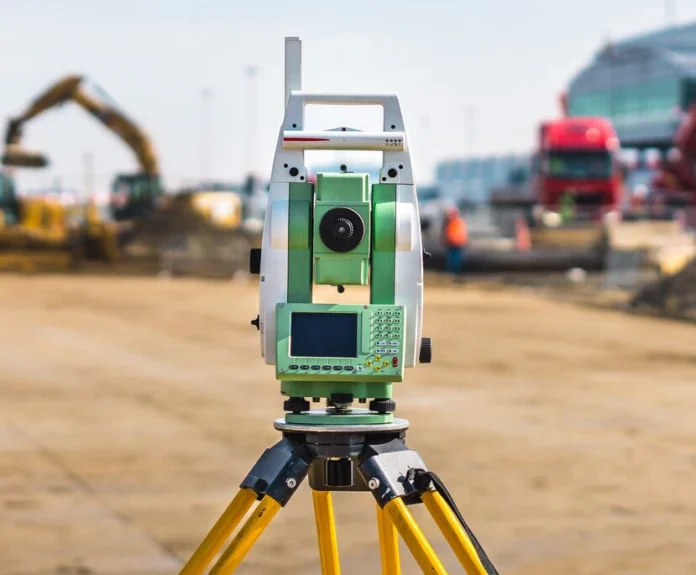

From pegging new claims to guiding production underground, surveying remains the heartbeat of Zimbabwe’s mining sector. No shaft is sunk, no ore is blasted, and no plan is implemented without the critical input of a mine surveyor.
By Rudairo Mapuranga
As Zimbabwe intensifies its push for greater mining sector efficiency and order, the importance of mine surveying has come into sharper focus—technically, legally, and economically.
Surveyors are no longer just line-markers or underground mappers. They are now integrated data specialists, helping mines navigate the intersection of geology, engineering, compliance, and production. From exploration through to mine closure, every stage of the mining lifecycle relies on the precision and oversight of trained surveyors.
“Without surveying, there is no mine. You can’t mine what you haven’t measured, and you certainly can’t plan what you can’t map accurately,” said a senior mine planning engineer during a recent Association of Mine Surveyors of Zimbabwe (AMSZ) technical visit.
Why Surveying is Central to the Mining Value Chain
Zimbabwe’s mining sector continues to evolve, but at the centre of every successful operation is a survey-controlled process. Here’s how:
Pegging and Licensing: The first step of any mining venture begins with pegging. Mine surveyors define and secure the physical extent of a mining claim, ensuring legal title is backed by precise, professional mapping.
Exploration and Resource Modelling: Working alongside geologists, mine surveyors assist in accurate drill positioning and 3D mapping of ore bodies, which informs resource classification and investor reporting.
Mine Planning: Survey data feeds directly into open-pit and underground designs. Surveyors help determine how much ore can be mined, how safely, and over what timeframe.
Production and Monitoring: On a daily basis, surveyors track volumes moved, ore extracted, and stope progression, ensuring production targets are met and reconciled with plans.
Compliance and Safety: From blasting clearance to dump placement, mine surveyors ensure operations stay within legal boundaries, avoid encroachment, and support environmental and safety standards.
Closure and Rehabilitation: When the mining ends, it’s the survey department that validates volumes mined, facilitates closure planning, and provides data for rehabilitation and compliance audits.
Policy Shift: Handheld GPS Banned in Favour of Survey-Grade Instruments
Recognising the central role of surveying, and the damage caused by inaccurate data, the Ministry of Mines and Mining Development recently moved to ban the use of handheld GPS devices for capturing mine coordinates.
In a General Notice issued in June 2025, the Provincial Mining Director for Midlands instructed that all mining title holders must submit coordinates captured using survey-grade instruments, under the supervision of registered mine surveyors, starting 1 July 2025.
“Handheld GPS is a navigation tool, not a survey instrument. It has an error margin of up to 5 metres, which is completely unacceptable in high-stakes boundary work.”
This move follows years of disputes caused by overlapping claims, illegal pegging, and title inaccuracies—most of which stemmed from reliance on imprecise handheld tools. While a fully operational digital cadastre system is yet to be implemented in Zimbabwe, the government’s push for professionalised coordinate submission is a foundational step toward its success.
Students and Innovation: The Future of Surveying is Already Here
During a recent AMSZ technical visit to Blanket Mine in Gwanda, the association’s Secretary General Takunda Paul Mubaiwa said students and young professionals will shape the future of mine surveying in Zimbabwe. He called on students across universities and polytechnics to join the association, saying it opens access to real-world knowledge, mentorship, and entrepreneurial opportunities.
“Surveyors are no longer just underground workers. They are data scientists, consultants, even hardware and software developers,” Mubaiwa said. “We encourage students to think beyond the diploma.”
He emphasised that surveyors are now expected to not only capture data, but also process and interpret it in ways that drive decision-making—linking their work directly to production, revenue, and profitability.
The Case for Respecting Survey Work
Surveying has historically been treated as a support service in mining. But that perception is changing. As Zimbabwe moves to modernise and formalise its mining sector, surveying is now a core operational and strategic function.
It underpins legal title security
It drives investor confidence through reliable data
It supports cost control by linking inputs to outputs
It enables mine safety and environmental compliance
It is key to building a functional mining cadastre system
AMSZ is also advocating for the broader use of modern survey software like Deswik, already in use at Blanket Mine, which allows multi-departmental integration of planning, geology, and survey data.
Surveying is Not Optional, It’s Foundational
Zimbabwe’s mining ambitions—from $12 billion sector targets to greenfield lithium developments—depend on accurate, verifiable spatial data. That means surveying must take its rightful place as a profession of high responsibility, governed by standards, and supported by legislation.
“Surveying is the heart of a mine. Everything starts and ends with a coordinate, and only professionals should handle that responsibility,” Mubaiwa said.
As the government enforces accuracy, and the industry embraces digital transformation, surveyors are poised to lead Zimbabwe’s next mining chapter—with precision, professionalism, and pride.

