



In a significant development for the mining sector, the Global Tailings Management Institute (GTMI) has announced its first-ever multi-stakeholder Board of Directors, a move aimed at advancing safer and more responsible tailings management globally.
By Rudairo Mapuranga
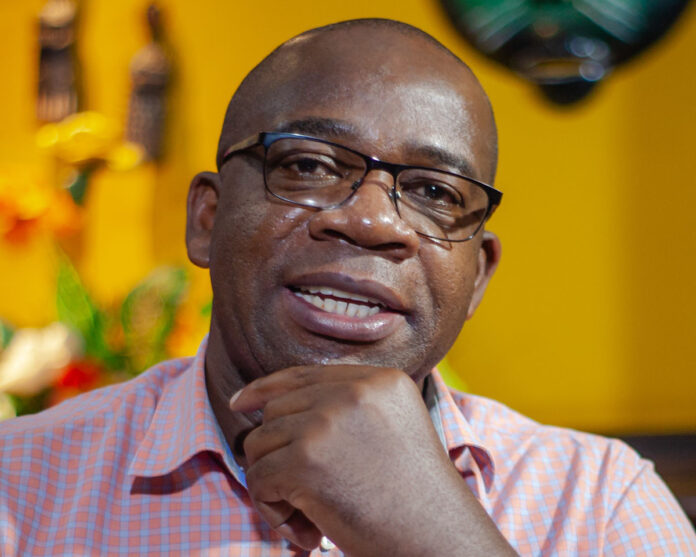
Among the appointed members is Mutuso Dhliwayo, the Executive Director of the Zimbabwe Environmental Law Organisation (ZELO), formerly Zimbabwe Environmental Law Association (ZELA), marking an important representation for Zimbabwe.
Founded through a partnership between the International Council on Mining and Metals (ICMM), the United Nations Environment Programme (UNEP), and the UN-backed Principles for Responsible Investment (PRI), the GTMI is tasked with promoting the adoption and implementation of the Global Industry Standard on Tailings Management (GISTM). The Institute’s vision is bold: ZERO harm to people and the environment, and ZERO tolerance for tailings-related fatalities.
“This appointment is both a recognition of Africa’s voice in global mining governance and a personal honour for Mr. Dhliwayo,” said a ZELO spokesperson. “It reinforces the importance of environmental justice and community-centered mining in international policy spaces.”
The GTMI Board will oversee strategic direction for global tailings governance, promote capacity building, and ensure that the GISTM continues to be adopted by mining companies across the world. It is expected to play a pivotal role in:
Supporting stronger regulatory frameworks and independent auditing for tailings dams;
Encouraging community inclusion and transparency in mine waste governance;
Building technical capacity in developing countries for safer tailings facilities;
Driving continuous innovation in tailings storage and rehabilitation.
Mutuso Dhliwayo brings years of experience in extractive industry governance, environmental law, and community rights. His leadership at ZELO has seen the organisation become a key voice in shaping Zimbabwe’s mining legislation, especially around environmental impact and benefit-sharing frameworks.
This milestone comes as tailings-related risks are rising globally, particularly in resource-rich but infrastructure-challenged countries. Dhliwayo’s appointment is seen as a strong step toward placing Africa’s mining safety concerns on the global agenda—at a time when the energy transition is driving up production and, in turn, mine waste.
The GTMI was formed in response to devastating tailings disasters like Brumadinho and Samarco in Brazil, which claimed hundreds of lives and triggered calls for a global standard. With the Institute now governed by a diverse Board representing civil society, Indigenous peoples, industry, and investors, its mission for safe, equitable, and sustainable tailings management has gained real momentum.
As the global mining sector prepares for higher mineral demand amid the green energy boom, tailings safety is no longer just a technical issue—it’s a central piece of the Environmental, Social, and Governance (ESG) puzzle. With leaders like Dhliwayo at the table, there’s growing hope that communities affected by mining will not only be protected but also meaningfully involved in shaping a safer future for mining.