



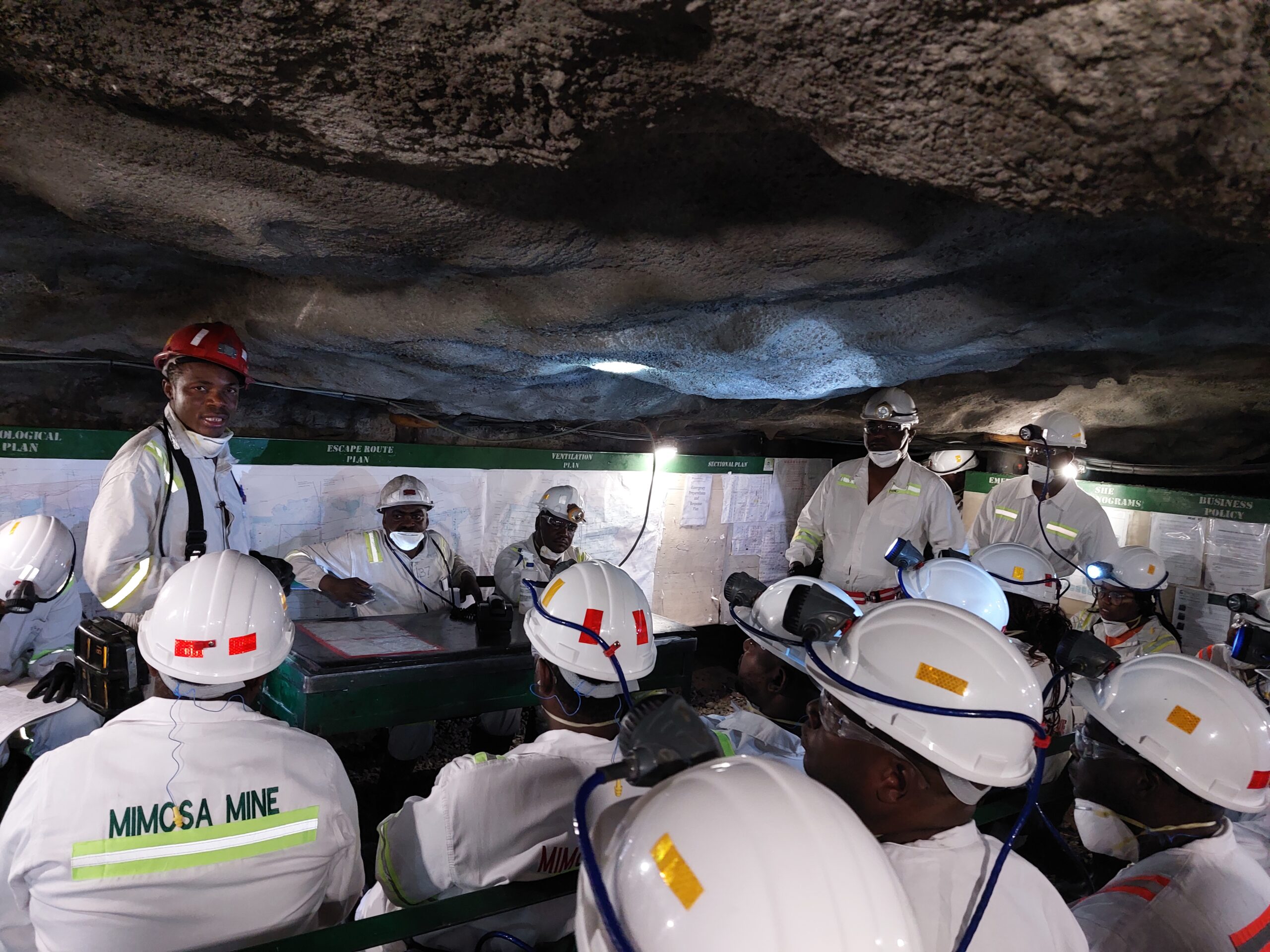

The country’s second biggest platinum group metals (PGMs) producer, Mimosa Mining Company, jointly owned by Implats and Sibanye-Stillwater, recorded a slight dip in production for the financial year ended 30 June 2025, producing 253,900 ounces of 6E concentrate compared to 255,400 ounces in FY2024, representing a 1% decline year on year, Mining Zimbabwe can report.
By Rudairo Mapuranga
While the decrease may appear marginal, the cause raises significant concern. According to Implats’ production update, intermittent regional power disruptions were the main culprit behind Mimosa’s subdued momentum. The mine, which has built a reputation as a stable and low-cost mechanised operation, found itself grappling with unscheduled outages that impacted plant throughput and recovery efficiency.
The challenges at Mimosa are not unique. Across Zimbabwe’s mining sector, electricity supply remains the most pressing operational risk. Platinum mining and processing require consistent power to maintain equipment efficiency, plant throughput, and metallurgical stability. Disruptions not only reduce output but also increase costs, as equipment idles and recovery rates drop when systems are restarted.
For Mimosa, a mine that has for years delivered consistent results, the 1% dip highlights how even slight interruptions in power can derail performance. The operation mines between 2.8 and 3.0 million tonnes of ore annually, with grades averaging around 3.6 grams per tonne. Any disturbance to its finely balanced production model can shave ounces off the final tally, translating into millions of dollars in lost revenue for both shareholders and the country.
Mimosa contributes significantly to Zimbabwe’s platinum group metals (PGM) exports, which remain the country’s second-largest source of foreign currency after gold. The 1% decline, though seemingly small, equates to more than 1,500 ounces of lost 6E production. At prevailing prices, this represents roughly US$2 million in unrealised export earnings.
For Zimbabwe, where every ounce counts in strengthening the balance of payments, sustaining and improving output at operations like Mimosa is critical. The mine employs over 1,400 workers directly and supports thousands more indirectly through supply chains, making production consistency central not just for Implats and Sibanye-Stillwater, but for the broader Midlands economy.
Despite the headwinds, Mimosa’s ability to maintain production above the 250,000-ounce level demonstrates resilience. The mine continues to optimise its mechanised mining model, focusing on efficiency gains and disciplined cost management. This stability has ensured that Mimosa remains one of Implats’ most predictable joint venture operations, even as other group assets in South Africa grapple with safety stoppages and restructuring.
However, long-term resilience will demand a strategic solution to Zimbabwe’s power woes. Industry players have repeatedly called for greater collaboration between miners and ZESA, including investment in alternative energy solutions such as solar farms and hybrid systems. Mimosa has already been exploring such initiatives, but scaling them up will be essential if the mine is to buffer itself against grid unreliability.
With global demand for PGMs under pressure from the automotive sector’s transition to electric vehicles, Zimbabwean producers are under increasing scrutiny to sustain output and reduce costs. Mimosa’s performance in FY2025 demonstrates both the opportunities and risks inherent in Zimbabwe’s mining environment.
The mine’s near-flat output shows operational discipline, but the electricity challenge remains a structural impediment that could erode competitiveness if left unchecked. For policymakers, the lesson is clear: investment in reliable infrastructure is no longer optional; it is the backbone of mining-led economic growth.

