



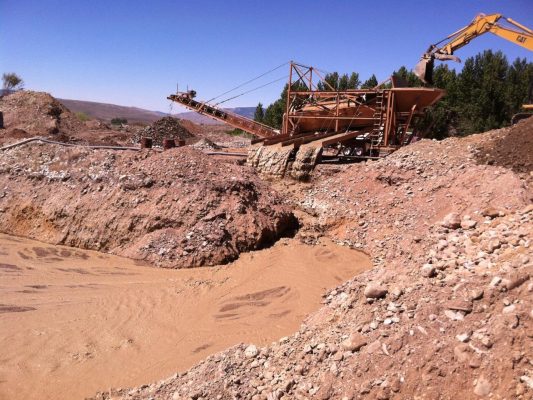

The government has ordered that perpetrators of illegal riverbed mining bear the full cost of rehabilitating degraded environments, invoking the “Polluter Pays Principle” as the next phase of its nationwide ban on alluvial mining, Mining Zimbabwe can report.
By Rudairo Mapuranga
The directive was briefed to the media by the Minister of Information, Dr. Jenfan Muswere, during a Cabinet briefing that received an update on the implementation of Statutory Instrument 188 of 2024, which outlawed alluvial mining along riverbanks. With the ban largely successful in halting active mining, authorities are now shifting focus to the extensive environmental cleanup required.
Dr. Jenfan Muswere delivered the briefing, stating that “since alluvial mining has largely ceased, attention has now shifted to the rehabilitation of degraded sites, with liability for the rehabilitation being borne by the perpetrators.”
The government reported significant progress in operations to eliminate the practice across most provinces. To enforce the new rehabilitation drive, the legislative framework is being strengthened through the development of new regulations, and legislative reform will be expedited to “ensure environmental justice and accountability.”
The Cabinet update provided a provincial breakdown, noting that no identified alluvial mining sites in need of rehabilitation were found in the metropolitan provinces of Harare and Bulawayo. This indicates that the most severe damage is concentrated in rural and mineral-rich regions.
The government’s monitoring and enforcement efforts will now be concentrated on provinces where degradation is most acute, including Matabeleland North and Masvingo. These regions have seen some of the country’s most severe river siltation, which has contributed to a critical national water crisis.
Minister Muswere emphasised that the enforcement of the ban is “ongoing,” and the government continues to heighten its “monitoring and evaluation as well as enforcement mechanisms.”
The move to hold mining operators—both legal and illegal—financially accountable for environmental damage marks a significant escalation in the government’s policy. The “Polluter Pays Principle” is a standard environmental policy tool designed to internalise the cost of pollution, ensuring that the responsible parties, rather than the public, fund the restoration.
This policy shift follows recent public scrutiny over sentencing disparities for mining-related offences, where foreign nationals received fines while Zimbabwean citizens were jailed for similar activities. The new rehabilitation directive applies a uniform standard of accountability, focusing on the environmental impact rather than just the act of illegal mining.

