



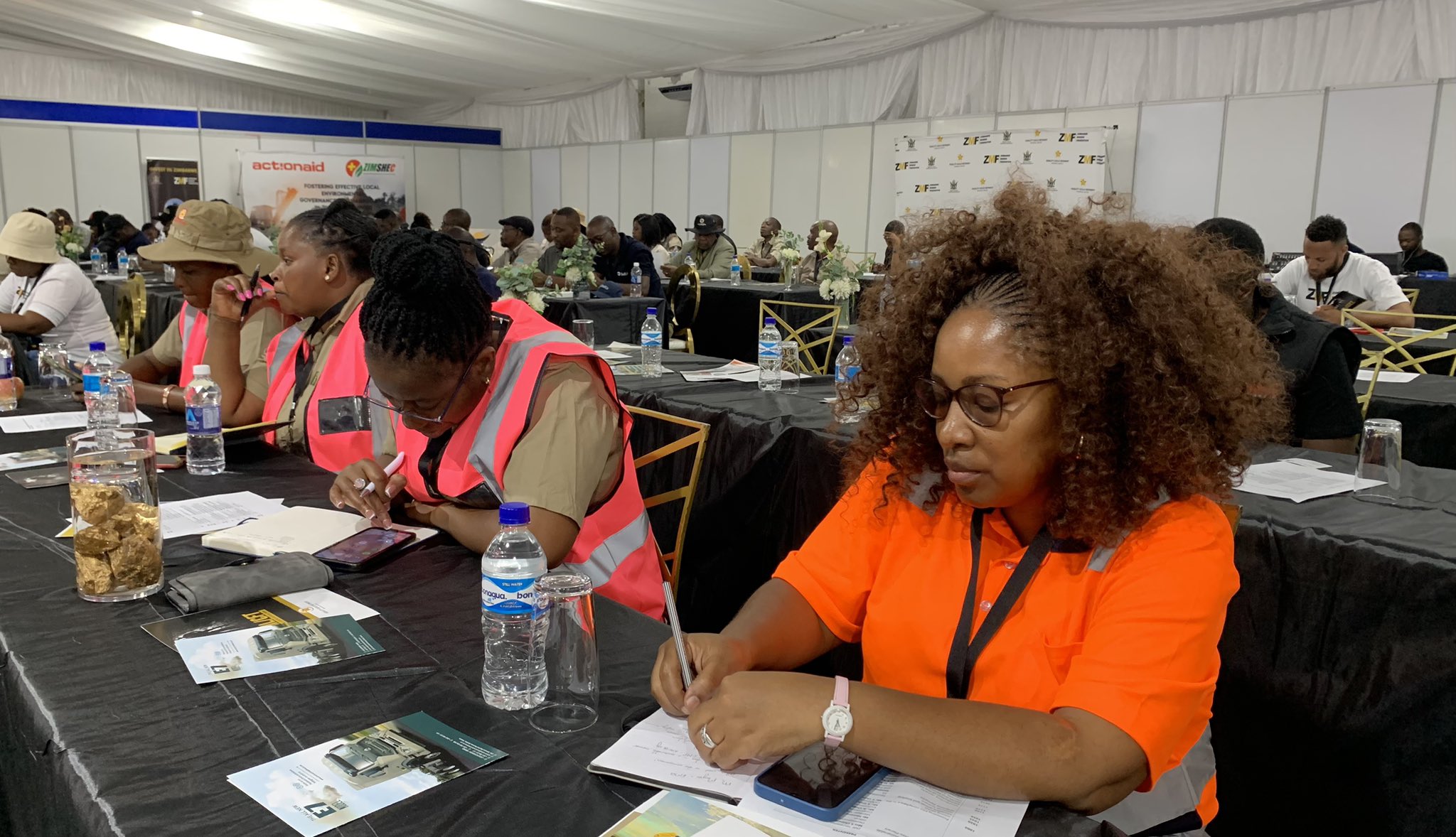

In an endeavour to ensure women’s interests are firmly embedded in Zimbabwe’s new legal framework for mining, the Zimbabwe Association of Women in Mining Associations (ZAWIMA) is convening a pivotal national dialogue on the Mines and Minerals Amendment Bill on Thursday, Mining Zimbabwe can report.
By Rudairo Mapuranga
This critical event, set for Harare on November 20, 2025, brings together women miners, government ministries, and civil society to co-create amendments that address the unique barriers faced by women in the sector.
From the gold-rich hills of Zvishavane to the chrome-laden landscapes of Chinhoyi, Zimbabwean women are not just entering the mining sector; they are fundamentally reshaping it. With picks in hand and entrepreneurial spirit, they are digging, processing, trading, and establishing small businesses that form the bedrock of family livelihoods and community upliftment. Their work spans the entire mining value chain, demonstrating remarkable resilience and innovation.
Yet, for all their undeniable contributions, these women miners face a landscape of persistent and significant barriers. Access to mining claims is often blocked by entrenched gender biases and bureaucratic labyrinths. They frequently work in unsafe conditions, exposed to environmental hazards without adequate protection. Perhaps most crippling is the severe lack of access to financing and investment capital, which stifles growth and keeps their operations in the informal shadows. Compounding these issues is a stark representation gap: women’s voices are consistently absent from the decision-making forums where mining policies and regulations are forged.
The Mines and Minerals Amendment Bill, currently under review by Parliament, represents a historic opportunity to dismantle these barriers. This piece of legislation can be transformed from mere text into a powerful tool for justice and economic empowerment. If shaped with intention, it can formalise and protect women’s participation, particularly in the artisanal and small-scale mining (ASM) sector, where they are most active and most vulnerable.
However, this transformation will not happen by default. It requires bold, informed, and united advocacy to ensure the bill is not a missed opportunity.
With support from the UK’s Foreign, Commonwealth & Development Office (FCDO), ZAWIMA is spearheading this essential dialogue. The gathering will unite a powerful coalition, including the Ministry of Women, Gender and Small and Medium Enterprises, the Ministry of Mines and Mining Development, civil society organisations, and, most importantly, women miners themselves.
The objective is clear and action-oriented: to collectively unpack the provisions of the Mines and Minerals Amendment Bill, identify its gender gaps, and co-create practical, rights-based amendments. These amendments must reflect the lived realities of the women who toil in the pits and run the processing plants. They must address issues of claim ownership, safety standards, access to capital, and meaningful representation in mining boards and committees.
The journey of a woman miner in Zimbabwe has always been one of courage. Now, with this dialogue and the pending legislation, we have a chance to ensure that her journey is also one of dignity, safety, and prosperity. By consciously crafting a mining law that sees and supports women, Zimbabwe can unlock the full potential of half its population and forge a more inclusive and prosperous future for all. The time for change is now.