



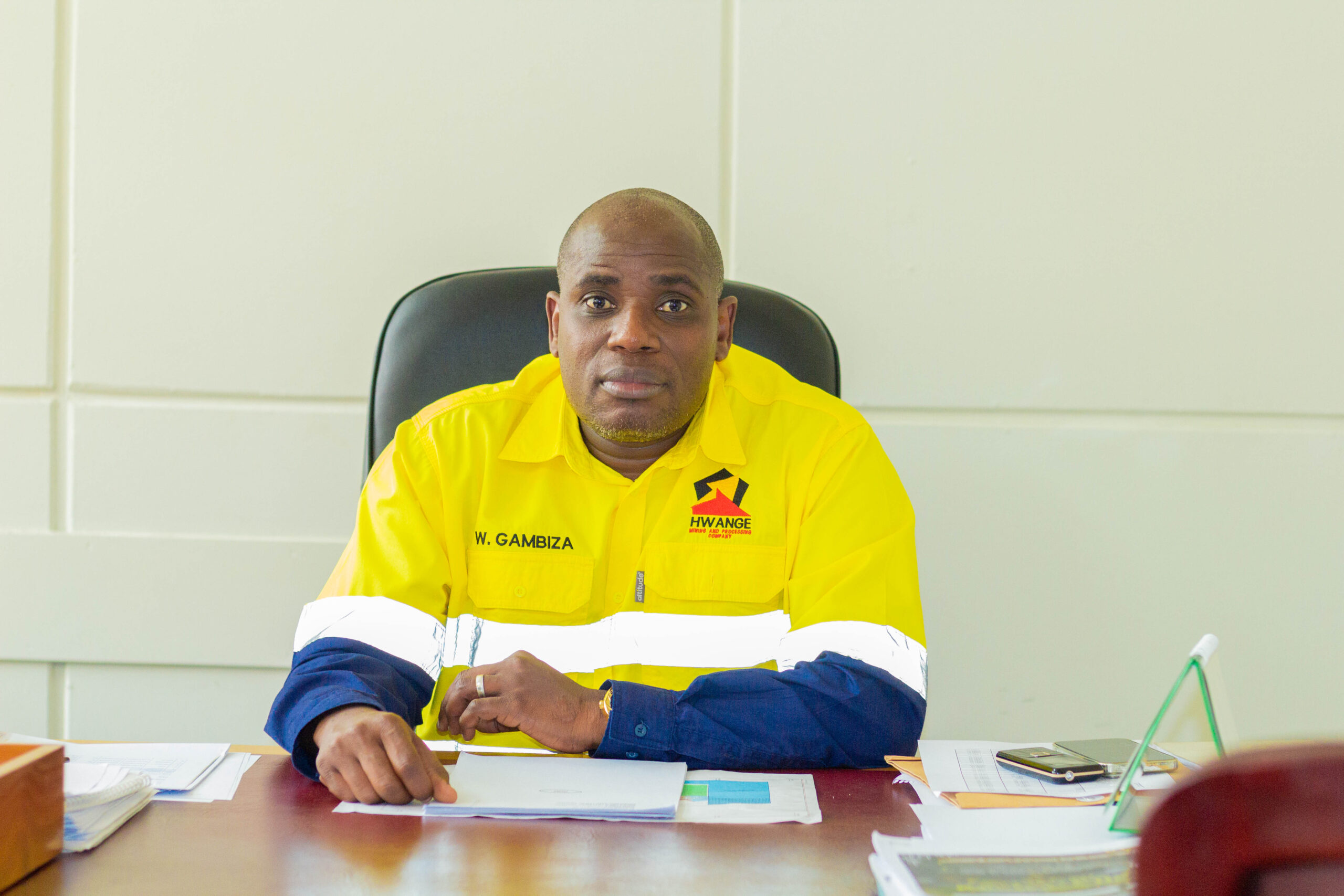

Hwange Colliery Company Limited (HCCL) has highlighted the need for policy-level measures to ensure local suppliers and contractors are meaningfully involved in major mining projects, Mining Zimbabwe can report.
By Ryan Chigoche
This call comes amid an influx of large-scale projects, particularly led by Chinese firms. While these investments have brought billions into Zimbabwe’s economy, a significant portion of spending has gone toward imported machinery, equipment, and services, leaving domestic suppliers with limited opportunities.
Some listed local mining companies have observed that foreign contractors often purchase imported items even when local alternatives exist. Hwange Colliery CEO Wilson Gambiza says this is not a reflection of local incapacity but an issue that needs attention at the policy level.
In an interview with Mining Zimbabwe, Gambiza acknowledged the expertise of Chinese contractors while emphasizing the importance of including domestic businesses.
“We find that with the influx of Asian investors, the Chinese, they have clinched most of the contracts because they have the expertise of how to build or to construct, to address the needs of the communities,” Gambiza said.
“But I think the issue is related to where the materials are coming from. I would not think it’s an issue which portrays or reflects failure by the locals to supply enough. But I think it’s an issue which needs to be addressed at the policy level, whereby the government needs to put restrictions or legislative measures which can also allow participation of the locals in some of these construction projects. Because with the current scenario, you will find the bulk of the stuff, the Chinese contractors they are bringing it from China. So literally it means they are promoting their home industries.”
Gambiza’s remarks underscore the gap between the potential of local contractors and their current involvement in high-value mining projects.
Imported equipment dominates local mining
The Chamber of Mines reports that around US$2.1 billion of the US$5.4 billion revenue generated in 2023 was spent on imported machinery, equipment, and services, with local manufacturing contributing just 15%.
ZIDA data for Q1 2025 shows that US$2.65 billion of the projected US$4.75 billion investment in the mining sector went toward imported capital equipment, indicating room for policies that encourage domestic sourcing.
“I think there should be a way whereby the government can also try to strike a balance in such a manner that even the locals also participate, and they are also promoted, and also they can participate in the construction projects in the mining industry,” Gambiza added.
Local contractors have proven their capacity
Zimbabwean firms have demonstrated their ability to handle complex mining projects. Mimosa Mining Company’s US$75 million Tailings Storage Facility (TSF-4) is an example: local contractors managed the construction while South African firm SRK handled design. Imported materials were limited to specialised items, keeping most costs in-country.
This shows that with careful planning, procurement, and supportive policies, local contractors can deliver projects to international standards.
Hwange Colliery’s underground project
Hwange Colliery is advancing a US$60 million underground mining venture in partnership with a Chinese firm. While foreign expertise and financing underpin the project, local companies such as Dinson Iron and Steel are involved in specific components.
“We have got another joint venture that we have with Dinson, in which we want to extract the Number Three underground pillars,” Gambiza said.
This demonstrates that even in technically complex operations, local firms can play a significant role. Expanding domestic participation ensures foreign investment benefits Zimbabwean industry.
Currently, Zimbabwe lacks strict local content requirements, and enforcement is inconsistent. Policymakers could consider minimum local procurement or skills transfer thresholds, drawing lessons from South Africa and Botswana. Such measures would encourage foreign investors to source locally, reduce foreign exchange outflows, and strengthen domestic industrial participation.
The rise in foreign investment presents both opportunities and challenges. Gambiza emphasises that without deliberate policy attention, mining inflows may primarily support imports rather than domestic growth.
Success stories like Mimosa’s TSF-4 project, Hwange’s underground operations, and joint ventures with local firms such as Dinson show that Zimbabwean contractors are capable; the key is ensuring policy frameworks allow them to contribute effectively.

