



CAPE TOWN – Zimbabwe’s Platinum Group Metals (PGM) sector is on the cusp of a historic expansion, with the government setting an ambitious deadline to bring multiple new projects into production by the end of 2026, as investor appetite for the country’s Great Dyke resources reaches unprecedented levels, Mining Zimbabwe can report.
By Rudairo Mapuranga
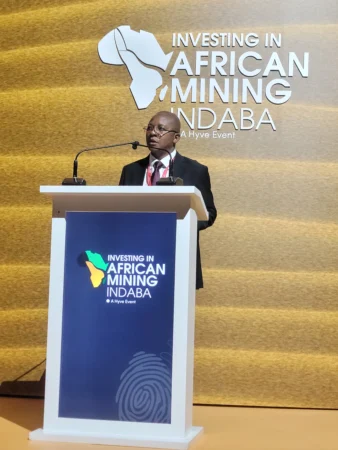
Speaking at an oversubscribed Mutapa Mining Indaba symposium in Cape Town, Minister of Mines and Mining Development Dr Polite Kambamura delivered an unvarnished observation that spoke volumes about shifting sentiment toward Zimbabwe’s PGM endowment.
“Next time, when you invite people, especially at these platforms, you need to consider a bigger venue. Look at the appetite,” Kambamura said, surveying a conference hall that had exceeded capacity.
He then issued a clear policy deadline: “It’s in our strategic plans that this year we need to be somewhere with regard to all that are in the Middle Dyke—Great Dyke Investments, Bravura, Karo is already working—so that the PGM sector is resuscitated by the end of this year.”
Central to this push is Mutapa Platinum Group’s Darwendale project, a world-class asset with estimated resources of 44 million ounces of platinum group metals located approximately 65 kilometres west of Harare.
Mutapa Platinum CEO Munashe Shava confirmed that the company expects to commence open-pit development by the end of the first quarter, with an initial throughput target of at least 2 million tonnes per annum. The project carries an estimated development cost of US$500 million.
“We have also done a collaborative approach for the development of the asset, where we are looking at other producers or other miners who are already in the game to try and see how to collaborate with them to fast-track the development,” Shava said at a recent press conference in Harare.
He confirmed that the company is at an advanced stage with partners where funding is now “almost ready,” adding: “We are open to anybody who has got the proper colour of money to come into the project.”
The open-pit phase is expected to last between seven and ten years, with subsequent underground development to follow. A modular development strategy will see bulk infrastructure—road networks, water systems, and supporting services—established concurrently this quarter.
Karo Platinum, the project Minister Kambamura specifically noted as “already working,” is rapidly advancing toward first production. Located in Selous along the Great Dyke, Karo has invested over US$190 million to date in Phase 1 development, which carries a total budget of US$543 million.
The project, jointly owned by Karo Mining Holdings (85%) and the Government of Zimbabwe (15% free carry), has defined initial probable reserves of 35.5 million tonnes at 2.31 g/t, containing approximately 2.5 million ounces of platinum, palladium, rhodium, and gold.
First ore production is targeted for the first half of 2026. Once operational, Karo will process 2.5 million tonnes of ore per annum, producing 190,000 ounces per year of 6E PGMs over an initial 17-year life of mine, with company officials indicating potential for a lifespan exceeding 50 years.
To address power security—a critical vulnerability for Zimbabwean miners—Karo is developing a 30 MW solar PV plant to supplement grid electricity, alongside constructing a 132 kV transmission line from the Selous substation. The company has also raised US$37 million through the Victoria Falls Stock Exchange (VFEX), demonstrating the growing viability of domestic US dollar-denominated capital markets.
Bravura Group’s Selous PGM project adds further weight to the Middle Dyke renaissance. Speaking to Mining Zimbabwe in 2023, Bravura General Manager Gbenga Ojo said the company has drilled over 40,000 metres to a maximum depth exceeding one kilometre, with the resource independently verified by SRK Consulting.
“We are confident in the measured resource and expect a life of mine exceeding 35 years, with further phases to follow,” Ojo said. The company is preparing for the excavation of the box cut.
Significantly, Bravura is prioritising local content and sustainable closure planning. “In terms of employment, we prioritise local hiring and skill transfer. Currently, 90% of our staff are Zimbabweans,” Ojo confirmed. “We do not engage in contract mining; all equipment and personnel are in-house, mitigating operational risks.”
The company has already secured an EIA certificate for its Kamativi project and is finalising the EIA application for Selous, with transparent closure plans embedded from the outset.
These new entrants will join Zimbabwe’s three established PGM producers, collectively positioning the country as the world’s third-largest platinum reserve holder after South Africa and Russia.
Zimplats, the Implats-controlled giant, remains the sector’s dominant producer. The company is currently executing a US$388 million Mupani Mine development and upgrade, advancing from 83% to 100% completion to replace declining production from existing operations. Zimplats also operates a base metal refinery and is constructing a new tailings storage facility.
Mimosa Mining Company, the joint venture between Implats and Sibanye-Stillwater, produced 123,000 ounces of 6E concentrate in the first half of FY2026, a 5% decline attributed to intermittent power interruptions and increased processing of oxidised ore as mining advances toward the extremities of the orebody. Despite these headwinds, Mimosa remains a globally competitive, low-cost producer with completed capital projects, including a new tailings storage facility.
Unki Mines, owned by Anglo American Platinum, continues to operate as Zimbabwe’s third major PGM producer, contributing steady output from its Shurugwi operations.
Minister Kambamura’s year-end deadline reflects a coordinated strategy to expand Zimbabwe’s PGM producer base from three to as many as six operational mines. When fully realised, Darwendale, Karo, and Bravura Selous will add significant production capacity, create thousands of direct and indirect jobs, and deepen the country’s integration into global clean energy supply chains.
As the Minister told the packed Cape Town venue, the appetite is unmistakable. The task now is execution.

