



The ambitious US$13 billion Mapinga Mine-to-Energy Industrial Park, once touted as Zimbabwe’s flagship beneficiation project, is effectively dead, with the investor having withdrawn following protracted land disputes and apparent financial constraints, according to Ministry of Mines and Mining Development Permanent Secretary Pfungwa Kunaka, Mining Zimbabwe can report.
By Rudairo Maparanga
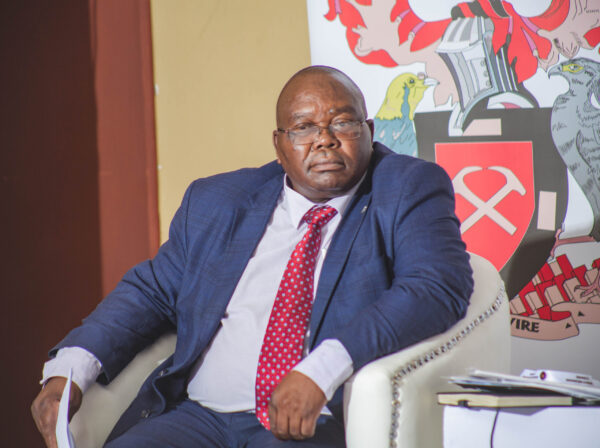
Testifying before a parliamentary workshop on energy minerals co-hosted by ActionAid Zimbabwe and the Parliament of Zimbabwe, Kunaka revealed that the project, which was meant to transform Zimbabwe’s lithium and energy minerals sector, has collapsed after the investor baulked at reduced land allocations and failed to demonstrate adequate financial capacity.
The Mapinga project was conceived as an integrated industrial complex where energy minerals mined in Zimbabwe would be processed into finished products in one location. Located along the Harare–Chirundu Highway, just past the Gwebi River climb at Mapinga, the project was meant to be the template for Zimbabwe’s beneficiation drive.
“Mapinga Industrial Park was conceived as an initiative called Mine-to-Energy, meaning we were looking at mining energy minerals and then converting them into energy in one place,” Kunaka explained.
The project was linked to a single investor, believed to be Eagle Canyon International Group and Pacific Goal Investment, which had mining operations in Buhera and proposed establishing the industrial park. A memorandum of understanding was signed with the government in 2022, with grand plans for two 300MW power stations, a coking coal plant, a lithium salt plant, a graphite processing plant, nickel-chromium alloy smelters, and a nickel sulphate plant. The government had targeted completion by 2027.
Land Dispute That Killed the Deal
The investor initially requested 5,000 hectares for the project, a figure that raised concerns within the government.
“For the information of honourable members, this park was to be located along the road to Chirundu from Harare. As you cross the last river, climbing Mapinga near the Gwebi River, the investor had asked for 5,000 hectares,” Kunaka said.
The Ministry eventually concluded that 5,000 hectares was excessive and that the investor could not be allowed to control such a vast tract of land, which sits atop the Great Dyke, Zimbabwe’s mineral-rich geological formation.
“We felt that there were significant mineral resources within the Great Dyke. The consideration was whether we should allow the investor to take up 5,000 hectares—it is a substantial amount of land.”
The government proposed reducing the allocation to 500 hectares as a starting point, with further expansion contingent on performance.
“We changed the model. We said you cannot have 5,000 hectares; you should start with 500, and then we assess progress.”
However, by then, the damage had already been done. The investor, according to Kunaka, effectively withdrew.
“We get a sense that the investor has given up because we reduced the land allocation.”
Complicating Factors: Farmers, Miners, and Investor Capacity
The land in question was not vacant. Established farmers and miners were already operating in the area, requiring relocation or compensation—a process that would have been complex and politically sensitive.
“There was a challenge in that area because we have farmers and miners already established, who would eventually have to be relocated. All these considerations led to the current position where the project is not progressing.”
Beyond land issues, concerns also emerged about the investor’s financial capacity, particularly given the downturn in global lithium prices.
“We also get a sense that the investor, perhaps due to the performance of lithium prices, may not have had the financial capacity to implement the project,” Kunaka revealed.
The project was meant to mark “the inception of the lithium-ion battery value chain in Zimbabwe,” positioning the country among global producers of lithium batteries.
With its collapse, a critical pillar of that strategy has been removed.
Alternative Models Emerging
Kunaka was quick to point out that while Mapinga has stalled, other integrated projects are taking shape.
“Honourable members, we also have other projects that are emerging, which follow the Mapinga model. A good example is the one in Beitbridge, which we call an integrated project,” he said.
The Palm River Energy and Metallurgical Special Economic Zone in Beitbridge, a US$3.6 billion joint venture between the government, Xintai Resources, and Tuli Coal, is already underway. Covering over 5,000 hectares, the project includes a coking plant, a ferrochrome smelter, and a 1,200MW power plant, and has already employed 400 locals.
“It has been granted Special Economic Zone status. Industrial parks are typically supported by financial incentives, which come through the Special Economic Zone framework.”
Kunaka also pointed to the Manhize iron and steel project, which is similarly structured under a Special Economic Zone model.
“We are looking at areas where we can develop industrial parks for chrome. Manhize is oriented towards iron and steel. These projects are benefiting from the Special Economic Zone model and draw lessons from what we intended to achieve at Mapinga.”
The Mapinga experience offers critical lessons for Zimbabwe’s industrialisation drive. Land allocation must balance investor needs with national interests, but excessive rigidity can deter capital. Farmers and miners on project sites must be engaged early and fairly, with clear pathways for relocation or integration. Investor due diligence must also include a rigorous assessment of financial capacity, particularly in volatile commodity markets.
For now, the Mapinga vision is on hold. The land, the concept, and the urgent need for beneficiation remain. What is missing is an investor willing to operate within Zimbabwe’s framework and capable of delivering on the country’s industrial ambitions.
“Mapinga, for now, I don’t think we are still pursuing it,” Kunaka concluded.

