


- NMB Links Mining Finance to ESG as Miners Seek Affordable Capital
NMB Bank is making environmental, social and governance (ESG) performance a key requirement for mining companies seeking concessionary financing, signalling a shift in how lenders are assessing credit risk as sustainable finance gains traction in Zimbabwe, Mining Zimbabwe can report.
By Ryan Chigoche
For years, access to affordable finance has ranked among the biggest constraints facing Zimbabwe’s mining industry, with artisanal and small-scale miners frequently citing stringent collateral requirements, high borrowing costs and financing models that do not reflect the realities of their operations. Industry stakeholders have also argued that while banks are willing to lend, many miners struggle to meet the requirements needed to access formal financing.
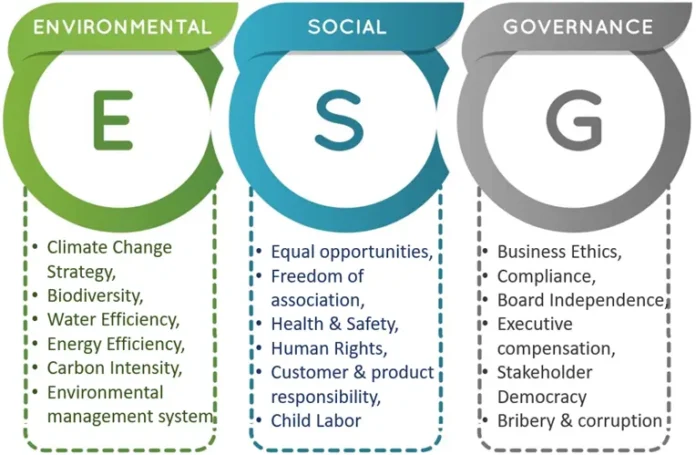
As lenders increasingly incorporate environmental, social and governance (ESG) considerations into credit decisions, the requirements for accessing cheaper capital are also changing. NMB Bank says miners that meet its climate finance eligibility criteria can access concessionary lending at reduced interest rates, with qualifying businesses eligible for a 0.5 percentage point interest rate concession.
Speaking to Mining Zimbabwe, NMB Bank Group ESG Officer Gerald Chigumbu said the initiative forms part of the bank’s broader climate finance framework, which rewards businesses that integrate sustainability into their operations.
“We offer what we call a concessionary rate, but for you to qualify you need to meet our climate finance eligibility criteria. We assess whether a company has a climate strategy and whether its operations contribute to climate mitigation or adaptation. For mining companies, this means having the appropriate environmental and social management systems, and we also conduct environmental and social due diligence before determining eligibility for the concessionary rate,” Chigumbu said.
The move reflects the growing role of sustainability-linked finance in the banking sector, where access to lower-cost capital is increasingly tied to environmental and social performance as well as financial strength. Development finance institutions that provide climate finance to commercial banks typically require strong ESG safeguards, prompting lenders to incorporate these standards into their credit assessment frameworks.
For mining companies, this means ESG is becoming more than a regulatory or corporate reporting requirement. It is increasingly influencing the cost and availability of finance for expansion projects and new investments.
Chigumbu said the bank’s due diligence extends beyond reviewing financial statements and includes site inspections to assess environmental and social risks. Lenders also evaluate rehabilitation plans, waste management systems, occupational health and safety practices, and engagement with host communities before approving climate-linked financing.
He added that financing mining projects requires specialist technical expertise, with banks relying on independent evaluators to assess operational risks and project viability alongside traditional financial analysis.
The ESG requirements vary according to the scale of operations. Smaller mines are expected to implement environmental and social management plans, while larger operations require comprehensive environmental and social impact assessments supported by mine rehabilitation programmes.
Industry stakeholders also called for financing models that reflect the realities of Zimbabwe’s artisanal and small-scale mining sector, arguing that differences in scale, land tenure and capital requirements make standard lending approaches unsuitable for many operators.
The development comes as Zimbabwe’s mining industry continues to seek affordable long-term capital to support expansion and meet the country’s ambition of building a US$12 billion mining economy. While access to finance has long been identified as one of the sector’s biggest constraints, lenders are increasingly indicating that strong ESG performance will play an important role in determining which projects qualify for concessionary funding.
For miners, the message is becoming clearer: demonstrating sound environmental management, responsible community engagement and good governance is no longer only about meeting regulatory expectations it is increasingly becoming a prerequisite for accessing cheaper capital.

