

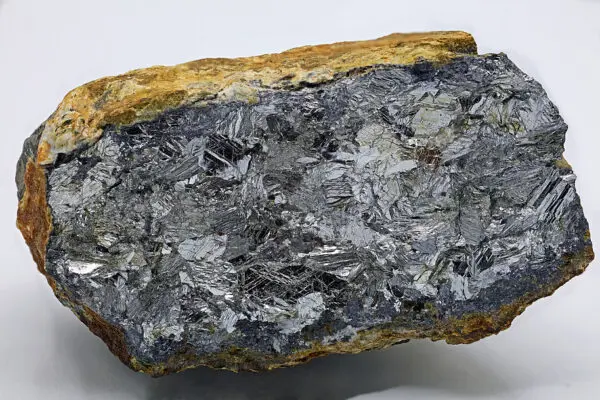
Antimony is a strategic mineral used in several industrial and high-technology applications because of its flame-retardant, alloy-strengthening, and semiconductor properties.
Below are the main uses of Antimony:
1. 🔥 Flame Retardants (Largest Use – ~50–60%)
Antimony is mainly used as antimony trioxide, a compound added to materials to reduce flammability.
Common applications:
- Plastics
- Textiles
- Electronics casings
- Building materials
- Cable insulation
It works with halogen compounds to slow or stop the spread of fire.
2. 🔋 Lead-Acid Batteries
Antimony is alloyed with lead to make battery plates stronger and more durable.
Used in:
- Automotive batteries
- Industrial batteries
- Backup power systems
The antimony improves the hardness and corrosion resistance of the lead plates.
3. 🏗️ Metal Alloys
Antimony strengthens soft metals such as lead and tin.
Applications include:
- Bearings
- Solder
- Pipes
- Sheet metal
- Ammunition components
Small amounts significantly increase hardness and mechanical strength.
4. ⚡ Semiconductors and Electronics
Antimony is used in certain semiconductor materials and electronic components.
Examples:
- Infrared detectors
- Diodes
- Thermoelectric devices
It improves electrical conductivity and thermal properties.
5. 🧴 Glass and Ceramics
Antimony compounds help:
- Remove bubbles from glass
- Improve glass clarity
- Add color to ceramic glazes
It is used in high-quality glass manufacturing.
6. 🪖 Military and Strategic Uses
Antimony is considered a critical mineral because it is used in:
- Ammunition primers
- Military alloys
- Flame-resistant materials
- Night vision and infrared technology
7. 🎨 Pigments and Paints
Antimony compounds are used in pigments for:
- Paint
- Plastics
- Rubber
They produce bright yellow and orange colours.
Why antimony matters globally
Because of its role in defence, batteries, and flame retardants, antimony is classified as a strategic or critical mineral by countries like the United States Geological Survey and the European Commission.
Price of Antimony
Antimony Metal (99.85% purity): Approximately $10,000 – $12,500 per metric ton on the spot market (this reflects typical recent rates, though exact quotes vary by supplier, quantity, and contract terms)
Antimony Trioxide (99.5% FOB China): Market quotations exist, but specific today’s price generally requires subscription access — Shanghai Metals Market tracks these (exact figures not publicly viewable without login)
Market Averages late 2025: Data from Metal.com shows antimony ingot pricing around ~$20,000‑$21,000/tonne (end‑of‑year US spot) with similar ranges in Europe depending on grade and form.
📈 Historical Price Context
Prices surged sharply in 2024–2025 amid supply restrictions from major producers like China, hitting peaks in some markets of $40,000–$60,000/tonne for antimony products — especially outside China, where shortages were most acute.
Average antimony prices in 2025 were around $25/lb (≈ $55,000/ton) before moderating later in the year.
After the peak, prices retreated as downstream demand eased and some supply opportunities emerged.
What Influences Antimony Prices
Global supply concentration: ~80–90% of output comes from China and a handful of other producers, so export controls or policy shifts strongly affect pricing.
Trade & geopolitics: Export bans and restrictions (especially from China to key markets) in 2024–2025 drove major price volatility and spikes.
Purity & form: High‑purity metal, compounds (like trioxide), and specialised grades command significant premiums over standard industrial material.
Areas Antimony is Mined in Zimbabwe
In Zimbabwe, Antimony is mined in Kwekwe, Bubi, Mberengwa, Kadoma, and Shurugwi

