


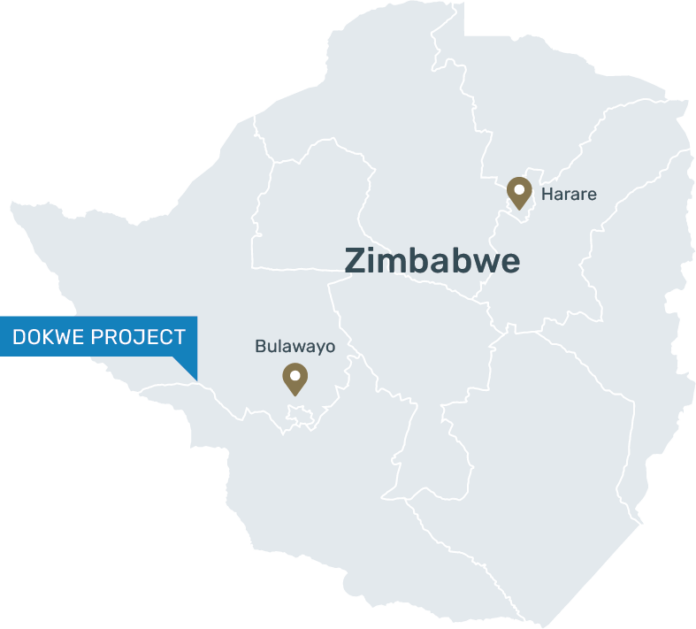
Ariana Resources is preparing to commence Phase 2 diamond drilling at its Dokwe North gold project in Zimbabwe later this month, following encouraging exploration results that suggest the mineralised system extends beyond the limits of the current resource model.
By Ryan Chigoche
The drilling campaign will build on a recently completed reverse circulation (RC) programme that returned several high-grade gold intercepts, strengthening confidence in the geological continuity of the deposit.
According to the company, diamond drilling will provide more detailed geological data than RC drilling, enabling the exploration team to refine the structural interpretation of the ore body and better understand the extent of mineralisation.
Ariana Managing Director Kerim Sener said the upcoming programme will form part of preparations for a potential update of the project’s resource estimate under the JORC reporting standard.
“Ariana plans to begin Phase 2 diamond drilling at Dokwe North in late March 2026 as a prelude to a possible JORC resource review,” Sener said.
The decision to advance to diamond drilling follows a series of encouraging intersections from the RC programme completed during the 2025–2026 exploration season.
Among the standout results was an intercept of four metres grading 16.90 grams per tonne (g/t) gold from a depth of 69 metres in drill hole DRC25, one of the strongest intersections recorded during the campaign.
Other significant intercepts included 10 metres at 7.67 g/t gold from 110 metres in hole DRC23, and 10 metres at 4.91 g/t from 156 metres in hole DRC22. These results confirm the continuity of mineralisation along the principal shear zone that hosts the Dokwe deposit.
Exploration results indicate that the mineralised system may extend beyond the boundaries of the existing resource model. The company believes near-surface oxide mineralisation could continue for as much as 150 metres beyond the current resource envelope towards the northeast.
The RC programme was expanded after initial drilling returned promising geological results. In total, Ariana completed 5,659 metres of drilling across 31 holes, exceeding the initial exploration plan of 4,000 metres across 26 holes.
Several step-out holes drilled between 50 and 100 metres beyond the high-grade DRC25 intercept are still awaiting laboratory results, leaving open the possibility of further extensions to the mineralised system.
Sener said the exploration results reinforce confidence in the scale and continuity of the Dokwe gold system and support the transition to the next stage of drilling.
The Dokwe mineral resource is currently estimated at 1.1 million ounces of gold at an average grade of 1.52 g/t, making it one of the more notable undeveloped gold deposits in southern Zimbabwe.
Growing Interest in Zimbabwe’s Gold Exploration
Progress at Dokwe comes at a time when Zimbabwe’s gold sector is drawing renewed attention from international explorers and investors.
Gold remains the country’s largest single mineral export, generating about US$5 billion in export earnings in 2025. Deliveries reached 36.7 tonnes last year, and industry projections suggest national output could move closer to 50 tonnes if current growth trends continue.
Strong global bullion prices, supported by central bank buying, geopolitical tensions, and broader economic uncertainty, have also boosted investor interest in gold exploration projects across Africa.
Zimbabwe’s greenstone belts and the Zimbabwe Craton are widely regarded as highly prospective geological terrains for gold, hosting numerous historic mines and several large deposits.
If upcoming drilling confirms further extensions of high-grade mineralisation beyond the current resource boundary, the project could move closer to expanding its resource base and advancing toward eventual mine development.

