


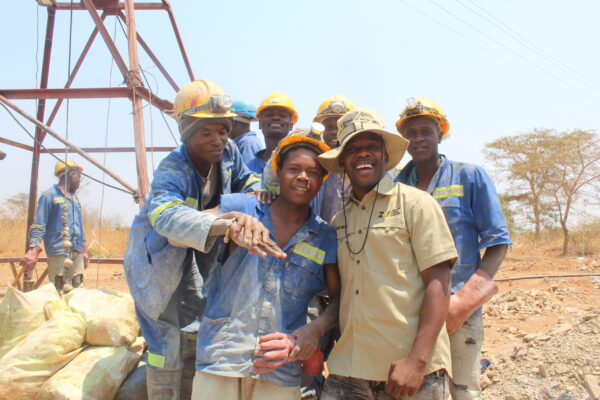
While Artisanal and Small-scale Miners (ASM) have been applauded for their contributions to the national fiscus, the sector continues to face critical challenges that threaten both miners’ welfare and the sustainability of mining operations, Donald Nyarota, Communication and Advocacy Officer at the Centre for Natural Resource Governance (CNRG), has said.
By Rudairo Mapuranga
Speaking at the Zimbabwe Diamond and Allied Minerals Workers Union (ZDAMWU) ASM Exchange Program, held at the Holiday Inn in Mutare, Nyarota emphasised the urgent need to address occupational health, safety, and environmental concerns, while also ensuring gender equity and responsible investment in the sector.
“There are challenges in the sector around occupational health and safety standards, and the rising mine-related accidents need to be solved. This industry should promote safe conditions for mine workers,” Nyarota said, highlighting findings from several research projects by CNRG that uncovered abuses within the sector requiring sustainable solutions.
Nyarota said mining accidents remain a pressing concern, with workers often operating in hazardous conditions without adequate protective equipment. He urged industry players to prioritise safety and implement systems that reduce accidents and fatalities.
“Mine-related accidents are rising, and these must be addressed sustainably,” he said.
Highlighting the gendered nature of mining impacts, Nyarota said women in mining and surrounding communities continue to bear a disproportionate burden.
“We want a strategy that is tangible and really addresses these gendered impacts,” he said, noting that unpaid care work and community responsibilities further exacerbate the challenges faced by women in ASM.
The CNRG official stressed that environmental degradation in mining areas directly affects communities. Poor rehabilitation practices and climate-related impacts compound socio-economic vulnerabilities.
“When the environment is damaged and left without rehabilitation, it is the communities that suffer,” Nyarota said.
He called for accelerated amendments to the Mines and Minerals Bill, alongside proper enforcement mechanisms, to ensure environmental protection becomes integral to artisanal mining.
Nyarota also lauded government initiatives, particularly the introduction of a mining cadastral system aimed at preventing double allocation of claims. He noted that Manicaland will pioneer the system, ensuring clarity and transparency in mining rights.
“The government has also undertaken a stance to include women in the upcoming Mine Affairs Board, which is going to be cross-representative across our provinces. These are key developments in the sector,” he said.
Nyarota called on miners to support unionisation efforts, warning against resistance from mine owners that undermines workers’ representation and the push for decent work.
“Every worker should be represented. In that representation, it should engender the decent work that we want,” he said.
He also emphasised the importance of attracting responsible investors who respect laws, cultural values, and community rights while contributing positively to the economy.
“Our government has been pushing for foreign direct investment, and we are calling for responsible investors that will not violate the rights of our society,” he said.
Nyarota encouraged participants to raise issues constructively, emphasising collaboration over blame.
“This is a safe space where we discuss issues progressively without pointing fingers… Let us look at how we can improve the issues that we are going to raise,” he said.

