

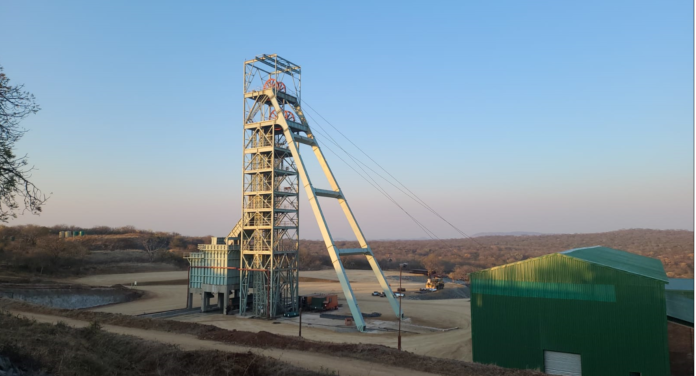
Despite its efforts to reduce environmental impact and increase energy self-sufficiency, gold-focused mining company Caledonia Mining Corporation has recorded a sharp increase in greenhouse gas (GHG) emissions in 2024, Mining Zimbabwe can report.
By Rudairo Mapuranga
The company’s latest ESG Report, released last month, reveals the complex balancing act of maintaining production in Zimbabwe’s energy-challenged environment while pursuing sustainability goals.
Caledonia, which operates the iconic Blanket Mine in Gwanda, Matabeleland South, reported a 43% surge in Scope 1 and Scope 2 emissions in 2024. This increase is largely tied to the company’s reliance on coal-generated electricity following the commissioning of a power plant in Hwange. While this development has improved energy reliability for mining operations, it has also contributed to a heavier carbon footprint.
The Coal Dilemma vs. the Solar Promise
While the coal power shift impacted emission metrics, Caledonia’s move to invest in renewable energy must not be overlooked. Its 12.2 MWac solar power plant, commissioned in November 2022, continues to provide critical clean energy to Blanket Mine. According to Caledonia, the solar plant now powers approximately 27% of the mine’s average daily electricity demand. This has significantly cut the mine’s dependence on diesel generators, reducing monthly diesel usage from 120,000 litres to just 18,000 litres.
In terms of performance, the solar plant has generated more than 47,350 MWh of clean energy since its commissioning. This output has not only reduced diesel-related emissions but also stabilised operations and minimised production interruptions. The improvement in grid power further enhanced the mine’s overall energy reliability.
From a financial perspective, Caledonia made a strategic decision to sell the solar plant in 2024 for US$22.35 million—realising a solid return on its original US$14.3 million investment. Importantly, Caledonia has retained an exclusive power off-take agreement, ensuring that Blanket Mine continues to benefit from clean, affordable solar energy without owning the asset outright. This move reflects a savvy blend of financial prudence and energy security.
Sustainability Goals and Public Expectations
Despite these green milestones, the jump in GHG emissions signals that there is still work to be done. The company’s transparency in reporting this spike is commendable, but it is clear that stakeholders—from environmental analysts to local communities—will want more detail on mitigation plans going forward. There is no denying that Caledonia is trying to build a sustainable operation, but efforts must now accelerate to reverse the emissions trend recorded in 2024.
The company has not yet committed to specific emissions reduction targets or outlined a formal carbon offsetting programme, which are now considered standard among environmentally conscious global miners. With Blanket Mine being one of Zimbabwe’s most visible and respected operations, Caledonia sits at the intersection of scrutiny and leadership.
Community Impact and Broader ESG Progress
Caledonia continues to lead in areas beyond just energy. The company maintains robust corporate social responsibility programmes, including support for education, healthcare, and local infrastructure in the Gwanda area. Blanket Mine’s presence has long supported livelihoods in Matabeleland South, and Caledonia’s ESG framework continues to emphasise shared value and long-term development.
Caledonia’s governance approach is also a benchmark for local operators. The company’s board and management team promote transparency, diversity, and international reporting standards—factors that have helped secure investor confidence on the London, New York, and Victoria Falls stock exchanges.
Turning a Strong Foundation into Greener Outcomes
Caledonia Mining’s 2024 ESG report presents a company that is honest about its setbacks and bold in its solutions. The rise in emissions—though concerning—is not the full story. The solar plant, which continues to supply over a quarter of Blanket Mine’s daily power, stands as proof that cleaner, locally generated energy is both viable and economically sound in Zimbabwe.
With the diesel cutback, improved production stability, and a profitable solar divestment that retains energy access, Caledonia is showing that green innovation can align with strong business strategy. What the company must do next is turn this momentum into measurable climate commitments: emissions targets, expanded renewable adoption, and defined pathways to reduce Scope 1 and 2 emissions.
In a mining environment where few firms are as transparent or forward-looking, Caledonia still holds its place as a leader. But leadership in the climate era demands more than good intentions—it demands action. And with a solid foundation already in place, the time for that action is now.

