

Zimbabwe’s gold sector continues to prove that it is the real driver of economic stability, contributing a staggering 33.3% of total foreign currency earnings in the first half of 2025. According to the 2025 Mid-Term Budget and Economic Review, gold fetched US$2 billion out of the US$6 billion in total forex receipts earned by the country between January and May, Mining Zimbabwe can report.
By Rudairo Mapuranga
And if the latest gold delivery figures are anything to go by, Zimbabwe has barely scratched the surface of what gold — especially from artisanal and small-scale miners (ASM) — can do for the economy.
Nearly 46% Growth: ASM Doubles Down
Gold deliveries to the country’s sole buyer and exporter, Fidelity Gold Refinery (FGR), from January to June 2025 reached 20,103.55 kg — a 45.85% increase from the 13,784.29 kg recorded during the same period in 2024.
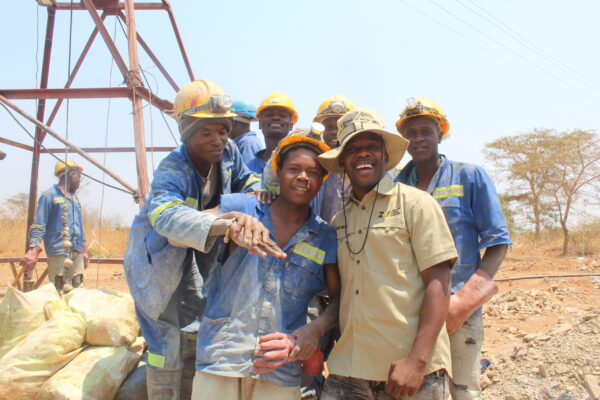
Artisanal and small-scale miners delivered 14,561.68 kg — a massive 96.31% jump from 7,416.97 kg in the first half of 2024. This surge signals growing trust in the formal gold market, driven by better pricing (now above US$105 per gram) and timely payments from FGR.
On the flip side, large-scale producers delivered 5,541.87 kg, down 12.95% from last year. While restructuring and infrastructure projects are partly to blame, it’s clear the ASM sector is carrying the industry on its back.
Despite gold’s dominance in foreign currency generation — and the ASM sector’s explosive growth — the Ministry of Mines and Mining Development remains one of the least-funded arms of government.
In the 2025 National Budget, the Ministry was allocated just ZiG664.8 million, which translated to around US$20 million. Meanwhile, the same economy it is expected to support earned US$2 billion from gold alone in six months.
We’re expecting billion-dollar results from a ministry we budget like a backyard committee.
Time to Match Output with Investment
The numbers speak clearly:
- Gold = 33%+ of forex
- ASM = 73% of total gold deliveries
- Ministry = Underfunded
We must stop admiring the numbers and start backing them. The ASM sector needs:
- Exploration support
- Access to credit
- Timely payments
- Fair and transparent markets
- Safety and training programmes
- Support for formalisation
The Ministry of Mines, which regulates this critical sector, should not be struggling with outdated vehicles, thin staffing, and no digital cadastre system while gold is plugging the national current account.
From Policy Praise to Practical Support
The government must move beyond slogans and handshakes at miners conferences. The 2026 Budget Strategy Paper has already projected mining to grow by 7.6% in 2025 and 8.3% in 2026. But growth cannot be wished into reality — it must be funded, structured, and nurtured.
With 40 tonnes targeted annually, and ASM already delivering over 14.5 tonnes by June, Zimbabwe is on course — but only if this momentum is supported through deliberate investment in small-scale operations and a fully capacitated Mines Ministry.
Feed What Feeds You
Zimbabwe’s economy is eating from the hands of small-scale gold miners. It’s about time we clean those hands, strengthen them, and place tools in them, not just clap for them after delivery.
If gold can bring a third of the forex, and ASM can deliver nearly triple the gold of large-scale producers, then our national budget and policies must reflect that reality.
We cannot afford to starve the cow that is giving us milk — or in this case, gold that’s literally keeping the economy breathing.

