


The Junior Chamber of Mines of Zimbabwe (JCMZ) is stepping up its push for formalisation and compliance in Zimbabwe’s middle-scale mining sector, with the organisation insisting that access to its support and representation is anchored on miners holding valid mining rights and operating within the regulatory framework, Mining Zimbabwe can report.
By Rudairo Mapuranga
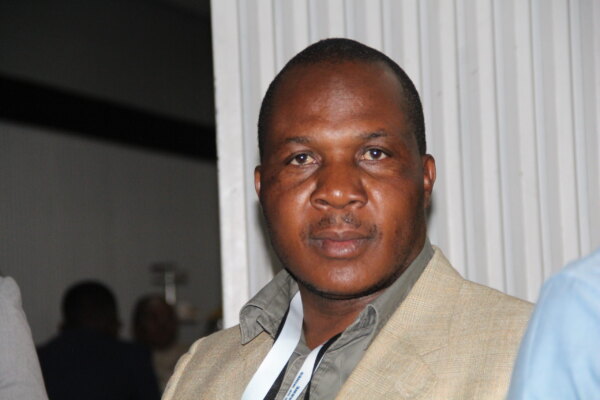
JCMZ Secretary-General Dosman Mangisi said the Chamber’s focus was on properly formalised and regulated miners, rather than operators working without recognised mining titles.
“It is strictly a miner who has got mining rights and mining titles. If you don’t have, then you are not a member. We only deal with small and medium-sized miners. Those who are well formalised and regulated,” Mangisi said.
He said compliance was central to JCMZ’s efforts to build a more productive and sustainable mining sector.
“Compliance is our key area where we try to build a bridge to develop this economy of Zimbabwe and ourselves,” he said.
Mine Surveyors Seen as Critical Technical Partners
Mangisi said mine surveyors had an important role to play in supporting miners as operations become more technically sophisticated and regulatory requirements increase.
He highlighted the importance of the Association of Mine Surveyors of Zimbabwe (AMSZ) to JCMZ, particularly in areas involving mining technology, mine development and optimisation.
The comments were made during the AMSZ Annual General Meeting and Conference, where the two professional bodies discussed opportunities for greater collaboration between mine surveyors and the mining sector.
Mangisi said JCMZ’s membership presented significant opportunities for surveyors to provide technical services, ranging from surface mining and mining rights issues to underground operations and optimisation.
He also referred to presentations on mining technology and optimisation, including a presentation by a Zambian expert at a DataMine conference in Cresta, which he said demonstrated the potential for technology and technical expertise to improve mining operations.
“This is another world that we really appreciate and recognise. And we want to work closely,” Mangisi said.
From Smaller Operations to Larger Mines
Beyond formalisation, JCMZ is positioning itself as a platform through which developing mining businesses can grow.
Mangisi said the Chamber did not want miners to remain permanently at small or middle-scale level, but wanted to support their progression into larger operations.
“The world remains as small or as medium. We would want to grow,” he said.
The growth agenda is tied to JCMZ’s broader role in supporting developing mining businesses through advocacy, technical assistance, incubation and access to opportunities that can help them expand.
For Zimbabwe, the progression of viable smaller mining operations into larger, better-capitalised businesses could also help broaden the formal mining tax base, create employment and increase investment in productive capacity.
JCMZ Seeks Clearer Definition of Middle-Scale Mining
Mangisi said JCMZ was also working to improve the definition and profiling of Zimbabwe’s small and middle-scale mining sector, arguing that uncertainty over the sector’s structure makes it more difficult to attract capital.
“Already we are working to redefine the mining sector for the small and medium, so that it’s well-profiled. Because for us now to bring these issues of capex that makes the industry grow, it becomes difficult if it’s not well-defined,” he said.
A clearer definition of the sector could help financial institutions, investors and policymakers better understand the size and requirements of mining businesses operating between artisanal/small-scale and large-scale mining.
For JCMZ, formalisation therefore goes beyond regulatory compliance. It is also being presented as a foundation for accessing capital, professional services, technology and ultimately scaling up operations.
Stronger Collaboration Needed
Mangisi called for closer engagement between JCMZ and the mine surveying profession, saying technical professionals could help miners better understand their operations and the direction in which the sector is moving.
“With your presence, the Association of Mine Surveyors, you would also help me to be in a position to help define and understand where we are going,” he said.
The call comes as Zimbabwe moves towards greater use of digital systems in mining administration and title management, increasing the importance of accurate technical information and professional surveying.
For mine surveyors, the expanding middle-scale mining sector presents an opportunity to play a greater role beyond traditional boundary and measurement work, particularly in mine planning, resource management, production monitoring, technology adoption and operational optimisation.
JCMZ’s message at the AMSZ gathering was therefore broader than a call for miners to obtain proper titles. The Chamber is seeking to build a more formal, technically capable and investable mining sector in which smaller operators can develop into larger businesses.
For miners seeking that transition, Mangisi’s message was clear: formalisation and compliance are increasingly becoming the foundation for growth.