




Karo Platinum has secured a 25-year Special Mining Lease from Zimbabwe, removing a key hurdle to the development of one of the largest undeveloped platinum-group metals projects on the Great Dyke and giving investors greater certainty over the project’s fiscal and operating framework, Mining Zimbabwe reports.
By Ryan Chigoche
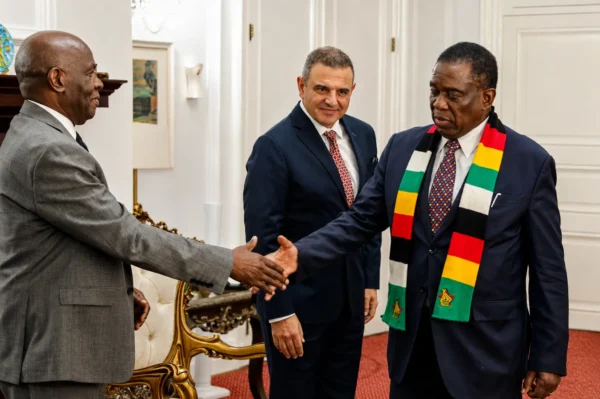 The agreement was signed at State House in Harare on Monday in the presence of President Emmerson Mnangagwa, underscoring the Government’s strategic interest in a project that could become a significant new source of platinum-group metals production.
The lease, granted under the Mines and Minerals Act, covers 23,903 hectares and establishes the tenure and fiscal terms under which Karo Platinum will advance towards first production.
For Tharisa Plc, which controls Karo Mining Holdings, the agreement marks the latest step in moving Karo from a large-scale construction project towards production after more than US$240 million of investment.
“The signing of this Special Mining Lease Agreement is a defining milestone for Karo Platinum and for Tharisa’s growth strategy,” Tharisa Chief Executive Officer Phoevos Pouroulis said.
“It gives us the long-term security of tenure and fiscal certainty needed to advance a project of this scale and strategic importance, while reinforcing the Government of Zimbabwe’s commitment to the responsible development of its mineral endowment.”
 The agreement comes as Zimbabwe seeks to attract more long-term capital into its mining industry while expanding production from its mineral-rich Great Dyke.
Karo is one of the largest undeveloped PGM assets on the geological formation, which is second only to South Africa’s Bushveld Complex in terms of PGM-bearing potential.
The project has an open-pit Mineral Reserve of 2.1 million ounces on a four-element basis and a Mineral Resource of 11.2 million ounces. Potential underground mining could extend the operation beyond the initial open-pit development and support a mine life of more than 50 years.
Phase One is designed to produce about 226,000 ounces of PGMs a year once fully ramped up and employ more than 1,000 people, putting the project among the more significant additions to Zimbabwe’s mining pipeline.
For the Government, the lease also provides a framework for capturing value from a project in which it holds a direct stake.
Karo Platinum is 85% owned by Karo Mining Holdings, with the remaining 15% held by the Zimbabwean Government through Generation Minerals on an unencumbered free-carried basis.
The structure gives the State exposure to the project’s economics without requiring it to fund its equity interest.
Mines and Mining Development Minister Polite Kambamura said the agreement reflected continued investor confidence in Zimbabwe’s mineral resources.
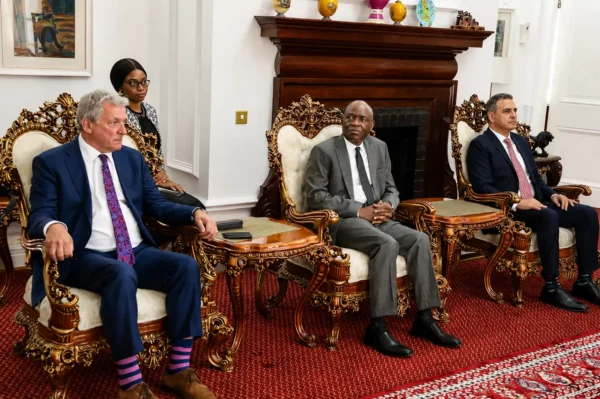
“The signing of this Special Mining Lease Agreement marks a proud and progressive moment for Zimbabwe’s mining sector. It reflects the confidence that responsible investors continue to place in our country, our people and the immense potential of the Great Dyke.”
He said Karo’s development could help unlock investment, jobs and skills while contributing to economic growth.
“The Karo Platinum Project is an important national development asset, and this agreement provides the long-term certainty required to unlock investment, create employment, build skills and contribute meaningfully to economic growth.”
Karo’s development has already moved beyond the planning stage. Construction began in December 2022, while pilot mining started in June 2023. More than US$240 million has since been invested in processing infrastructure, mining equipment, water and power infrastructure, and community programmes.
That investment has continued despite volatile PGM prices and challenging market conditions, making the lease an important milestone in reducing the remaining development risk.
Karo Platinum Chairman Kumbirayi Katsande said the agreement would strengthen the project’s investment case while demonstrating Zimbabwe’s ability to provide greater certainty for large-scale mining developments.
“This agreement is an important milestone not only for Karo Platinum, but for Zimbabwe’s mining sector and investment climate.”
“The Special Mining Lease supports the long-term certainty required to progress a project of this national significance, while demonstrating Zimbabwe’s commitment to attracting responsible, long-term investment into its mineral resource base.”
The focus now shifts to advancing Karo towards production under the newly established long-term framework.
For Tharisa, the project’s importance extends beyond Zimbabwe. Karo is expected to form a central part of the group’s growth strategy through 2030, with its planned production providing an additional source of PGMs as the company expands its mining portfolio.
“With Phase 1 designed to employ over 1,000 people while delivering 226 koz of PGMs per annum, Karo Platinum remains central to Tharisa’s 2030 strategy,” Pouroulis said.
For Zimbabwe, the project represents another major development on the Great Dyke and a potential long-life source of export earnings, employment and mining-sector investment.
The 25-year lease does not by itself mark the end of Karo’s development risk, but it removes one of the critical uncertainties surrounding tenure and fiscal terms. The next test will be whether the project can convert that certainty into construction progress, financing and ultimately commercial production.
Financing Becomes the Next Test
With the tenure and fiscal framework now settled, Karo Platinum’s next major hurdle is financial rather than regulatory.
The agreement gives potential lenders a clearer basis for assessing the project’s long-term cash flows and repayment capacity, potentially widening the pool of financing available for Phase One. That could include commercial banks, development-finance institutions and strategic investors.
The company has not disclosed a new financing package alongside the lease agreement, leaving the funding of the remaining development as the next key milestone.
For Tharisa, the challenge is now to convert the project’s substantial resource base and newly secured tenure into a financeable development capable of reaching its targeted 226,000 ounces of annual PGM production.
In that sense, Monday’s agreement may be less the conclusion of Karo’s de-risking process than the point at which the project enters its next phase: turning regulatory certainty into capital and, ultimately, production.
Who was Present
- President Emmerson Mnangagwa
- Minister of Mines and Mining Development Dr (Eng) Polite Kambamura
- Ministry of Finance, Economic Development and Investment Promotion Prof Mthuli Ncube
- Phoevos Pourolis – Tharisa Group CEO and Karo Mining Holdings Board Chairman.
- Bernie Pryor – Karo Mining Holdings Managing Director.
- Josephat Zimba – Karo Platinum Country Director
- Kumbirayi Katsande – Karo Platinum Board Chairman
- Rumbidzai Gakanje – Karo Platinum Finance Director

