


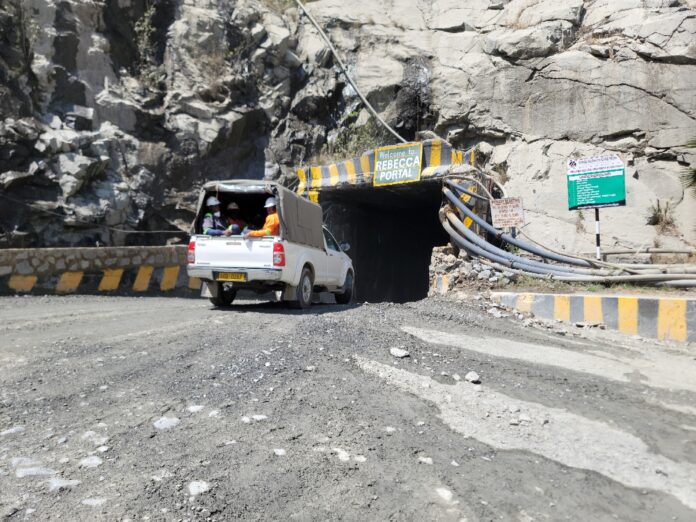
Kuvimba Mining House (KMH), Zimbabwe’s state-owned mining giant, has reported a strong quarter of growth in gold production across its three primary gold assets, with collective output rising 14.7% in the three months ended September 30, 2025, Mining Zimbabwe can report.
By Rudairo Mapuranga
This significant surge was fuelled by double-digit percentage increases at all its mines, highlighting positive operational momentum that sets a robust foundation for the remainder of the financial year. The impressive quarterly performance, however, is set against a backdrop of a production decline in the half-year figures compared to the previous period, underscoring the variable nature of mining operations.
The company’s robust quarterly performance comes amid a favourable gold price environment and aligns perfectly with its publicly stated strategic focus on enhancing plant efficiency and ore recovery rates across its operations. The collective effort from Freda Rebecca, Shamva, and Jena mines demonstrates Kuvimba’s capacity to orchestrate a synchronised operational rebound.
The flagship operation, Freda Rebecca, led from the front with a remarkable 14.7% quarter-on-quarter increase, resulting in its production climbing from 15,197 ounces in the June quarter to 17,425 ounces in the September quarter. This performance solidifies its position as the anchor of Kuvimba’s gold portfolio. Shamva Mining Company provided solid support, growing its output by 6.9% to 5,948 ounces, up from 5,562 ounces in the previous quarter. The most dramatic growth, however, was recorded at Jena Mines, which posted a striking 24.6% quarter-on-quarter rebound, with production rising to 3,086 ounces from a previous 2,476 ounces.
Despite this powerful quarterly finish, total production for the first half of the current financial year, which ended on September 30, 2025, was lower than the preceding six-month period. This half-year decline is primarily attributable to reduced output at the Shamva and Jena mines compared to their exceptionally strong performance in the half-year that ended on March 31, 2025. For the half-year ended September 2025, Kuvimba’s mines produced a combined 49,704 ounces. This represents a significant decrease compared to the 83,269 ounces produced in the previous half-year ended March 2025, a period that included a substantial 25,688 ounces from Shamva and 11,092 ounces from Jena.
When compared to the same period last year, overall output also shows a decrease. The half-year total of 49,704 ounces is below the collective production from the half-year ended September 30, 2024, which was 57,715 ounces, comprising 38,232 ounces from Freda Rebecca, 12,989 ounces from Shamva, and 6,494 ounces from Jena.
A deeper dive into Freda Rebecca’s performance reveals a story of cyclical strength. While its 14.7% quarterly increase demonstrates an excellent operational recovery, its half-year total of 32,632 ounces represents a 14.7% decrease from the 38,232 ounces it achieved in the same six-month period last year. This places its current output in the context of its full-year achievement for the period ended March 31, 2025, when it produced a total of 79,121 ounces.
Shamva Mine, meanwhile, is navigating clear production volatility. Its steady 6.9% quarterly growth is a positive sign, but it is overshadowed by a substantial half-year drop. Its production of 11,510 ounces for the half-year ended September 2025 is 55.2% lower than the 25,688 ounces produced in the previous six-month period ended March 2025. Compared to the half-year ended September 2024, when it produced 12,989 ounces, the current figure represents an 11.4% decrease.
Jena Mines, situated in Silobela, showcased the most vigorous recovery trajectory of the trio. Its impressive 24.6% quarter-on-quarter jump underscores the success of targeted operational initiatives. Despite this strong quarterly finish, the mine’s half-year total of 5,562 ounces remains 14.3% lower than the 6,494 ounces produced in the same period last year and is almost half of the 11,092 ounces it produced in the half-year ended March 2025.
These mixed results across the half-year come as Kuvimba executes a strategic focus on operational stability and efficiency gains for the 2026 financial year. Company leadership has previously indicated that output is expected to remain in line with 2025 levels, with potential uplifts being driven primarily by accessing higher ore grades and achieving improved plant recovery rates, rather than through major capital expansion.
To this end, the company is actively pursuing several key initiatives to bolster performance. A central pillar of this strategy involves critical equipment upgrades, with Kuvimba prioritising the replacement of ageing and unreliable plant and equipment at both Freda Rebecca and Jena mines. Parallel to this, investments are being made to enhance processing capacity, specifically by increasing tank capacity at its processing plants. This technical improvement will extend the “residence time,” which is the duration ore is exposed to chemicals, thereby directly boosting recovery rates. On the financial front, despite industry-wide cost pressures, the company has demonstrated prudent cost management, successfully reducing the cash cost per ounce and setting even more ambitious targets for the current year. Furthermore, to ensure operational consistency, KMH is finalising a major power purchase agreement for a 23MW solar plant, a move designed to reduce reliance on Zimbabwe’s unreliable national grid and secure a stable energy supply for its energy-intensive operations.
Kuvimba Mining House’s latest production results ultimately paint a picture of an organisation building powerful quarterly momentum after a slower start to its financial year. The double-digit growth across all three mines in the September quarter is a clear testament to the operational improvements being implemented across the board. While the half-year figures show an expected decline from the exceptionally high production in the previous six-month period, the company’s strategic focus on efficiency, cost control, and stable output appears to be yielding positive results. With global gold prices remaining strong, Kuvimba is well positioned to continue generating significant revenue, contributing substantially to Zimbabwe’s position as a major gold producer in Africa.