


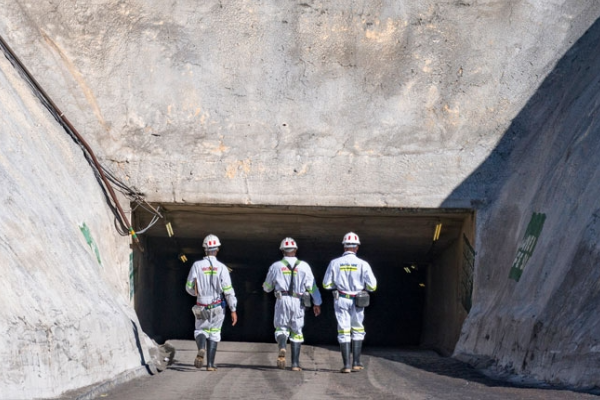
At a time when Environmental, Social, and Governance (ESG) compliance is no longer a box-ticking exercise but a business imperative, Mimosa Mining Company is steadily emerging as one of the few mining giants in Zimbabwe with a deliberate, structured, and transparent ESG agenda, a recent assessment highlighted.
By Rudairo Mapuranga
The report, seen by Mining Zimbabwe, described Mimosa’s ESG architecture as robust and evolving, with evidence of a company that is “producing comprehensive ESG reports since 2023 which are publicly available,” supported by clear “materiality assessment guidelines and stakeholder engagement strategy.”
According to the report, at a time when ESG frameworks are often paper-deep, Mimosa’s model offers something more tangible: governance that begins at board level, data that is externally assured, and policies that inform action — not just statements.
The report states that Mimosa is aligning itself with the Global Reporting Initiative (GRI), a globally recognised ESG reporting benchmark that few local mining companies have fully adopted.
“The company has a strong governance structure starting at the board level going down,” reads the report.
“The organisation has structured its ESG systems using GRI standards… and reports on the most important material issues in accordance with GRI.”
Third-Party Assurance and Transparent Reporting
One of the report’s standout findings is Mimosa’s commitment to transparency, particularly through third-party assurance of its ESG reports. In a mining landscape where some operators still avoid disclosure or produce low-quality reports, this signals a shift in mindset — one that values openness and accountability.
Furthermore, the company reportedly “conducts evaluation of its CSR projects” and runs community environmental monitoring forums — a participatory mechanism aimed at involving local communities in environmental stewardship.
Community-First Approach to Environmental Monitoring
The report outlines that Mimosa has embraced meaningful community engagement, not only in policy but in practice. However, it also recommends that more be done to build the capacity of the local community so they can participate more effectively in environmental monitoring activities.
“There is need for capacity building of the local community to enhance their effective participation in environmental monitoring activities of the company… focusing on water, air quality and noise indicators,” the report notes.
These aren’t criticisms. Rather, they are forward-looking suggestions that seek to amplify what Mimosa is already doing, particularly around helping the community understand risk assessment, private sector engagement, and environmental data.
There’s a call to capacitate the community on engaging the private sector, understanding the roles of government agencies such as RDCs, and participating in the mitigation of environmental risks using structured processes.
Driving Sustainable Livelihoods
Mimosa’s social impact work is also under the spotlight. The report recognises that while community projects are being implemented, there is scope to strengthen governance around them.
“Raise awareness and support the community to develop governance structures for livelihood projects… through committee development of water point committees, livestock projects, and development of constitutions for the projects,” the report says.
This would promote ownership and sustainability of these projects — a crucial aspect often overlooked in CSR work where donor fatigue and dependency can creep in without clear exit or ownership strategies.
Packaging Reports for Community Engagement
The report also flags a key communication gap between the technical nature of ESG reports and the need for grassroots-level understanding.
“Repackaging of Mimosa Sustainability Reports for ease of understanding for communities… using radio dialogues,” is recommended.
This is not just a communications strategy; it is a bridge to deepen community trust and empower locals with information that affects their lives and land.
A Model Others Should Study
What emerges clearly from this assessment is that Mimosa Mining Company is not just operating a mine — it is operating a system of corporate governance, environmental responsibility, and community engagement that many in Zimbabwe’s mining sector are yet to establish.
By using internationally accepted standards such as GRI, subjecting its data to third-party review, and structuring its engagement through documented policies, Mimosa is effectively laying down a marker for what responsible mining can and should look like.
It’s not perfect — and no model is — but it’s moving, it’s visible, and it’s honest.
ESG as a Value, Not a Buzzword
In a sector often clouded by issues of environmental degradation, unregulated operations, and opaque governance, Mimosa’s structured ESG approach is both refreshing and necessary. The report reinforces that mining is no longer just about what comes out of the ground, but what is left behind — for people, for the planet, and for generations.
With recommendations that Mimosa is likely to consider seriously, the future of ESG in Zimbabwe’s mining sector may already have a case study — one that other players would do well to read, study, and perhaps even adopt.