


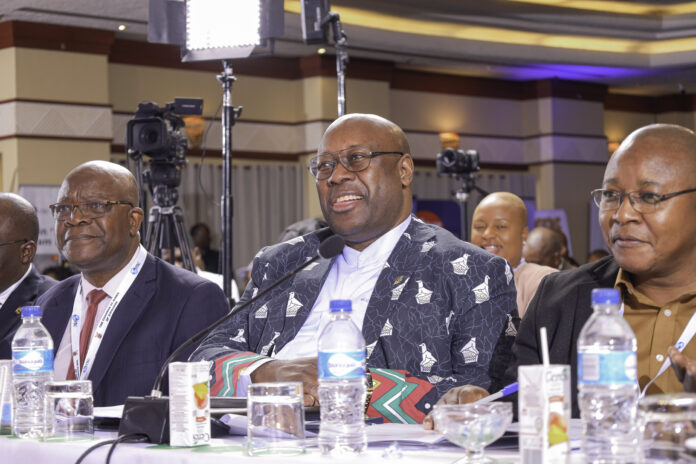

Zimbabwe’s long-awaited Mines and Minerals Amendment Bill, hailed as the key to unlocking responsible and modernised mining in the country, is now set to be gazetted “in the next two weeks,” Mines and Mining Development Minister Hon. Winston Chitando said.
By Rudairo Mapuranga
Speaking at the Chamber of Mines Annual General Meeting on Friday in Victoria Falls, Chitando confirmed the government’s intention to finally move forward with the Bill, whose history is riddled with false starts, legal objections, and over a decade of delays.
“We have a very good opportunity time because the amendments to the Mines and Minerals Act are being gazetted in the next two or so weeks,” Chitando said. “Working together with the Parliamentary Committee and the ruling party, we must make these amendments clear and give them teeth.”
However, this is not the first time the Bill has been gazetted. The Mines Bill was previously gazetted during the Ninth Parliament, only to be stalled by constitutional inconsistencies and a lack of political consensus. In 2018, the Bill even reached President Mnangagwa’s desk but was sent back for further revisions after concerns were raised about clauses that risked centralising excessive power in the Ministry of Mines.
The President himself, in a speech during the opening of the First Session of the 10th Parliament, underscored the importance of finalising the Bill. He placed it among key legislative items that must be completed without further delay.
“The Mines and Minerals Amendment Bill… which was outstanding from the Ninth Parliament, must be concluded during the First Session of this Parliament,” said President Mnangagwa, urging lawmakers to act.
“Use It or Lose It” Principle to Be Strengthened
A major highlight of the new Bill is the legal reinforcement of the “use it or lose it” policy—an area the Ministry of Mines has publicly struggled to enforce under the existing law. Chitando made it clear that title holders who continue to sit on claims without developing them will face forfeiture.
“We cannot continue allowing individuals or companies to hold mining titles and do nothing. That is speculation. If you’re not developing your mine, you will lose the title,” said Chitando.
The Minister lamented how Zimbabwe’s mineral sector growth has been hampered by speculative landholding, with some title deeds dating as far back as the 1970s still undeveloped.
Environmental Violations Will Cost You Your Claim
Chitando also announced a radical shift in how environmental accountability will be enforced. In line with the Responsible Mining Initiative, environmental negligence will now carry legal consequences, including the loss of mining rights.
“There is no reason to maintain a mining title when you damage the environment. If you violate the environment, you lose your mining title—simple,” he declared.
He cited examples of destructive coal and granite mining operations that have left roads unusable and communities at risk, describing some current practices as “irresponsible” and unsustainable.
Strategic Minerals and Local Reservations
The upcoming Bill will also formalise the classification of certain minerals as “strategic,” giving the state greater control over key commodities such as lithium, platinum, and rare earths. Furthermore, certain mining blocks and claim sizes will be reserved for Zimbabwean citizens.
“The amendments will include having some conditions in terms of size being reserved for locals. This is about ensuring our people benefit from the mineral wealth beneath their feet,” said Chitando.
Special Mining Leases to Be Tied to Mutual Benefit
The Bill will also tighten the framework for awarding Special Mining Leases (SMLs) for investments above US$100 million. The government will demand reciprocal value from investors who seek policy stability guarantees.
“Some companies want all the benefits of a Special Mining Lease, but there’s no upside for the government. We are saying: if we guarantee stability, then you must guarantee value in return,” the Minister emphasised.
Over a Decade of Delay
The Mines and Minerals Act (1963) is widely regarded as outdated and unfit for Zimbabwe’s 21st-century mining ambitions. Efforts to overhaul it began over ten years ago, yet the process has been repeatedly derailed by stakeholder disagreements, constitutional hurdles, and lack of momentum.
In 2023, the Parliamentary Legal Committee ruled that the previous draft violated several constitutional provisions, forcing further revisions. Earlier this year, the Bill underwent public consultations across the country under the oversight of the Parliamentary Portfolio Committee on Mines and Mining Development.
Despite repeated commitments, critics say the delay has enabled land hoarding, lack of transparency in title allocation, weak enforcement on ESG compliance, and minimal community benefit.
Hope for a New Era
If passed, the Bill could usher in a new era for Zimbabwe’s mining sector—one where mineral resources are no longer hoarded, communities are respected, and environmental protection is taken seriously.
“Let’s all respect the law,” Chitando told delegates. “You follow the law, and government will follow the law. That’s how we unlock growth in the mining sector in a responsible manner.”

