


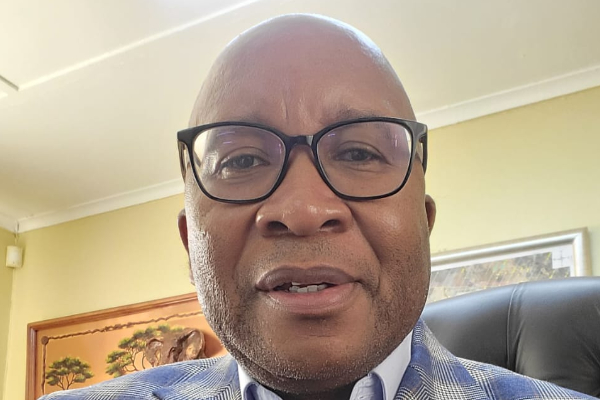

MUTAPA Gold Resources Chief Executive Officer Patrick Maseva-Shayawabaya has outlined five key priorities that he believes are critical to unlocking the full potential of Zimbabwe’s gold sector, with exploration and formalisation of artisanal mining taking centre stage.
By Rudairo Mapuranga
Speaking at the Chamber of Mines Gold Symposium, which his company sponsored for the second year running, Maseva-Shayawabaya said the conference comes at a “decisive moment” for Zimbabwe’s gold industry.
“Gold remains one of the country’s leading strategic minerals. This is the leading foreign currency generator. It supports millions of livelihoods, attracts investment, and creates opportunities for industrial growth,” he said.
“But the future we seek will not be secured by current production alone.”
Five Connected Priorities
The Mutapa Gold Resources CEO identified five interconnected priority areas that require urgent attention:
• Strategic context of Zimbabwe’s gold sector
• Exploration as the foundation for growth
• Governance as an enabler and facilitator
• Formalising artisanal and small-scale mining
• Critical success factors to transform ASM into a transparent, inclusive, and competitive pillar of national development
Exploration Foundation for Growth
Maseva-Shayawabaya warned that the current mining boom is built on exploration work conducted decades ago, citing one of the companies in the Mutapa Gold Resources Group, Freda Rebecca, which started operating in 1988 following exploration conducted in the early 1980s.
“Freda Rebecca’s current life of mine is four years, which means we’ve not done as much exploration as we should have,” he said candidly.
He noted that countries that make geological information accessible, promote certainty in mineral tenure, and apply clear rules for exploration investment are better positioned to attract long-term capital for exploration.
“For Zimbabwe, this means strengthening the bridge between public geological institutions, private explorers, financiers, and cooperation so that exploration becomes a national platform rather than a speculative activity,” he said.
Governance as an Enabler
Maseva-Shayawabaya stressed that governance must be understood “not as an administrative burden but as the operating system for a credible gold industry.”
Good governance systems give investors confidence, communities assurance, government visibility over national resources, and producers access to responsible markets, he said.
“These principles matter because gold is highly mobile, has a high value, and is vulnerable to leakages when oversight is weak. Governance is therefore not separate from production. It is what protects value,” he said.
Formalising Artisanal Mining a Passion
The CEO described formalising artisanal and small-scale mining as “one of the most important development questions facing Zimbabwe’s gold sector today.”
He acknowledged that artisanal miners are already part of the national production base and an important source of livelihoods, particularly in rural areas.
“The challenge is not whether this sector exists; it is whether it operates safely, legally, productively, and in a way that strengthens national gold accountability,” he said.
Maseva-Shayawabaya stressed that formalisation must be practical and incremental, simplifying access to training, creating secure operating areas, providing technical training, improving safety and health, supporting processing technologies, enabling access to finance, and connecting miners to formal gold markets.
Business Case for Supporting ASM
In a notable departure from conventional corporate rhetoric, Maseva-Shayawabaya declared that Mutapa Gold Resources’ support for artisanal miners is not charity but business.
“We are not by any chance the leaders in this field, but we have decided that we can co-exist and prosper together with artisanal miners,” he said.
“Our goal has been to support artisanal miners to work safely, provide them with technical assistance, and provide them with working capital so that their production increases. And I must add, it’s not charity for us. It’s a business for us. We benefit from the mining. The artisanal miners also benefit.”

