CAPE TOWN – Mutapa Gold Resources is embarking on an ambitious, multi-phased expansion programme aimed at more than doubling consolidated gold production to approximately 250,000 ounces per annum, nearly 7.5 tonnes, within the next three to four years, anchored by a US$150 million redevelopment of Shamva Mining Company, followed by an expansion at Jena Mine.
By Rudairo Mapuranga
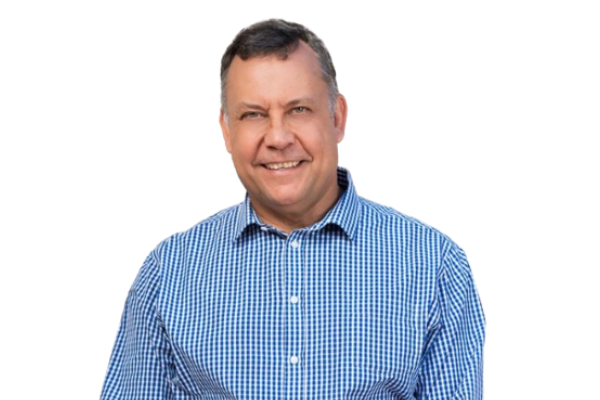
Speaking at the Mutapa Investment Fund symposium on the sidelines of the Investing in Africa Mining Indaba, Mutapa Gold Resources CEO Trevor Barnard provided a detailed breakdown of the state-owned gold vehicle’s project pipeline, clarifying the distinct funding requirements and production targets for each asset under its portfolio.
Barnard confirmed that the US$150 million funding requirement is specifically allocated to Shamva Mining Company, where Mutapa plans to transform the operation into a large-scale, open-cast, low-cost gold producer with a throughput of about 2.5 million tonnes per annum.
“That would give us a consolidated gold production of around 170,000 ounces per annum,” Barnard stated. He emphasised that the mine is being designed to sit in the lower quartile of the global cost curve, ensuring resilience against future gold price corrections.
“We don’t expect the gold price to stay at the heavy heights that it is currently, so we need to prepare ourselves for those days when we also have some lower prices,” he said. This philosophy of designing for long-term viability, rather than short-term price peaks, underpins Mutapa Gold’s entire expansion strategy.
Turning to Jena Mine, Barnard outlined a separate but concurrent growth trajectory. Currently producing approximately 30 kilograms of gold per month, Jena is operating well below its geological potential. Mutapa plans to install a completely new processing plant and transition the operation to open-cast mining.
“We’re fortunate that Jena is quite a high-grade mine. We’ve got grades there that approach about 2.5 grammes per tonne,” Barnard said. “If you design an open-cast mine at that grade and the geological potential at Jena, you’re going to be producing at a pretty low cost and significant volume.”
The expanded Jena operation is expected to contribute around 80,000 ounces per annum, adding substantial weight to Mutapa Gold’s consolidated production profile.
While not the subject of immediate major expansion announcements, Freda Rebecca remains the flagship asset within Mutapa Gold Resources, currently producing approximately 220 kilograms of gold per month. This strong baseline production, equivalent to roughly 85,000 ounces per annum, provides the cash flow and operational stability that enables the group to pursue its ambitious growth agenda across other assets.
Barnard confirmed that Elvington Mine in Chegutu represents the third wave of Mutapa Gold’s development pipeline, following the successful execution of Shamva and Jena.
“We’re running on the basis of a contract mining agreement where we’re supporting the artisanal miners that are there at the moment,” Barnard explained, describing an interim model where gold is split equitably between Mutapa, the artisanal miners, and the processor, with all sales channelled through Fidelity.
This pragmatic approach formalises activity, generates immediate revenue, and secures Mutapa’s social licence while de-risking the site ahead of major capital deployment. The long-term vision is to access the main resource sitting underground, beyond the reach of current artisanal operations.
Barnard clarified the sequencing: “Our project pipeline is first of all Shamva. As soon as Shamva is well on the go, then we’ll follow up with the development of Jena. Those two will run to an extent concurrently, and then once those are operational, it’s then to take the next step and develop Elvington to its full extent”.
When combined, Mutapa Gold Resources’ current production base, anchored by Freda Rebecca, plus the targeted expansions at Shamva and Jena, position the group to triple its total gold output from approximately 115,000 ounces per annum to over 300,000 ounces (approximately 9.6 tonnes) within five to six years.
“And if you put all of that together with our current production, we are planning to triple our current gold production in the next five to six years, which would be taking us from our current around 115,000 ounces per annum to over 300,000 ounces per annum,” Barnard confirmed.
Beyond this horizon, he indicated that Mutapa Gold intends to continue developing its remaining tenements, projecting sustained growth over the next five to ten years.
Throughout the presentation, Barnard stressed that implementation will prioritise Zimbabwean capacity.
“The skill is definitely available. As you could hear from my previous discussions around the different projects, our implementation model is really to develop large-scale, low-cost mines,” he said.
He emphasised support for local contractors and suppliers, noting that the competencies required to execute these projects exist within Zimbabwe’s mining industry.
“We’re really excited about the future of the gold company, and the only thing that I can leave you with is watch your space,” Barnard concluded.