

Members of Parliament have thrown their unanimous support behind the government’s immediate suspension of raw mineral and lithium concentrate exports after hearing detailed evidence from the Ministry of Mines and Mining Development on the scale of mineral leakages and the loss of valuable multi-elements contained in Zimbabwe’s lithium deposits, Mining Zimbabwe can report.
By Rudairo Mapuranga
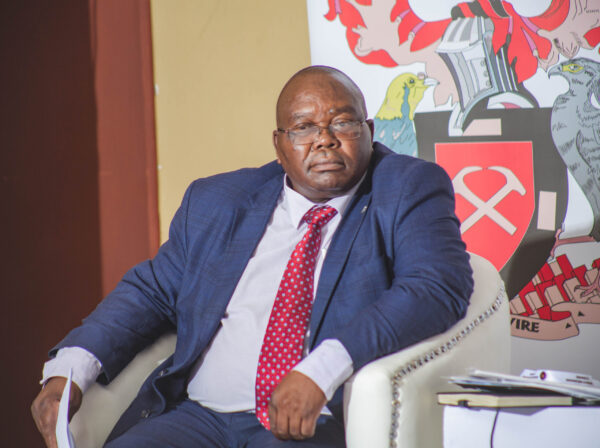
Speaking at a workshop on energy minerals co-hosted by ActionAid Zimbabwe and the Parliament of Zimbabwe, Ministry of Mines and Mining Development Permanent Secretary Pfungwa Kunaka provided the technical and scientific rationale behind the ban, revealing that studies had confirmed significant losses of rare earth minerals and other valuable elements through raw exports.
PS Kunaka said Zimbabwe’s lithium deposits contain other elements that have been largely overlooked in public discourse.
“It’s something that is quite scientific, that when you look at most of the ore bodies in Zimbabwe, they are multi-mineral. And even the lithium ore is also coming with multi-elements, which are, to some extent, even rare earth minerals.”
This geological reality means that when Zimbabwe exports raw lithium concentrate or other raw minerals, it is not just shipping lithium or other minerals; it is losing a cocktail of valuable elements that could be extracted and sold if processing occurred locally.
“The observation that we have come up with, through studies and technical testing of the lithium that has been exported from the country, brings us to the conclusion that a lot of the minerals were leaking. We’re now putting a stop to the loss of some of the very crucial and valuable elements in the lithium.”
Ban Not New: Existing Law Was Being Abused
Crucially, Kunaka clarified that the ban is not a new policy but the enforcement of existing law that had been undermined by licence abuse.
“I would agree to some extent that the ban was abrupt. But the other side is also to say that since 2023, we have had a ban on the export of ore, lithium, and other base minerals.”
He explained that Statutory Instrument 213 of 2022 had already prohibited raw mineral exports. A few companies were granted temporary licences to export while they developed processing capacity, but these licences became a vehicle for widespread abuse.
“This trajectory is something that our stakeholders have been quite aware of. You’ll be aware that we’ve even agreed with the producers in the lithium sector that, come 2027, we would have wanted them to gravitate to the production of sulphate, and it’s something that they’ve committed to even in writing.”
However, the abuse of temporary licences forced the government’s hand.
“But a crunch came, Chairman, when we discovered that a lot of the leakages were actually happening, and this was through a study which was undertaken in 2025, which confirmed the loss of value in the region. So this necessitated the government, in order to protect value, to come up with a ban that we announced on the 25th of February 2026.”
The decision was so urgent that even lithium already on the roads was ordered to return.
“We went to the extent of saying even the lithium which was on the highways, on the roads, and even at border posts was supposed to be returned back because the ban was with immediate effect. Of course, that came with some costs that the government had to take action on.”
Kunaka dismissed concerns that Zimbabwe lacks processing capacity, revealing that multiple sulphate plants are nearing completion.
“We are glad, Chairman, that some of the producers, three of them, already have a plant which is due for commission anytime from now. We also have, Chairman, other miners with a processing plant for sulphate, which we believe can be commissioned anytime from now. We also have good progress, Chairman, in terms of processing plants that are coming up.”
He projected that by the end of 2026, Zimbabwe will have no fewer than four lithium sulphate processing plants operational.
For small-scale miners unable to build their own plants, Kunaka pointed to the PGM sector as a model.
“Even the small producers, they need to join hands with the big ones who will be able to set up the plants. This is not a new arrangement. We have seen this happening in the PGM sector, where they are joining hands. Someone with a bigger pocket has put up the necessary processing plants.”
Fiscal Reforms Needed
The Permanent Secretary acknowledged that the fiscal regime must be adjusted to support the beneficiation trajectory.
“This is where perhaps, Chairman, we need to be talking more closely with the Minister of Finance. We need a fiscal regime that is promoting that trajectory. I think the Chamber is already making some representations to the Minister of Finance in that regard.”
Following Kunaka’s presentation, Members of Parliament across the political divide expressed strong support for the ban, with some arguing it was long overdue.
Hon. Matangira, Chairman of the Portfolio Committee, who had earlier raised concerns about the abruptness of the ban, shifted position after hearing the technical evidence, acknowledging the necessity of immediate action to protect national interests.
Hon. Mushoriwa delivered a particularly forceful statement, prioritising national development over diplomatic considerations.
“The country needs to be certain of its interest. We cannot put friendship in front of profits. Our interests as a country are development, not friendship. What doesn’t improve or develop the country cannot be prioritised.”
He went further, suggesting the government had actually waited too long.
“The government decision was actually late, but good. I encourage the government not to reverse the ban.”
Hon. Karimazondo expressed concern about the scale of undervaluation occurring before the ban.
“The ban was good, and I also feel minerals that were being declared were less than 50 percent of their actual value.”
His remarks suggested that the problem of transfer pricing and deliberate undervaluation was far more extensive than previously acknowledged.
Hon. Zvaipa reflected on how his perception had changed after hearing the Ministry’s presentation.
“The way the ban was perceived before and now—I had been blaming the Ministry, but after they presented the evidence, my understanding has completely shifted.”
The Ultimate Goal: Battery-Grade Chemicals
Kunaka concluded by outlining the government’s long-term vision for the lithium sector.
“The ultimate goal, Chairman, is to be able to have battery-grade chemical production. In other words, we want the raw materials to be processed to the extent that they can be used in a lithium battery, and also in solar panels. So this value addition component is very important.”
He reminded the gathering that lithium is not just an export commodity but a critical mineral for the global energy transition—and Zimbabwe intends to be a processor, not just a digger.

