

Zimbabwe’s Platinum Group Metals (PGM) sector, a major foreign currency earner second only to gold, is reeling from a combination of suppressed global prices, power supply fragility, and a punishing effective tax burden now estimated at a staggering 77%, Mining Zimbabwe can report.
By Rudairo Mapuranga
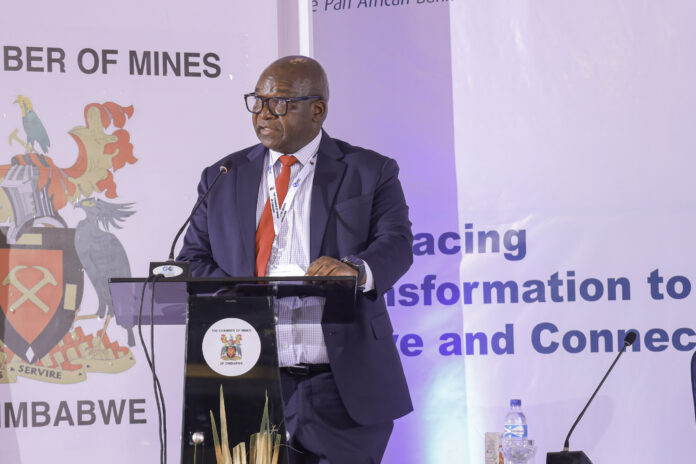
Speaking during the Chamber of Mines Annual General Meeting in Victoria Falls, Chamber CEO Isaac Kwesu painted a sobering picture of the industry’s current struggles. He warned that despite Zimbabwe’s enviable geology—boasting the third-largest PGM reserves in the world—the sector’s contribution to national exports had dropped to 26% in 2024, down from previous highs, due largely to subdued prices and operational hurdles.
“Gold is now contributing more than 43% to national exports, a figure previously shared with PGMs, which have been severely affected by price declines and rising production costs,” Kwesu said.
The CEO noted that formal employment in the sector remains around 10,000, roughly 20% of total formal mining jobs in the country, with current producers still running robust local enterprise development and community empowerment programs.
However, he stressed that these contributions were under threat.
“The sector has seen effective tax rates rise from 70% to 77% when factoring in all payments to government and its related entities. This is happening in an environment where revenues are falling, viability is under pressure, and price recovery remains uncertain,” Kwesu warned.
Electricity Crisis and Power-Hungry Smelters
One of the most pressing challenges, Kwesu said, is Zimbabwe’s fragile power supply. Some PGM smelters were suspended in late 2024 due to electricity shortages.
“Smelting capacity has expanded significantly over the past year, and power demand is projected to surge beyond 500 megawatts in the coming years—up from the current average of 200 megawatts,” he revealed.
While some producers have turned to alternative energy solutions, the Chamber is pushing for industry prioritization in electricity allocation through ongoing engagements with ZESA and government authorities.
Foreign Currency Shortages and Implicit Taxes
Kwesu also decried the foreign currency retention framework, highlighting that the disparity between the official and black market exchange rates erodes the value of forex retained through official channels.
“The forced liquidation of a portion of export earnings at the official rate effectively acts as an implicit tax on miners,” he said, adding that this has significantly undermined the sector’s ability to procure imported inputs.
Output and Revenue Drop
In terms of production, the Chamber noted slight declines in output year-on-year: palladium production dropped from 19.1 tonnes in 2023 to 18.9 tonnes in 2024, while platinum output dipped from 15.9 tonnes to 15.6 tonnes over the same period.
These production losses, coupled with price pressure, saw total PGM export revenues fall from US$1.55 billion in 2023 to US$1.5 billion in 2024.
Hope in Expansion Projects and New Entrants
Despite these setbacks, Kwesu remained cautiously optimistic. He highlighted new PGM projects underway by Karo Resources, Great Dyke Investments, Bravura, and Todal Mining. He also noted ongoing expansion projects at existing giants—Zimplats, Mimosa, and Unki—which are investing in beneficiation and smelting capacity.
“Zimbabwe has over 32 million ounces of PGM reserves—comparable to North America and parts of South Africa’s Bushveld Complex. This provides long-term opportunities if we can survive this difficult phase,” Kwesu emphasized.
Regulatory Bottlenecks
On the regulatory front, the CEO lamented delays in VAT registration processes for new projects, which he said were tying up capital required to begin operations.
He urged the government to refine policy clarity, stabilize the operating environment, and reduce the cost of doing business for the PGM sector to retain investor interest.
A Call for Urgent Support
With expansion efforts underway and billions of dollars in investment potential on the line, Kwesu said the sector urgently needs government support.
“Our producers are doing all they can to remain afloat and expand. But without a more investor-friendly fiscal and policy framework, the sector risks stagnation,” he warned.
As Zimbabwe eyes Vision 2030, the message from the Chamber of Mines is loud and clear: the PGM sector remains a pillar of the mining economy—but it cannot bear the burden of high taxes, poor infrastructure, and policy uncertainty alone.

