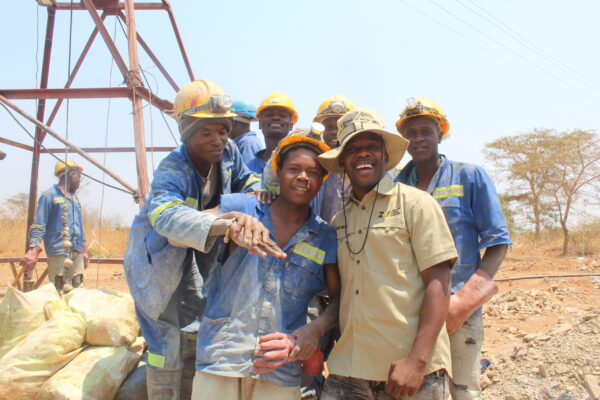
A significant exodus of Artisanal and Small-Scale Miners (ASM) from Zimbabwe’s lithium sector has been revealed in a new study, with many abandoning their mine sites entirely due to economic pressures and operational challenges, Mining Zimbabwe can report.
By Rudairo Mapuranga
This finding was presented by Joyce Machiri of the Zimbabwe Environmental Law Organisation (ZELO) during the launch of their “Mine to Market: Critical Minerals” situational report in Harare. The report assesses the entire lithium value chain, from extraction and processing to transportation and export.
According to Machiri, one of the study’s starkest discoveries was the state of ASM operations. “Most of the ASM sites were abandoned,” she stated. “They were not operational; they were affected by the price slump, which affected the big mines as well as the small-scale.”
The downturn in global lithium prices proved devastating for smaller operators, who lack the financial buffer of large corporations. Machiri described the visible aftermath of this exodus, noting that equipment and materials “were just seen lying around some mine sites; some were left along the road and the like.”
This retreat of ASMs from the lithium space coincides with other systemic issues plaguing the sector. The report identified challenges such as electricity and water shortages, which are hindering the processing of lithium into concentrate. These infrastructural deficits are also complicating the government’s efforts to enforce a ban on the export of raw lithium ore.
Machiri highlighted a critical lack of coordination among key government ministries and agencies, including the Minerals Marketing Corporation of Zimbabwe (MMCZ), which was notably absent at border posts. This absence, she said, creates significant oversight gaps, making it difficult to verify if the lithium being transported matches the accompanying documentation.
Furthermore, the study found a limited understanding of lithium minerals among officials from the Zimbabwe Revenue Authority (ZIMRA), coupled with a lack of weighbridges at borders to accurately determine the content of export trucks.
The ZELO report paints a picture of a lithium sector at a crossroads. While the government has approved numerous processing plants and attracted major mining companies, the departure of small-scale miners and persistent infrastructural and regulatory hurdles threaten the sustainability and equitable growth of this critical mineral industry. The findings call for a coordinated strategy to not only attract large investment but also to create a resilient and inclusive value chain that can withstand market fluctuations.