


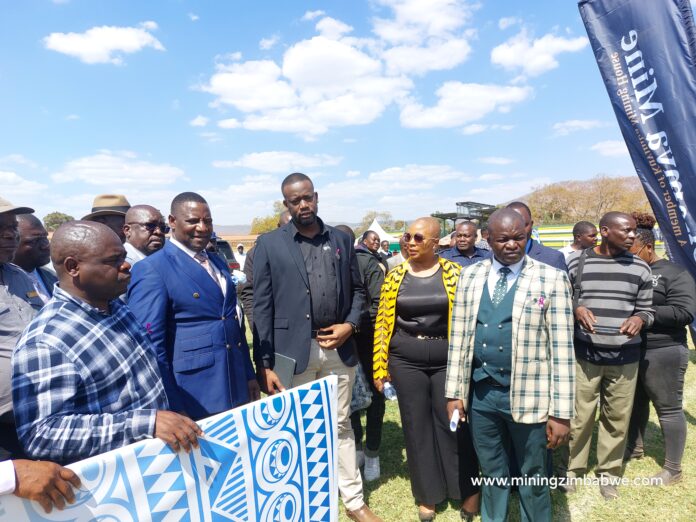
In an effort to ensure that the community it operates in benefits meaningfully from the resources extracted from its soil, Shamva Mine has in the past two years invested over US$0.5 million into a wide range of corporate social responsibility (CSR) initiatives in Shamva District, Mining Zimbabwe can report.
By Rudairo Mapuranga
From rehabilitating roads to upgrading hospital facilities, from township sanitation projects to mobile health outreach, the mine is deliberately positioning itself not just as a gold producer but as a development partner whose footprint extends far beyond the pit.
Speaking at the commissioning of Chaminuka Rural District Council Service Delivery Equipment, Shamva Mine General Manager Eng Gift Mapakame said the approach is neither accidental nor purely philanthropic. It is rooted in a deliberate understanding that mining, while driven by production targets and profitability, is ultimately dependent on the goodwill of the people whose land, heritage, and environment play host to extraction. Without that social licence, a mine can be rich in ore but poor in prospects.
It was against this backdrop that Engineer Mapakame addressed the Chaminuka Rural District Council Service Delivery Equipment Commissioning Ceremony. Standing before local leaders, community members, and national officials, Mapakame underscored the mine’s resolve to align its corporate goals with community priorities.
“We are guided by a CSR strategy anchored on four pillars: health, empowerment, education, and environmental stewardship,” he said. “This approach is rooted in the recognition that mining is only sustainable when the people who host it share in its benefits.”
Shamva Mine is a subsidiary of Kuvimba Mining House, part of its Gold Cluster, operating under the custodianship of the Mutapa Investment Fund, Zimbabwe’s sovereign wealth fund. This ownership structure has been crucial in reviving and stabilising operations.
“The history of Shamva Mine has been a rollercoaster,” Mapakame reflected. “We have traversed through changes in ownership, the highs and lows of productivity, and challenging times that tested our resilience. Today, we stand as an emblem of this district thanks to the commitment of our workforce, the support of our stakeholders, and the strategic vision of Kuvimba Mining House.”
To understand Shamva Mine’s CSR thrust, one must first understand the unique structure of Kuvimba Mining House (KMH) and its parent, the Mutapa Investment Fund. KMH is not just another mining operator. It is a diversified group with assets across gold, energy, platinum group metals (PGMs), and base minerals. This clustering allows for shared expertise, economies of scale, and the cross-deployment of resources across operations.
Under the Mutapa Investment Fund, Zimbabwe’s sovereign wealth vehicle, KMH’s model includes acquiring distressed or underperforming assets and resuscitating them into productive, revenue-generating operations. This model has been applied successfully in several mines, and Shamva is a flagship example.
For Shamva, being part of such a group means access to capital, technical support, and operational oversight that might otherwise be beyond reach. It also means being aligned with a shareholder, the sovereign wealth fund, whose mandate goes beyond profit to include national economic development.
Mapakame was quick to credit national leadership for the environment in which mines like Shamva have been able to stabilise.
“Our honour is due to His Excellency, the President of the Republic of Zimbabwe, for visionary and transformative leadership that has placed our mines at the centre of Zimbabwe’s economic growth and sharpened our regional and international competitiveness,” he said.
This alignment between national policy, corporate objectives, and community welfare is at the heart of Shamva’s CSR. By embedding CSR into its business strategy, the mine ensures that its contributions are not ad hoc donations but part of a coherent plan that reinforces both operational sustainability and community resilience.
Over the past two years, the mine’s CSR expenditure, exceeding US$500,000, has been channelled into projects that address pressing needs in infrastructure, health, and sanitation.
1. Road Rehabilitation and Maintenance
The Shamva–Bindura Highway is not just a road. It is a vital artery linking the district to the provincial capital and beyond. By keeping it serviceable year-round in partnership with local authorities and the parent ministry, the mine supports economic activity that boosts the provincial GDP. This is not charity; it is strategic investment in a logistical lifeline that also benefits the mine’s own operations.
2. Sanitation Upgrade in Wadzanai Township
Phase one of the Wadzanai Township sewer upgrade is another standout project. Designed to overhaul the township’s wastewater management system, it addresses a longstanding public health risk. Proper sewage collection and treatment will help prevent waterborne diseases like cholera and typhoid, protect local water sources, and preserve the district’s ecosystem. The project has both immediate and long-term benefits, from reducing disease outbreaks to safeguarding environmental integrity.
3. Hospital Support and Health Infrastructure
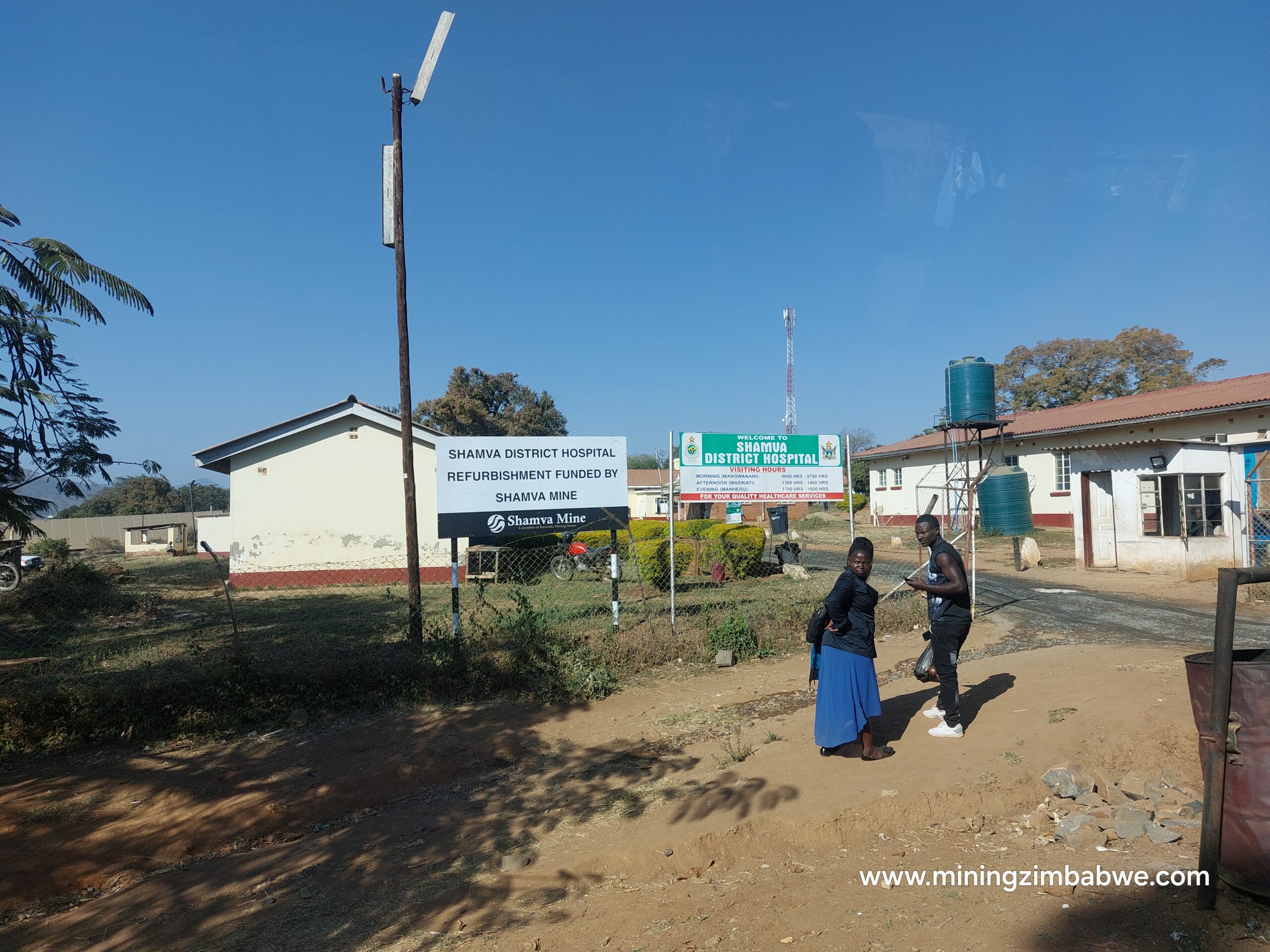
Shamva District Hospital serves as the referral centre for 20 clinics. Recognising its centrality to district health, the mine has invested in expanding the mortuary, upgrading wards, and refurbishing ablution facilities. These improvements have enhanced patient care and operational capacity.
The Shamva Gold Mine Clinic also runs a mobile wellness outreach programme, bringing primary healthcare to remote and underserved communities. In a district where distances and transport costs can prevent access to care, such initiatives have a profound impact.
These projects illustrate a deeper principle: that the social licence to operate is not granted once and forgotten. It must be renewed continually through actions that demonstrate respect for, and investment in, the host community. For Shamva, this has meant not only spending money but also building partnerships with local authorities, community leaders, and residents.
As Mapakame put it: “We are privileged to be part of this resilient community. We work together, in partnership, to develop Shamva.”
Zimbabwe’s Vision 2030, to become an upper-middle-income society, relies heavily on mining as a driver of economic growth. But it also emphasises that growth must be inclusive and sustainable. Shamva Mine’s CSR agenda aligns neatly with this vision, demonstrating how a mining operation can be both profitable and developmental.
In the broader context, the mine’s initiatives also support the United Nations Sustainable Development Goals (SDGs), particularly those related to health, clean water and sanitation, infrastructure, and partnerships.
Of course, CSR is not without its challenges. Economic headwinds, fluctuating gold prices, and operational demands can all put pressure on CSR budgets. Mapakame acknowledged that while the mine is “distant from achieving all its priorities” due to various constraining factors, it remains committed to its strategic pillars.
Looking ahead, the mine plans to expand its CSR footprint, particularly in youth empowerment and environmental management. This could include vocational training programmes, support for small-scale agriculture, and more robust environmental rehabilitation efforts.
Shamva’s example is particularly significant in a country where the mining sector’s relationship with local communities has at times been strained. By demonstrating that mining revenues can be reinvested locally in ways that visibly improve quality of life, the mine sets a standard for others to follow.
The model is clear:
Embed CSR into corporate strategy.
Align projects with both community needs and operational priorities.
Partner with local institutions for sustainable delivery.
If more mines adopted this approach, the narrative around mining in Zimbabwe could shift decisively from one of extraction and displacement to one of shared growth and development.
The gold extracted from Shamva may fill national coffers, but the benefits flowing into the district are building something equally valuable: a stronger, healthier, and more resilient community. By aligning corporate strategy with community development, Shamva Mine is proving that the social licence to operate is not an abstract concept but a living commitment, one measured in kilometres of road, litres of clean water, hospital beds, and healthier lives.
In the words of Engineer Gift Mapakame: “We work together, in partnership, to develop Shamva.” That, ultimately, is the gold standard for mining in Zimbabwe.

