




The Zimbabwe mining industry has its challenges, but the numbers tell a story that investors cannot afford to ignore. The country generated a record US$8.5 billion in mineral export earnings in 2025, up from US$5.9 billion in 2024, while international mining companies continued committing hundreds of millions of dollars to lithium processing, platinum development and mine expansion.
By Keith Sungiso
The question for investors is no longer simply whether Zimbabwe has mineral wealth. It is whether they can structure commercially viable projects that navigate its operating environment, capture value from its resources and deliver competitive returns.
For companies willing to undertake the necessary due diligence, Zimbabwe is already presenting investment opportunities that extend well beyond its reputation for political and economic risk.
The numbers are making the case
US$8.5bn
2025 mineral exports
Record export earnings
Zimbabwe’s mining sector generated US$8.5 billion in export earnings in 2025, compared with US$5.9 billion in 2024 — an increase of approximately 44%. This demonstrates the sector’s growing capacity to generate foreign currency.
US$2.37bn
Q1 2026
Mineral exports continued to grow
Mineral export earnings rose by 57.4% year on year in the first quarter of 2026, from US$1.31 billion to US$2.37 billion. Gold and platinum group metals were significant contributors.
US$3.52bn
Licences since 2023
A pipeline of new mining projects
Mining licences worth US$3.52 billion have been issued since 2023, according to reporting by Mining Weekly. The figure indicates the scale of projects entering the investment pipeline, although licence values are not equivalent to capital already spent.
Mineral types
A diversified resource base
Zimbabwe has close to 40 different minerals, including gold, platinum group metals, chrome, lithium, coal and diamonds. This diversity gives investors several possible entry points instead of requiring them to depend on a single commodity.
These figures do not mean every mining project in Zimbabwe is profitable. They demonstrate that the sector is commercially active, that mineral exports are generating substantial revenues and that companies continue to commit capital despite the risks.
South African companies are already investing heavily
One of the strongest arguments against the claim that Zimbabwe is an unattractive mining destination is the presence of established South African mining groups. These are companies with experience operating in a competitive regional mining environment, and their Zimbabwean operations demonstrate that cross-border investment is already a reality.

Zimplats, a subsidiary of South Africa’s Impala Platinum (Implats), is a major example of long-term cross-border investment. The company has invested more than US$750 million in expansion, beneficiation and energy projects in Zimbabwe, according to Mining Weekly.
The US Geological Survey reported that Zimplats produced 17,627 kilogrammes of platinum group metals in 2024, making it Zimbabwe’s leading PGM producer that year. Its continuing development of the Mupani and Bimha mines illustrates the importance of reinvestment in sustaining production as existing ore reserves are depleted.

Mimosa is another established platinum producer operating in Zimbabwe. It is jointly owned by South Africa’s Impala Platinum (Implats) and Sibanye Stillwater. The company is investing more than US$200 million in its operations.
Its presence demonstrates that Zimbabwe’s PGM sector continues to attract capital for an established mining business, rather than solely speculative exploration. For investors, the relevant considerations include the mine’s remaining resource, production costs, capital requirements and ability to sustain output over time.
3. Tharisa – Karo Platinum
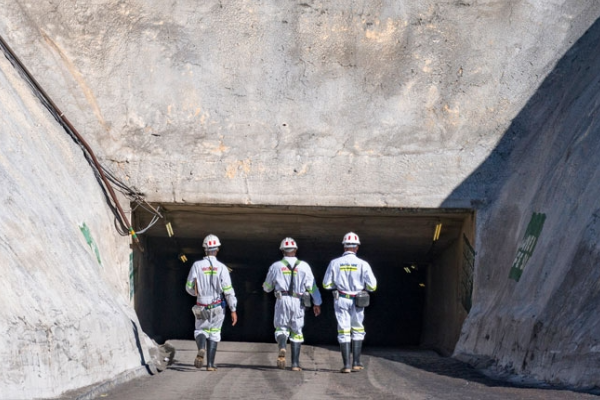
Tharisa’s Karo Platinum project on Zimbabwe’s Great Dyke represents a major new investment in the country’s PGM industry. In its October 2026 production report, Tharisa said US$240 million had been invested in the first phase of the project against estimated capital expenditure of US$516 million.
The company reported that the project was fully funded through a US$300 million senior secured bond, with first ore to the mill targeted for the fourth quarter of 2027. This is evidence of substantial capital commitment, although the project remains under development and should not yet be described as an operating mine.
The significance of these investments is straightforward: established regional companies have allocated capital to Zimbabwean mineral assets, processing capacity and future production. Their decisions do not eliminate country risk, but they challenge the blanket assertion that the country is uninvestable.

4. Unki Mine – Anglo American Platinum / Valterra Platinum
Unki is one of Zimbabwe’s most important examples of a large, established international mining operation. It was wholly owned by Anglo American Platinum, which became Valterra Platinum following the 2025 demerger.
Valterra’s 2025 integrated report records 219,700 PGM ounces produced at Unki, down 8% from 240,000 ounces in 2024. Despite the lower production, EBITDA increased 83% to R2.7 billion, supported by lower costs and a 24% increase in the dollar PGM basket price.
5. Caledonia Mining Corporation – Canada-founded, internationally listed gold producer
Caledonia, which operates Blanket Gold Mine near Gwanda, is another example of foreign capital invested in Zimbabwe outside the South African and Chinese groups.
Blanket produced 76,213 ounces of gold in 2025, compared with 76,656 ounces in 2024.
Caledonia is advancing the Bilboes gold project, for which its November 2025 feasibility study projected life-of-mine production of 1.55 million ounces over 10.8 years, with first production expected in late 2028. These are feasibility-study projections, not production already achieved.
Chinese investors are transforming Zimbabwe’s lithium industry
The investment story is not confined to South African platinum producers. Chinese companies have become major participants in Zimbabwe’s lithium sector, acquiring mineral assets, expanding production and investing in processing facilities.
The scale of these commitments is particularly important because lithium connects Zimbabwe’s mineral resources to international battery-material supply chains.

6. Zhejiang Huayou Cobalt – Arcadia Lithium
Huayou acquired the Arcadia lithium project near Harare for US$422 million in 2022. It subsequently invested approximately US$300 million in a lithium concentrate plant and US$400 million in a lithium sulphate processing facility.
The sulphate plant, completed in 2025, was designed for annual capacity exceeding 50,000 tonnes. The investment is significant because it moves processing beyond the production of lithium concentrate towards an intermediate material used in battery-grade chemical manufacturing.
7. Sinomine Resource Group – Bikita Minerals
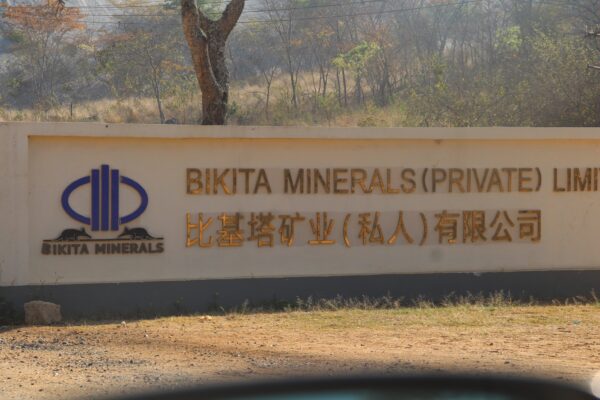
Sinomine acquired Bikita Minerals for US$180 million in January 2022 and subsequently invested approximately US$300 million in expanding operations and developing a spodumene concentrate plant.
The company also announced plans for a further US$500 million smelter investment. That proposed expenditure should be distinguished from money already invested.
Bikita demonstrates the attraction of Zimbabwe’s lithium and associated mineral resources to a company prepared to expand an established mining asset and pursue downstream processing.

8. Chengxin Lithium Group and Canmax Technologies – Sabi Star
Chengxin and Canmax paid approximately US$77 million for the Sabi Star mine in 2021, followed by about US$130 million in development and concentrator investment.
The concentrator was completed in 2023. This example illustrates how foreign investors can combine acquisition expenditure with subsequent project development to establish mineral production capacity.

9. Yahua Group – Kamativi Mining Company (KMC)
Yahua is involved in the Kamativi lithium project through a joint venture with the Zimbabwean state. In February 2026, it announced plans for a lithium sulphate plant at the mine.
The project adds another example of foreign participation in Zimbabwe’s effort to expand domestic mineral processing. The proposed plant should not be confused with a completed facility or confirmed commercial production.
10. Dinson Iron and Steel Company (DISCO) – Manhize steel project

Dinson Iron and Steel Company (DISCO), a subsidiary of China’s Tsingshan Holding Group, is developing one of Zimbabwe’s largest industrial investments at Manhize, between Mvuma and Chivhu.
The project has a projected investment value of US$1.5 billion. Production began in 2024, with the plant subsequently expanding into steel bars and other products. Phase One has an indicated annual production capacity of approximately 600,000 tonnes of steel, with further expansion planned.
The project is significant because it connects mining with domestic manufacturing. Instead of relying entirely on imported steel products, Zimbabwe can increasingly supply local construction and industrial markets from a plant operating within the country.
In September 2026, Mining Zimbabwe reported that exports across four selected iron and steel product categories reached approximately US$150.3 million in the first seven months of 2026, compared with US$46.3 million during the same period in 2025 — an increase of about 224%. These figures cover selected product categories across Zimbabwe’s trade data and should not be attributed exclusively to DISCO without a company-level breakdown.The company has also outlined plans for an 800-hectare Special Economic Zone at Manhize that could accommodate more than 300 businesses. If realised, this could create more opportunities for steel fabrication, roofing products, pipes, nails and other downstream manufacturers.
11. Mutapa Platinum Group (MPG)
Mutapa Platinum Group has secured a US$100 million financing facility to restart development of the Darwendale platinum project, with funds already being disbursed and civil works under way at the processing plant.
The funding moves one of Zimbabwe’s largest undeveloped PGM projects into construction after years of delays over financing and a change in development strategy.
Darwendale has an estimated resource of about 44 million ounces of PGMs, while Mutapa has put the wider development cost at about US$500 million and previously targeted initial throughput of at least 2 million tonnes a year.
The investment opportunity extends beyond lithium
Although lithium has attracted significant attention, Zimbabwe’s mining investment case is broader.
Gold
Zimbabwe produced a record 46.7 tonnes of gold in 2025, according to figures cited by Fidelity Gold Refinery (FGR). The country is targeting 50 tonnes in 2026, creating potential opportunities in exploration, mine development, processing, equipment and underground mining services.
Chrome
Zimbabwe’s mineral portfolio includes substantial chromium resources. Opportunities can extend beyond extraction to processing, ferrochrome production, energy supply and logistics, although project economics depend on power costs, market prices and operating conditions.
Mining services and infrastructure
Mining operations require reliable electricity, haulage, rail and road transport, pumps, ventilation, drilling equipment, engineering services and mineral-processing technology. These are potential commercial opportunities for suppliers and service providers, not guarantees of contracts or returns.
Why investors should pay attention now
One of the clearest indicators of opportunity is the amount of capital the industry still needs.
At the Chamber of Mines of Zimbabwe’s annual mining conference in June 2026, outgoing president John Musekiwa said the industry required approximately US$10 billion in capital investment over five years to sustain operations and expand output.
That requirement represents a funding challenge, but it also identifies areas where investors, lenders, equipment manufacturers and engineering companies could participate.
The opportunity is not limited to purchasing mining claims. It includes financing mine expansions, developing processing plants, improving energy reliability, supplying equipment, upgrading infrastructure and establishing businesses that support mining operations.
The government’s push towards mineral beneficiation also creates a potential opening for investors with processing technology and access to downstream markets. However, the planned restriction on lithium concentrate exports from January 2027 means companies considering lithium investments must assess the applicable regulations and processing requirements carefully.
The correct approach is neither to dismiss Zimbabwe outright nor to assume every mineral project will succeed. Investors need project-level due diligence, realistic price assumptions, reliable cost estimates, secure legal rights and a clear understanding of how revenue will be earned and repatriated.
Rounding Up: Zimbabwe deserves to be assessed on evidence, not reputation
In a conversation with a South African friend, Sizwe, we agreed that Zimbabwe’s potential is big and evidence is substantial. However, the challenge may be that those who do research may just be doing it behind a desk in a cosy, air-conditioned office in comfortable swivel chairs, getting very limited information.
For those conducting research on Zimbabwe’s mining industry, it is advisable to prioritise local publications with journalists on the ground, as they often provide deeper insights, first-hand information and context that international media outlets may overlook and usually lack direct access to.
Zimbabwe recorded US$8.5 billion in mineral export earnings in 2025. South African-linked companies have invested heavily in platinum operations, while Chinese investors have committed hundreds of millions of dollars to lithium mines and processing facilities. New projects such as Karo Platinum demonstrate that capital continues to enter the sector even as investors navigate considerable risks.
These investments do not prove that Zimbabwe is a low-risk destination, nor do they establish that every investor will make money. They demonstrate something more relevant: Zimbabwe is attracting capital, producing minerals at scale and creating opportunities that merit serious commercial evaluation.
For investors still relying on an outdated perception of Zimbabwe as a country to avoid entirely, the question should be whether that blanket judgment remains defensible in light of the evidence.
The companies already operating and investing in the country suggest that the answer requires a closer look. There are areas that need improvement, like Dispute resolution, government needs to take a tough stance to totally eliminate this problem.
Keith Sungiso is the founder of Timelison Media, the publisher of Mining Zimbabwe.