

…as Govt Moves to Plug Gaps in Previous RMA Audits
The Government has warned that the days of unchecked non-compliance in Zimbabwe’s mining operations are over, as authorities move swiftly to close gaps identified in previous Responsible Mining Audits (RMA) and strengthen oversight across the sector, Mining Zimbabwe reports.
By Ryan Chigoche
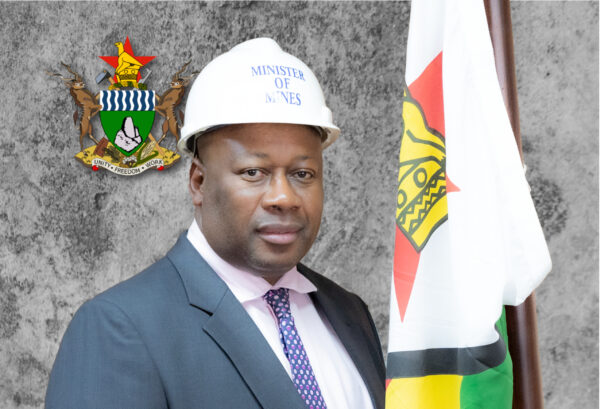
This was the key message delivered by Minister of Mines Winston Chitando in his foreword to the Responsible Mining Audit (RMA) Gap Analysis Report, compiled by ENM Advisory Group, which evaluated the 2023 and 2024 responsible mining audits. His remarks underscore the government’s determination to turn lessons from past audits into concrete reforms.
The 2025 Gap Analysis Report is particularly timely, coming as the Ministry of Mines is developing a National Responsible Mining Audit Framework (NRMAF) designed to address shortcomings identified in previous audits. This effort aligns with the government’s broader push for stricter oversight, reinforced by President Emmerson Mnangagwa’s warning that irresponsible miners will not be tolerated.
The need for reform is reinforced by the findings of the 2024 audit, which revealed significant progress from the inaugural 2023 exercise. The Ministry audited 728 mining sites in 2024, up from 424 in 2023, surpassing the targeted 712 audits. Alongside this expansion, fines totalling US$680,000 were imposed and suspensions increased, reflecting a more rigorous enforcement approach.
Building on this momentum, Minister Chitando emphasised the importance of moving beyond checklist-style audits when launching the RMA Gap Analysis Report. He highlighted the need for modern, principles-based standards, stronger community engagement, real-time digital tracking, and effective follow-up to ensure non-compliant operations are held accountable.
“The audits conducted in 2023 and 2024… demonstrated our capacity to enforce compliance and address widespread non-adherence to our national statutes,” the Minister said, framing the expanded programme as a “crucial first step” in resetting mining governance.
He added that the notable increase in fines and suspensions is more than an enforcement metric. “It is a clear signal that the days of unchecked non-compliance are over. We have shown that a multi-agency approach to mining oversight can yield tangible results, bringing to light critical issues related to safety, labour, ethical business practices, human rights, environmental degradation, and fiscal responsibility.”
Looking ahead, as the Ministry prepares to implement the improved audit framework with ENM Advisory Group providing consultancy support, Minister Chitando acknowledged that more work remains. “However, as this report candidly reveals, our work is far from complete. A true measure of responsible mining goes beyond legal compliance. It is about a holistic commitment to Environmental, Social, and Governance (ESG) principles that underpin a Social License to Operate,” he said.
The RMA process itself, piloted in 2023 following Cabinet approval, marked a major shift in mining oversight. For the first time, inspections were conducted by multi-agency teams drawing authority from various Ministries, Departments, and Agencies (MDAs), demonstrating a coordinated approach to governance.
Yet, as the RMA Gap Analysis Report (2023–2024) shows, despite these efforts, gaps persist in the country’s mining oversight. Audits remain largely reactive, focusing on statutory compliance rather than broader sustainability or developmental outcomes.
This limitation is compounded by operational inconsistencies. Even with a centralised Command Centre at the Ministry of Mines, each Ministry, Department, and Agency (MDA) relied on its own checklists, interpretations, and reporting templates. Such fragmentation has led to uneven findings and left holes in the national compliance picture.
Small-scale and unregulated mining operations were identified as particularly high-risk. Many operators lacked mine managers, licences, or basic safety infrastructure such as fenced shafts and secure tailings dams. Labour and taxation violations were widespread, with hundreds employing undocumented expatriates or failing to remit taxes.
The report stresses that enforcement alone cannot resolve these structural challenges. Without capacity-building, guidance, and support, artisanal and small-scale miners remain vulnerable to non-compliance. This underscores the need for a more integrated and proactive approach to oversight.
Even among larger, more structured mines, issues persist. While these operations largely complied with labour, environmental, and fiscal requirements, audits revealed persistent problems such as expired work permits, land-use irregularities, and disputes with rural district councils, showing that no operator is entirely immune to regulatory lapses.
In contrast, Custom Milling Centres and Elution Plants showed complete non-compliance. None held valid milling or elution licences as required under SI 178 of 1990, and all lacked environmental permits for hazardous substances and air emissions. Standalone cyanidation plants operated entirely outside the regulatory framework, without approvals, operational records, or ore movement documentation, posing serious risks to public safety and the environment.
Certain areas, particularly mining hotspots such as Kwekwe, were flagged as epicentres of illegal operations, unsafe shaft construction, uncontrolled use of explosives, and severe land degradation. Law enforcement presence in these zones was largely ineffective, overwhelmed by the scale of illicit activity and limited resources. This highlights the particular challenges of oversight in high-risk regions.
Against this backdrop, Minister Chitando emphasised the limitations of a purely checklist-based enforcement approach and called for a shift towards ESG principles to guide responsible mining. “A true measure of responsible mining goes beyond legal compliance… We must move beyond a checklist approach to embrace modern, principles-based standards,” he said, noting that small-scale miners require both oversight and supportive interventions.
While the audits exposed extensive violations across Zimbabwe’s mining sector, they also laid the groundwork for long-term reform. The multi-agency model has demonstrated that coordinated enforcement can yield tangible results, and Minister Chitando’s declaration that “the days of unchecked non-compliance are over” is being positioned as the defining benchmark for a new era of mining governance in Zimbabwe.

