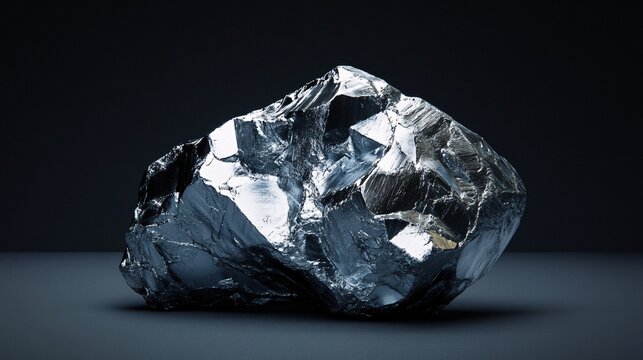
In 2025, the Platinum Group Metals (PGMs) market is experiencing a notable price rebound. Platinum has surged nearly 25% year-to-date, breaking above US$1,250 per ounce—its highest level in four years.
By Ryan Chigoche
Meanwhile, palladium trades near US$1,100 per ounce, and rhodium holds strong around US$5,400 per ounce, reflecting tight market conditions across the entire PGM complex.
This price strength is underpinned by a growing imbalance between supply and demand.
The World Platinum Investment Council (WPIC) forecasts a 966,000-ounce platinum deficit for 2025, marking the third consecutive annual shortfall.
South Africa, the world’s largest platinum producer, supplying over 80% of global output, continues to grapple with power outages, mine shutdowns, and chronic underinvestment, constraining new supply growth.
WPIC warns that if current trends persist, above-ground platinum inventories could shrink to just six weeks of demand cover by 2028, applying sustained upward pressure on prices.
Despite these supply concerns, platinum’s supply and demand are highly price inelastic in the short term—meaning recent price gains have yet to significantly boost production or curb demand, keeping the market structurally tight.
Platinum’s industrial demand remains robust, anchored by its essential role in automotive catalytic converters, growing applications in the hydrogen economy, and resilient jewellery markets, particularly in China.
The metal’s expanding use in hydrogen fuel cells and electrolysers ties it closely to global decarbonization efforts, adding new layers of long-term demand.
Investor Sentiment Turns: Platinum as the Next Big Precious Metal Play
As platinum fundamentals tighten, investor sentiment is also shifting.
After focusing heavily on gold over the past two years, institutional and retail investors are increasingly viewing platinum as a value play within the precious metals space.
Gold has rallied more than 32% in 2025, crossing above US$3,500 per ounce, but platinum’s relatively lower price and tightening fundamentals are drawing fresh interest.
Commodity research firm GSC Commodity Intelligence described the current market as “a rare alignment of macroeconomic, industrial, and investment forces,” forecasting that platinum prices could climb toward US$4,000 per ounce in the coming years, potentially outpacing gold’s gains.
Growing speculative interest and ETF inflows have added momentum to the rally. Investors are increasingly seeing platinum not only as an industrial metal but also as a store of value and inflation hedge.
Supporting this optimism, Valterra Platinum CEO Craig Miller shared a bullish outlook in a recent interview, highlighting structural supply deficits and resilient demand as key drivers.
Miller downplayed concerns over battery electric vehicles (BEVs) eroding PGM demand, noting, “BEVs accounted for just 10% of global vehicle sales in 2023 and 2024.
That leaves 90% of the market still reliant on internal combustion engines or hybrids—both of which depend on PGMs.”
Valterra, which owns Zimbabwe’s Unki Mine alongside South African operations at Mokala Kwena, Amandelbult, and Mototolo, is focused on capital discipline and operational efficiency to capitalise on the price environment.
Miller confirmed the company has no immediate plans for mergers or acquisitions, opting instead to maximise value from its existing assets.
The recent uplift in PGM prices is also positive news for emerging Zimbabwean developer Karo Platinum, whose commissioning has been delayed by years of subdued market conditions.
Karo Platinum’s flagship Karo Project, located in Zimbabwe’s Great Dyke region, is expected to produce approximately 190,000 ounces of PGMs annually at full capacity once fully operational.
The improving market backdrop enhances the project’s prospects, positioning Karo as a significant contributor to Zimbabwe’s expanding PGM output.
Meanwhile, Zimbabwe’s established producers are experiencing varied operational performances in 2025 amid these market shifts.
Zimplats, the country’s largest platinum producer and a subsidiary of Impala Platinum, reported an 11% year-on-year decline in mining volumes during the first quarter of 2025, primarily due to shortages of trackless mobile machinery and intermittent power disruptions.
This downturn underscores ongoing operational challenges but also highlights the importance of sustained favourable prices to support investment and stability.
In contrast, Mimosa Mining Company, co-owned by Sibanye-Stillwater and Impala Platinum, recorded a 13% increase in 6E concentrate production for the quarter ending March 31, 2025.
This growth was driven by improved plant recoveries despite facing power interruptions and difficult ground conditions.
Mimosa’s resilience signals the potential for Zimbabwean producers to capitalise on rising PGM prices through operational efficiencies and ongoing optimisation.
Rally Ripples Across the PGM Basket
The platinum rally is also influencing other PGMs.
Palladium, which peaked above US$2,500 per ounce in previous years, currently trades around US$1,100, offering potential accumulation opportunities amid steady automotive demand from petrol and hybrid vehicles.
Rhodium, often the most volatile PGM, remains elevated near US$5,400 per ounce, with forecasts indicating a 23% decline in inventories this year, sustaining a tight market.
While platinum leads, the performance of palladium and rhodium remains closely tied to the broader PGM supply-demand fundamentals.
With multi-year supply deficits, diversified industrial demand, green energy adoption, and renewed investor focus, analysts see 2025 as the possible start of a long-term upcycle in PGMs.
For producers like Valterra, emerging players like Karo Platinum, and established operators such as Zimplats and Mimosa, platinum’s resurgence marks a pivotal moment, reestablishing its central role in the global precious metals market.
This article first appeared in the Mining Zimbabwe Magazine Edition 81