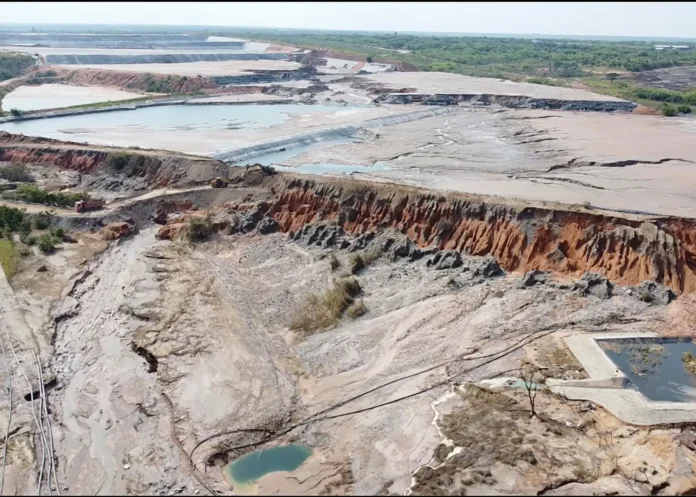
A toxic spill from a copper mine in northern Zambia has escalated into one of the country’s most severe environmental disasters, according to a new investigation, confirming a recent stark warning from the U.S. Embassy in Zambia.
By Ryan Chigoche
About a week ago, the embassy ordered all U.S. government personnel to leave the affected region after reports indicated that hazardous and carcinogenic substances, including arsenic, cyanide, uranium, and other heavy metals, had contaminated a major river system flowing through Chambishi and the nearby city of Kitwe. Officials also raised the possibility that some of these toxic substances had become airborne.
The warning relates to an accident at the Chinese-owned Sino-Metals Leach Zambia mine in February 2025.
A few days ago, the Zambian government dismissed concerns over dangerous pollution in the Copperbelt mining region, asserting that water quality had been restored and that there was no cause for alarm.
However, recent independent investigations now indicate the spill was far more severe than official reports suggested, raising alarm for communities, ecosystems, and Zambia’s economic future.
Massive Spill at Sino-Metals Leach Zambia
Environmental experts from Drizit Zambia Ltd estimate that approximately 1.5 million tons of toxic sludge leaked from the Sino-Metals Leach Zambia Ltd mine near Kitwe.
By comparison, official statements initially claimed only 50,000 tons had been released, highlighting significant discrepancies in reporting and transparency.
U.S. Ambassador Michael Gonzales described the incident as the “sixth-worst mining disaster in history,” underscoring the international recognition of its severity.
How the Spill Occurred
The disaster began on February 18, 2025, when heavy rains caused a dam wall at the mine’s waste reservoir to collapse.
The dam contained sulphuric acid-laden sludge used in copper extraction.
Once breached, millions of tons of toxic material flowed into the Mwambashi River, threatening downstream communities, farmland, and the broader ecosystem.
Preliminary reports suggest the dam’s structural integrity had been compromised by seasonal rains, though questions remain about maintenance and safety practices prior to the failure.
Environmental Impact
Immediate Damage
The acidic sludge quickly devastated the Mwambashi River, lowering pH levels to 1, so corrosive it could reportedly dissolve human bones. Aquatic life was wiped out for miles, and nearby farmland and crops were contaminated.
The Mwambashi feeds into the Kafue River, a critical water source for Lusaka and other communities. The presence of heavy metals, including arsenic, cyanide, and uranium, suggests that contamination could extend far beyond the immediate area. About 800 residents remain in the fallout zone.
Drizit warns that without urgent intervention, future generations could face severe health consequences, as heavy metals may accumulate in the food chain.
Government Response
The Zambian government has deployed hundreds of tons of lime into rivers to neutralise acidity. Officials claim water quality has been restored and publicly demonstrated safety by drinking tap water in Kitwe.
Independent assessments, however, indicate that heavy metal contamination persists, posing ongoing risks to local communities. No deaths or confirmed cases of poisoning have been reported, but monitoring systems may be insufficient to detect long-term effects.
Economic and Diplomatic Implications
The spill threatens Zambia’s copper production ambitions, including President Hichilema’s plan to triple output to 3 million tons.
The incident also raises questions about the $1.3 billion investment pledged by Sino-Metals’ parent company, China Nonferrous Mining Corp., in 2023.
Diplomatically, the disaster has strained Zambia-China relations, coming at a time when Zambia is restructuring $5.6 billion in Chinese debt.
The U.S. Embassy’s evacuation order highlights international concern over environmental oversight and public safety in the region.
Accountability and Transparency
Drizit Zambia reported resistance from Sino-Metals during its assessment. The company terminated the contract shortly before the report’s conclusion, raising questions about attempts to suppress the true scale of the disaster.
Health Risks
Communities along the Mwambashi and Kafue Rivers face continued exposure to heavy metals through water, soil, and food. Children, pregnant women, and the elderly are particularly vulnerable. Chronic exposure may result in cancer, developmental issues, and other long-term health effects.
Experts stress that comprehensive health monitoring and remediation are urgently needed to prevent generational impacts.
Lessons from Other Mining Disasters
With a spill volume of 1.5 million tons, this ranks among the largest tailings disasters globally. The initial underreporting mirrors patterns seen in previous accidents worldwide.
Recovery could take decades. Effective remediation will require immediate containment, chemical neutralisation, removal of contaminated soil, and long-term ecosystem monitoring. Cleanup costs may reach hundreds of millions of dollars.
A full remediation plan must address both acid and heavy metal contamination. Continuous monitoring of the Mwambashi and Kafue Rivers, restoration of agricultural land, and protection of surrounding ecosystems are essential.
Establishing accountability, independent verification, and adherence to international mining standards will be critical to rebuilding public trust. Regulatory reforms and stricter environmental oversight could emerge as lasting lessons from this catastrophe.