


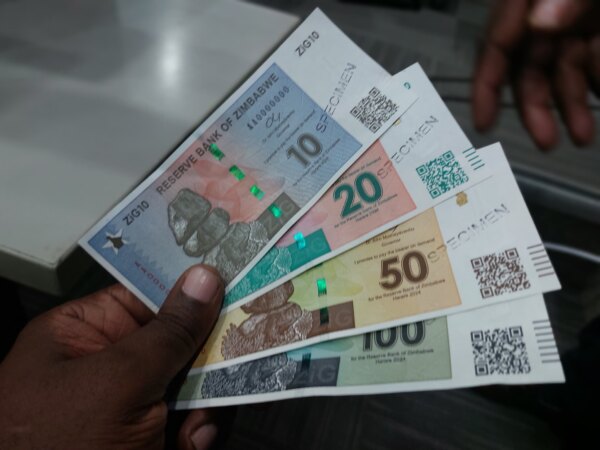

Zimbabwe’s platinum miners are staring down a liquidity abyss as unpaid export surrender balances in ZiG have ballooned to more than US$228 million, pushing an already fragile sector to its operational limits, industry leaders have warned.
By Rudairo Mapuranga
The staggering figure, confirmed at the recent PGM Producers’ Indaba at the Chamber of Mines Annual Conference in Victoria Falls, reflects the growing mismatch between foreign currency earnings and the government’s delayed settlement of the mandatory 30% surrender portion—paid in the local ZiG currency. Producers say the accumulating backlog is not just a balance-sheet headache but an existential threat that is stalling exploration, starving local suppliers, and forcing some operators to review their Zimbabwean exposure.
“The ZiG surrender delays have effectively locked up working capital equivalent to nearly four months of operating costs for some mines,” a senior executive who attended the indaba told Mining Zimbabwe on condition of anonymity. “We’re being asked to fund the state’s cash-flow gap while our own equipment ages, contractors go unpaid, and new shafts remain on ice.”
Fresh concerns have emerged around downstream service providers, while community trust funds are also feeling the pinch, as miners have slashed procurement budgets by over 15% in the first half of 2026 to preserve dollar-denominated reserves. The unpaid ZiG portion, which companies cannot easily use to import critical reagents or pay expatriate staff, has created a perverse two-speed economy within the mining houses.
Valterra’s Unki operation confirmed a US$100 million claim in February. Industry sources now suggest the combined figure has crept higher as new surrenders from Q1 2026 have been added without corresponding settlements.
The crisis comes at a cruel juncture. Global PGM prices recovered modestly from 2025 lows, boosting export earnings to US$1.9 billion last year, but producers argue they cannot leverage that uptick because the ZiG surrender mechanism acts as a drag on dollar liquidity. The central bank and Treasury have acknowledged the backlog and begun partial repayments, but miners say the pace is too slow to reverse project deferrals, notably a planned US$400 million concentrator expansion that has been shelved indefinitely.
Production data underscores the urgency: platinum output dipped to 17,882kg in 2025 from 18,911kg in 2024, while palladium fell to 14,620kg. The Chamber of Mines is forecasting a 5% rebound this year, but that projection hinges on improved cash flow, which the US$228 million ZiG albatross makes increasingly unlikely.
“We are not asking for a waiver or a handout; we are asking for the rules of the game to be honoured,” said Alexander Mhembere, Chair of the Platinum Producers Association. “Every day that this ZiG balance remains unsettled, we are effectively subsidising the fiscal deficit with our own survival. That cannot continue if Zimbabwe wants to remain a top-ten PGM producer.”
Mining executives are now calling for a radical overhaul of the surrender framework—either switching to a fully dollarised export retention model or introducing a guaranteed settlement window of no more than 30 days. Without such reforms, they warn, the US$228 million figure could exceed US$300 million by year-end, turning a crisis point into a full-scale collapse that would imperil 18,000 direct jobs and nearly 30% of formal mining employment.
For now, the sector watches and waits, but patience, like dollar liquidity, is wearing dangerously thin.

