



Zimbabwe’s mining industry could require approximately 4,000 megawatts (MW) of electricity by 2030, as expanding mining projects and beneficiation investments intensify pressure on the country’s generation capacity and transmission infrastructure.
By Ryan Chigoche
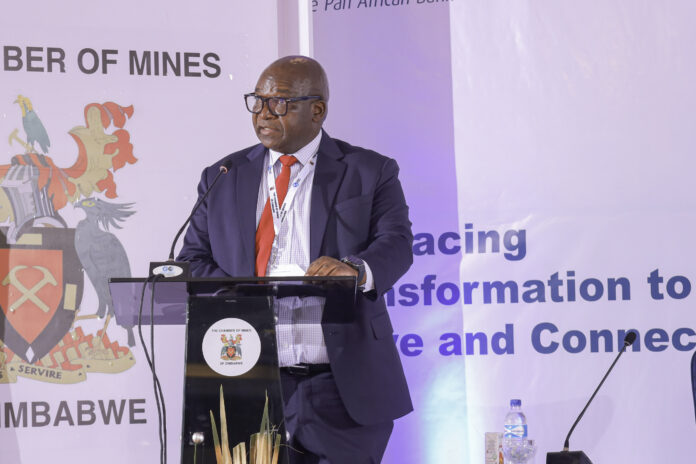
Chamber of Mines of Zimbabwe Chief Executive Officer Isaac Kwesu told the Ministry of Mines and Mining Development’s strategic planning workshop in Kadoma that the mining sector currently requires approximately 1,500MW against national electricity generation of about 1,800MW, excluding imports.
He said additional applications submitted by mining companies to ZESA for expansion projects represented a further 2,500MW in electricity requirements, highlighting the scale of demand expected as the industry expands.
“When you compare the demand for power for the mining sector, they have 1,500 megawatts, and current Zimbabwe is generating 1,800, excluding imports,” Kwesu said. “Only mining, we want 1,500.”
Kwesu said mining companies were not relying exclusively on the national utility, with producers pursuing ring-fenced electricity supply arrangements with ZESA and investing in captive solar and other clean-energy projects.
However, these initiatives were expected to generate only about 1,200MW, with half of that capacity earmarked for ferrochrome producers.
“If we do it on our own, we are only able to generate less than half of what our projects require,” Kwesu said. “This remains a big issue. It’s an elephant in the room. In the absence, we have to meet the shortfall through imports.”
Electricity imports, however, face their own constraints, particularly the capacity of Zimbabwe’s transmission and distribution infrastructure to accommodate additional supplies.
Kwesu cited discussions at the ZIMZAM Power Summit in Victoria Falls, where ZESA and other stakeholders reportedly highlighted limitations within the national grid that could prevent independent power producers from delivering electricity to consumers, even where additional generation capacity becomes available.
“If all IPPs come on board, they may not be able to sell their power to those who require it due to the grid—the power infrastructure is not in good shape,” he said. “So there’s need for huge investment in excess of billions in the next five years, which remains a big issue for miners.”
Zimbabwe’s electricity supply is supported by major generation facilities at Kariba South and Hwange, alongside smaller power stations and regional imports. However, generation reliability has been affected by hydrological constraints, technical breakdowns and ageing infrastructure.
The country has consequently relied on electricity imports from regional suppliers, including Mozambique and Zambia, to supplement domestic generation.
Mining is among Zimbabwe’s largest electricity consumers, with demand expected to increase as new projects, mineral-processing facilities and beneficiation investments come on stream.
Kwesu said access to affordable capital was another major obstacle to developing the generation capacity required by the industry.
He argued that local banks were unable to provide financing at competitive rates, leaving mining companies facing higher borrowing costs than their regional counterparts.
“Look at the cost of capital, due to our own challenges—the banking, local banking markets, they are not able to avail cheap loans,” he said. “So the cost of capital interest, the cost of power itself remains sub-optimal when compared with our peers.”
He added that ZESA’s cost-recovery tariff model was likely to keep electricity prices elevated because of the utility’s high embedded costs.
“With ZESA, wherever they want to do cost recovery tariff, it means it will keep on going because their embedded cost remains high,” he said. “So we anticipate the cost structure to remain high.”
The electricity challenge is emerging as a central concern for Government’s mining growth and industrialisation ambitions, particularly as companies pursue increased production and local mineral processing.
Kwesu warned that existing electricity supplies, even when supplemented by imports, would be insufficient to support the industry’s projected expansion without substantial investment in generation and grid infrastructure.
“Even if we want to meet our targets, as miners anticipate, it’s most unlikely that ZESA or the current power available, even if we want to add imports, will be able to match it,” he said. “So it remains a big issue that we have to put all our heads together to find a solution when it comes to power.”
The power requirements highlight the need for coordinated investment by Government, ZESA, independent power producers and mining companies to expand generation capacity while strengthening transmission and distribution infrastructure.
ZESA Holdings and the Ministry of Mines and Mining Development had not responded to requests for comment at the time of publication.