

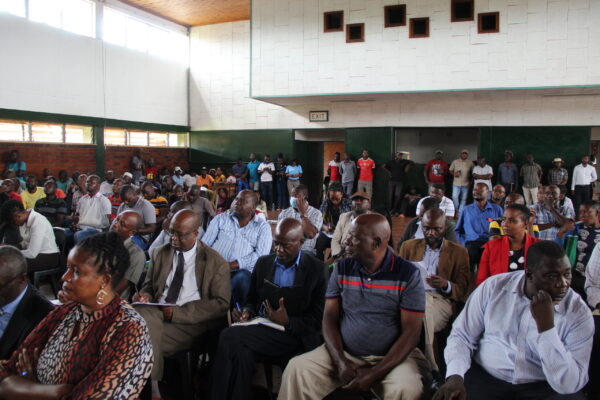
Zimbabwe’s new Mines and Minerals Bill, which will soon undergo nationwide consultations before gazetting, has been described as the most comprehensive attempt yet to integrate Environmental, Social, and Governance (ESG) obligations into mining regulation.
By Ryan Chigoche
The draft law not only strengthens environmental protection and social accountability but also ties compliance directly to the preservation of mining rights, something the current Mines and Minerals Act largely ignores.
The Mines and Minerals Bill 2025 was published by the Ministry of Mines and Mining Development in early 2025 as part of Zimbabwe’s effort to modernise its mining legislation. It looks to replace the nearly three-decade-old Mines and Minerals Act [Chapter 21:05], aiming to address emerging challenges in the sector, including environmental protection, community rights, and governance standards, among other important issues to be corrected from the current Act.
In recent times, Environmental, Social, and Governance (ESG) principles have become the global benchmark for sustainable business practices, and with the nature of its operations, the mining sector sits at the core of this shift. ESG frameworks demand that companies minimise environmental harm, build strong and respectful relationships with communities, and maintain transparent, ethical governance.
For mining, this means protecting ecosystems, ensuring fair labour conditions, supporting local development, and being held accountable for decisions that impact people and the planet.
One of the biggest ESG advances in the Bill is the requirement for miners to first acquire a social licence before being granted a full licence to carry out mining operations.
Under the existing Act governing the mining sector, environmental provisions are minimal and fragmented, with much responsibility left to the Environmental Management Act. Mining companies are not required to submit Environmental Impact Assessments (EIA) before registering a title, and there are no explicit obligations for community engagement or benefit-sharing. Complaint mechanisms are weak, and forfeiture of rights is mostly tied to failure to work a claim, not to failure to protect the environment or engage communities.
The new Bill directly addresses these gaps. Clause 154 requires every mining leaseholder and special grant holder to submit a Statutory Environmental Impact Assessment (EIA) and a Social Responsibility Certificate within 30 days of registration. This certificate, issued by a certified third party, confirms that miners are actively engaging surrounding communities, respecting cultural heritage sites, and delivering tangible social and economic benefits such as schools, clinics, and jobs.
Further strengthening this is the Bill’s link between ESG compliance and the preservation of mining rights—perhaps its most transformative change. Under current law, a miner can maintain rights even while damaging the environment, provided they “work the claim.” Under the new Bill, failure to meet EIA, Social Responsibility, or rehabilitation obligations can result in suspension or even forfeiture of mining titles.
This “use it responsibly or lose it” approach mirrors international best practices and sends a clear message that ESG obligations are not optional.
Empowering Communities and Strengthening Accountability
For the first time, communities and local authorities will have formal avenues to hold miners accountable. Clause 155 empowers the Environmental Management Agency (EMA) and Rural District Councils (RDCs) to lodge complaints against miners who breach environmental or social obligations. If breaches are confirmed, the Provincial Mining Director can deny inspection certificates or suspend operations until defaults are remedied.
This is a stark improvement from the current Act, which gives communities little influence over mining operations in their areas. Now, communities can indirectly compel miners to comply, while the Minister retains powers under Clauses 182 and 183 to suspend rights for up to 60 days in environmental emergencies or impose conservation measures such as pollution controls.
An Environmental Fund to Guarantee Rehabilitation
Mine rehabilitation remains a major issue in Zimbabwe, primarily due to the legacy of unregulated mining practices and the financial burden of rehabilitating abandoned sites. This problem is compounded by the lack of comprehensive legislation enforcing mandatory rehabilitation by mining companies, risking long-term environmental damage, including water contamination and soil erosion.
A significant new addition is the Mining Industry Environmental Protection Fund (MIEPF), created under Clauses 180–191. Funded through insurance or a 0.1% gross mineral production levy, the MIEPF ensures that even if a company defaults, resources will be available for environmental rehabilitation, pollution control, and compensation for landholders affected by mining activities.
In contrast, the existing Act has no such fund, leaving communities and the government to deal with the aftermath when miners abandon polluted sites. The new Bill also establishes a multi-stakeholder committee, including EMA, the Ministry of Finance, the Chamber of Mines, and small-scale miners to manage the fund, adding much-needed transparency.
Closing the Governance Gap
Good governance is at the heart of effective ESG performance. It ensures companies are transparent, accountable, and managed with integrity, building trust with investors and communities alike. Without strong governance, even the best environmental and social initiatives can fall short, making it a critical foundation for sustainable business success.
The Bill modernises governance by introducing a digital cadastre for transparent tracking of licences and obligations. It requires independent third-party certification for social responsibility and mandates annual audits of the Environmental Protection Fund. By comparison, the current Act’s oversight structures are heavily centralised and opaque, making it difficult for communities or civil society to track what companies owe or deliver.
If enacted in its current form, the Mines and Minerals Bill will make Zimbabwe a regional leader in embedding ESG into mining law. For communities, it means stronger protections for land and livelihoods, and a louder voice in how mineral wealth is developed. For investors, it signals a more structured and transparent regulatory environment.

