.png)


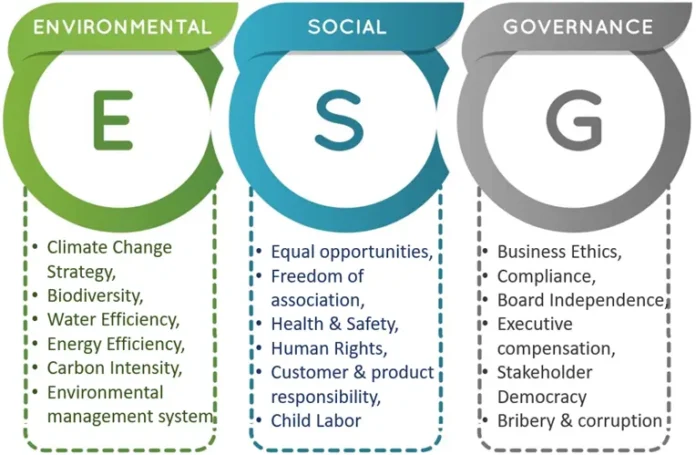
Environmental, Social, and Governance (ESG) practices are slowly becoming a central theme in global mining discourse. However, in Zimbabwe, one of Africa’s key mineral producers, the ESG conversation remains stuck somewhere between boardroom presentations and glossy compliance reports, with very little filtering down to the people and places mining directly impacts, ESG expert Tafara Chiremba told Mining Zimbabwe.
By Rudairo Mapuranga
Chiremba, a leading expert on sustainable mining from the Zimbabwe Environmental Law Organisation (ZELO), formerly known as the Zimbabwe Environmental Law Association (ZELA), when asked whether ESG has been genuinely integrated into the core strategy of Zimbabwean mining operations or is still being treated as a checkbox obligation, didn’t mince his words: “It is largely a compliance issue so far.”
That honest admission is both revealing and unsettling.
Across several forums, from policy roundtables to mine site inspections, ESG has become the most thrown-around term in corporate mining language. But as Chiremba’s insights reveal, the reality on the ground is starkly different. ESG in Zimbabwe’s mining sector, for the most part, is yet to transcend performative declarations and become the transformative tool it was intended to be.
Tick-Box ESG: A Symptom of Shallow Integration
Zimbabwe’s mining sector has no shortage of ESG commitments on paper. Companies speak glowingly of sustainability, stakeholder inclusion, environmental stewardship, and community empowerment. Yet, when the public ESG reports land, they often feel like documents prepared to satisfy investor expectations, not to reflect lived community experiences.
Chiremba explains that what’s missing is not just the reporting, it’s the actual process behind it.
“Many companies avoid the genuine processes and go straight to the report, just for compliance purposes,” he noted.
It’s not that ESG reporting itself is flawed. In fact, frameworks like the Global Reporting Initiative (GRI), one of the most widely accepted sustainability reporting models, provide a thorough, internationally respected blueprint. The real issue is that Zimbabwean mining companies, particularly those operating in the small-scale mining to mid-tier space, often sidestep the rigorous foundational work required to make ESG meaningful.
The Real ESG Process — What Companies Are Skipping
Chiremba laid out what proper ESG integration actually looks like, highlighting that true sustainability is not a paragraph in an annual report, it’s a living, evolving system.
The process begins at the top. “Development of governance systems is the first step,” Chiremba explained. “You need buy-in from leadership from the boardroom to shaft.”
From there, a mining company must:
Develop an ESG strategy and goals after wide consultations with stakeholders not just investors, but host communities, regulators, employees, and civil society.
Conduct a materiality assessment to understand what issues matter most to each stakeholder group.
Undertake due diligence and comprehensive risk assessment, then craft a risk management plan that includes the community.
Identify value creation opportunities — turning CSR into more than a donation, but a means of sustainable economic empowerment.
Implement actual CSR or community development projects that go beyond window dressing.
Adopt a reporting framework that speaks to all material topics, not just what looks good to financiers.
Most importantly, continuously assess and review ESG systems, especially the relevance of material topics in collaboration with communities.
It’s a cycle of listening, acting, evaluating, and improving. That is what’s missing in most ESG efforts in Zimbabwe.
The Cost of Cosmetic ESG
When ESG is done only for compliance, communities suffer. Promises are made but not kept. Projects are launched but abandoned. And worse, host communities lose trust not just in mining companies, but in the entire governance ecosystem that is supposed to regulate them.
A mine may claim to be climate-sensitive, yet dump effluent into rivers. It may claim stakeholder engagement, yet leave local voices out of planning processes. These contradictions breed resentment and eventually, resistance.
Mining firms that skip foundational ESG processes also end up missing out on long-term value: fewer partnerships, lower investor confidence, and growing regulatory risks. In a world increasingly attuned to ESG scoring, half-measures are fast becoming liabilities.
What Zimbabwe’s Mining Sector Must Do
Chiremba’s recommendation is clear: shift from cosmetic compliance to process-driven sustainability.
Zimbabwean mining companies must treat ESG not as a hurdle to jump over but as a tool to transform how they operate. ESG should no longer be the responsibility of a lone officer tucked in some corner of the office. It should be embedded in operations, finance, human resources, health and safety, procurement, and most importantly, community relations.
Local communities should no longer be passive recipients of corporate social responsibility. They must become co-creators of sustainability strategies. They should be trained, resourced, and empowered to monitor air, water, and land use — and to hold companies accountable in real time.
If mining is to remain viable in Zimbabwe, ESG must stop being a buzzword and start being a culture.

