

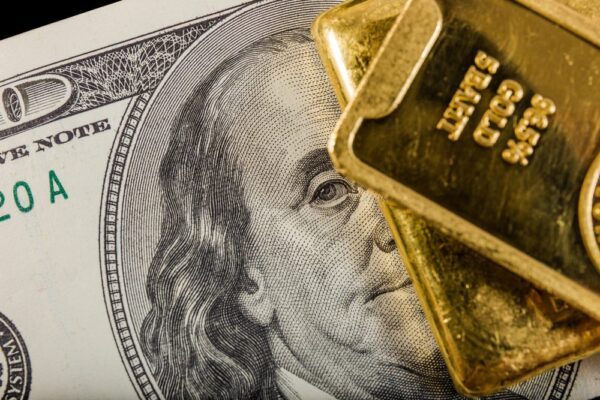
Global gold prices are on a record-setting run, driven by renewed investor demand as the US dollar weakens. The metal surged to $3 592/oz in the week ending September 5, underscoring its status as a safe-haven asset in times of market uncertainty.
By Ryan Chigoche
Traditionally, gold strengthens when the dollar falls and retreats when the currency recovers. While there have been exceptions to this pattern in recent years, analysts say the current rally is being reinforced by a mix of economic and geopolitical factors.
Precious metals refiner Heraeus notes that investors increasingly see gold as a more reliable hedge against potential US policy errors than holding dollars.
The company warns that political pressure on the Federal Reserve to cut interest rates could lead to monetary missteps that amplify existing fiscal challenges.
This weakening sentiment around the dollar is also part of a broader trend. Heraeus points out that, although still as strong as in the early 2000s on a trade-weighted basis, the currency has come off its recent highs.
Trade frictions stemming from former President Donald Trump’s tariff regimes continue to weigh on global trade relations. Even if the US Supreme Court rules that Trump overreached in imposing reciprocal tariffs, concerns over protectionism and trade deficits are likely to persist, particularly with tariffs on steel, aluminium, and automotive imports remaining in place.
Gold’s rally is not just a speculative play — it is being strongly supported by central banks.
According to World Gold Council (WGC) data, global central banks have been buying gold at a near-record pace in 2025.
Major buyers such as China, Turkey, and India are adding bullion to their reserves as part of efforts to diversify away from the US dollar and strengthen their financial stability.
Heraeus expects this buying trend to continue throughout the year.
Institutional and retail investors are also contributing to the surge.
Gold-backed exchange-traded funds (ETFs) saw inflows of 397 t (12.3%) in the first half of the year compared with the same period in 2024.
Physical bar and coin demand climbed 6.4% year-on-year, with India and China accounting for most of the purchases. ETF managers say investors are positioning their portfolios defensively, using gold to guard against currency volatility, inflation, and recession risk.
A similar pattern is emerging in silver. Heraeus reports that the Saudi Central Bank has taken positions worth US$40.6 million in the iShares Silver Trust and Global X Silver Miners ETF, moves seen as part of a broader sovereign wealth fund diversification strategy.
Russia, meanwhile, has announced plans to acquire US$535 million worth of silver over the next three years.
This institutional interest has pushed silver above US$40/oz for the first time in 14 years, with expectations of Federal Reserve rate cuts adding further momentum.
In contrast, other precious metals were relatively stable. Platinum and palladium held firm at US$1 382/oz and $1 112/oz, respectively, while rhodium eased by US$50/oz to settle at US$7 675/oz during the same week.

