


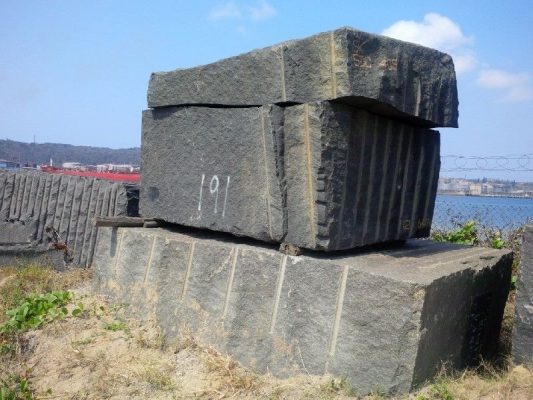

Zimbabwe’s granite sector has recorded a remarkable production surge in the first quarter of 2026, with output leaping by 271.4% to 88,570.37 metric tonnes from just 23,848 metric tonnes in the same period last year, Mining Zimbabwe can report.
By Rudairo Mapuranga
According to the Ministry of Mines and Mining Development’s Q1 performance report seen by this publication, the dramatic increase positions granite among the country’s fastest-growing mineral sectors, reflecting a strategic push toward rural industrialisation and value addition.
The surge comes as the government intensifies efforts to transform the sector from raw exports to processed finished products. The Mutoko area in Mashonaland East Province, which supplies approximately 75% of Zimbabwe’s annual black granite output and produces an estimated 150,000 tonnes each year, has emerged as the epicentre of this activity. The black granite, prized globally for its durability and sleek appearance, is a sought-after material for high-end countertops, flooring, and architectural finishes.
The Q1 production figures represent more than half of the 79,000 tonnes of granite exported during the first eight months of 2025, which were valued at US$10 million. This suggests that full-year 2026 production could substantially exceed previous years’ levels, potentially pushing export revenues significantly higher.
Value addition drive gains traction
For years, Zimbabwe’s granite was exported predominantly in its raw form, limiting the economic benefits accruing to local communities and the national treasury. However, the government’s rural industrialisation drive, championed by President Emmerson Mnangagwa, has prioritised value addition and beneficiation across the mining sector, with granite receiving particular attention.
The Rich Basin granite stone processing plant in Mutoko is now cutting and polishing approximately 70 tonnes of granite daily at its state-of-the-art facility, producing tiles and designed stone products for both local and international markets. The company exports to Poland, China, Germany, and the United States, among other destinations, and is seeking to expand operations with additional land from the local authority.
“For a long time, our granite was going out of the country and being exported in its raw form. However, President Mnangagwa insisted on value addition, and today these are the results,” said a former Minister of State for Provincial Affairs and Devolution for Mashonaland East during a tour of the Rich Basin plant.
Italian firm RED Graniti, operating through its Southern Graniti subsidiary, has been active in the country for over 15 years and currently runs three operational granite quarries in the Mutoko area. The company also operates a processing plant in Chitungwiza dedicated to transforming granite blocks into slabs, with production split between exports and the local market. Italian Ambassador Joseph Giacalone recently visited the facilities, emphasising that Italy fully supports companies operating in Zimbabwe and is working to stimulate investment, transparency, and industrial consolidation.
The granite sector is already a significant contributor to Zimbabwe’s mineral export basket, with building stone exports reaching US$13.9 million in 2022, making it the country’s 22nd most exported product that year. Major export destinations included Germany (US$3.78 million), France (US$3.45 million), Mozambique (US$2.72 million), Italy (US$1.42 million), and Spain (US$761,000). The fastest-growing markets between 2021 and 2022 were France, Germany, and Italy, indicating strengthening European demand for Zimbabwean granite.
Policy reforms reshape sector dynamics
In September 2025, the Cabinet resolved to reserve quarry and granite mining exclusively for indigenous Zimbabweans, adding the sector to the list of economic activities reserved for local investors.
This policy shift is complemented by a new mining tax regime introduced in January 2025, which doubled the levy on black granite and other minerals from 1% to 2% of gross value on sales within Zimbabwe or on exports. The levy must be paid in the currency of trade and applies to lithium, black granite, quarry stones, and uncut and cut dimensional stones.
The government has also mandated that mining companies establish community economic empowerment trusts to drive rural industrialisation through industrial parks and revenue-sharing mechanisms, ensuring that communities benefit from resource extraction in their areas. This aligns with broader efforts to create linkages between the mining sector and local economic development.
Environmental concerns temper optimism
Despite the sector’s impressive growth, environmental challenges persist. The Minerals Marketing Corporation of Zimbabwe has raised concerns about the environmental cost of expanded granite mining, citing “significant environmental degradation, including vegetation clearing, rubble dumping, disruption of natural river flows, and pollution.”
The MMCZ has called for “stringent enforcement of environmental laws by relevant agencies to ensure sustainable mining practices and land rehabilitation,” warning that operations “continue to cause significant degradation” on a scale characterised by “widespread environmental abuse.”
Environmental groups have criticised lax enforcement and the inadequacy of penalties, arguing that current fines are often too low to deter well-funded mining companies and are viewed as a negligible “cost of doing business,” which undermines the authority of agencies such as the Environmental Management Agency.
Market outlook
Market analysts project that Zimbabwe’s granite sector will continue its growth trajectory, with the broader stone mining and quarrying market expected to experience a compound annual growth rate of 70.36% during the 2020–2024 period. The granite market specifically is projected to grow at a stable rate of 2.40% by 2027 within the African region, positioning Zimbabwe among key players alongside South Africa, Ethiopia, Algeria, and Nigeria.
The dramatic Q1 2026 production increase, combined with growing processing capacity and supportive policy frameworks, suggests that granite could emerge as a significant pillar of Zimbabwe’s mineral export revenue in the years ahead. For local communities in Mutoko and other granite-rich areas, the challenge and opportunity lie in translating this mineral wealth into sustainable economic development through genuine beneficiation, robust environmental safeguards, and meaningful community participation in the sector’s growth.