




Zimbabwe’s mining industry is expected to increase its electricity demand to more than 1,500 megawatts (MW) within the next 12 months as companies expand production and invest in mineral processing facilities, placing energy security at the centre of the sector’s growth ambitions, the Chamber of Mines of Zimbabwe has said.
By Ryan Chigoche
The projected increase represents a 50% rise from current mining consumption levels and comes as the sector moves beyond mineral extraction towards beneficiation and value addition, activities that require significantly more electricity.
The development raises questions over whether Zimbabwe’s power infrastructure can keep pace with an expanding mining industry that is targeting higher production and greater local processing.
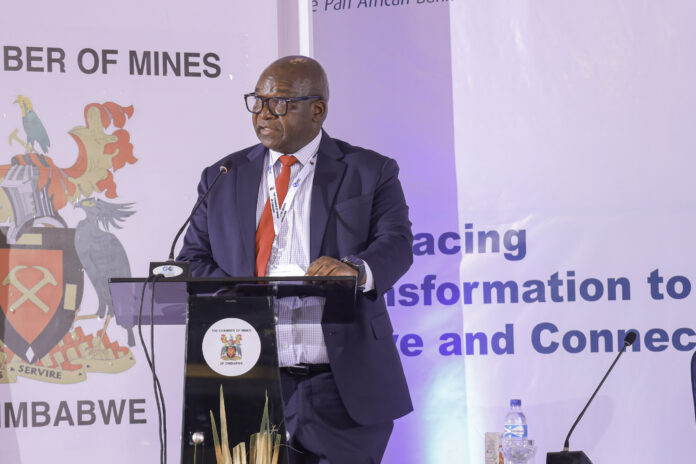
Speaking at the Mining Industry Suppliers, Energy and Infrastructure Forum at Mine Entra 2026, Chamber of Mines Chief Executive Officer Isaac Kwesu said the mining sector currently consumes approximately 1,000MW of electricity, accounting for more than half of Zimbabwe’s domestic power generation.
“The industry currently consumes approximately 1,000 megawatts. That is more than half of what is produced locally as electricity. However, with the ongoing expansion activities and new beneficiation facilities, the energy demand is set to surge to more than 1,500 megawatts in the next 12 months,” Kwesu said.
Zimbabwe has expanded its installed generation capacity following the addition of Hwange Units 7 and 8, but available dependable capacity remains constrained by technical limitations, ageing infrastructure, and operational challenges.
The country’s installed generation capacity is estimated at about 2,640MW, while dependable capacity has generally ranged between 1,200MW and 1,600MW, according to the National Energy Compact.
The Ministry of Energy has also previously indicated that average electricity supply capacity was between 1,200MW and 1,400MW, against peak demand of around 1,800MW, highlighting the gap that has historically required imports, demand management, and alternative energy solutions.
The expected rise in mining demand comes as companies invest in expanding output across key minerals, including gold, platinum group metals, lithium, and chrome, while the government pushes for greater domestic processing of mineral resources.
Beneficiation projects are particularly energy-intensive, meaning the success of Zimbabwe’s value addition ambitions will depend not only on mineral availability but also on reliable and affordable electricity supply.
Energy availability has increasingly become a key consideration for mining investors, alongside geological potential, infrastructure, and policy stability. Some mining companies have responded by investing in captive power solutions, including solar projects, to reduce reliance on the national grid and improve operational security.
Kwesu said investment in supporting infrastructure would be critical to ensuring the mining sector remains competitive as it enters its next phase of expansion.
“Investment in these strategic areas will enhance productivity, improve competitiveness, and create an environment where local businesses will thrive,” he said.
Zimbabwe’s mining sector remains the country’s largest source of export earnings, with billions of dollars in expansion projects planned across the industry. However, as miners move towards processing more minerals locally, the availability of electricity is set to become one of the biggest factors determining whether the sector can translate resource wealth into sustained industrial growth.
For Zimbabwe’s mining ambitions, the next major competition may not only be for minerals, but for megawatts.

