




Padenga Holdings’ gold production rose 4% to 1,345 kilogrammes in the six months ended June 30, with higher output and a stronger realised gold price driving a 161% jump in group profit before tax to US$107.31 million, Mining Zimbabwe can report.
By Ryan Chigoche
The increase in production was accompanied by higher sales from Dallaglio, Padenga’s mining unit, which sold 43,228 ounces during the period compared with 41,528 ounces in the prior-year period. The average realised gold price rose to US$4,668 an ounce from US$3,106, significantly lifting the value generated from the additional ounces sold.
The combination pushed Dallaglio’s revenue up 48% to US$182.34 million from US$123.37 million, while profit before tax more than doubled to US$93.75 million from US$41.31 million. EBITDA increased 107% to US$101.87 million, while operating cash flow rose 61% to US$68.93 million from US$38.12 million.
Dallaglio’s growing contribution was reflected across the group, with the mining business accounting for 97% of Padenga’s revenue, up from 94% in the comparable period. Group revenue consequently increased 44% to US$187.74 million from US$130.68 million, while group EBITDA more than doubled to US$100.82 million from US$48.10 million.
The earnings improvement was supported by stronger cash generation across the business. Group operating cash flow rose to US$89.92 million from US$39.89 million, while free cash flow increased 163% to US$75.29 million from US$28.68 million. Free cash flow conversion stood at 74% of EBITDA, with the margin reaching 40%.
The group’s financial position was also helped by a shift in its interest position, with Padenga recording net interest income of US$1.24 million compared with a net interest expense of US$3.19 million in the prior-year period. Equity-accounted earnings increased to US$5.9 million from US$0.8 million.
The stronger mining performance was underpinned by higher mined grades and improved plant recoveries, following continued investment in mine development, drilling and operational optimisation across Dallaglio’s operations.
Eureka remained the cornerstone of production during the period, with higher mill-feed grades and throughput contributing to the improvement. Exploration activity also continued, with 12,495 metres of drilling completed during the first half, targeting down-dip continuity and shallower areas through infill drilling.
The exploration programme is intended to strengthen the geological understanding of the orebody and support future mine planning as Dallaglio works to sustain production from the operation.
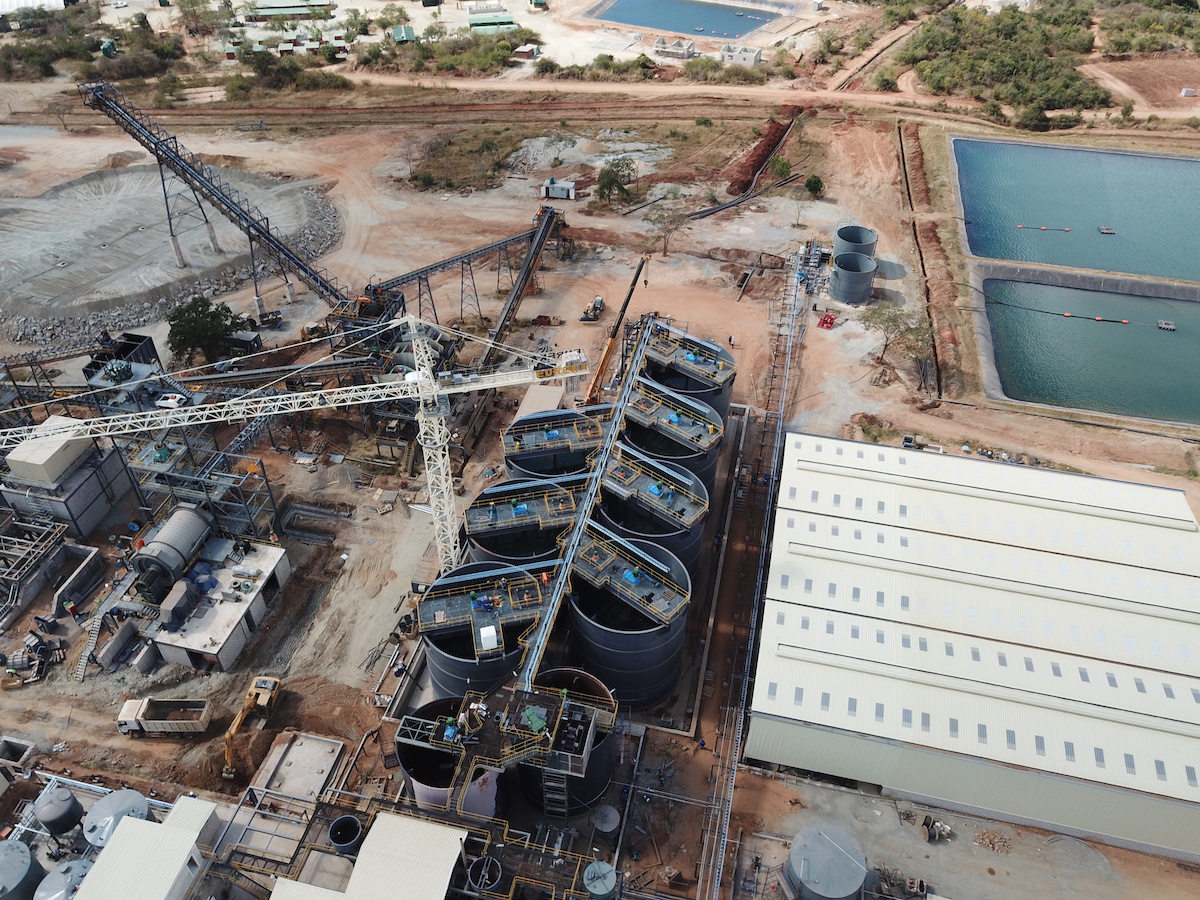
At the same time, the company is investing in processing capacity at Eureka. The Gravity Upgrade Project is expected to come online in September 2026 after a shipment delay involving a component for one of the concentrators. Optimisation work is already under way to capture the expected recovery improvements.
The Cyclone Cluster Upgrade is scheduled for November and is expected to eliminate milling throughput constraints, allowing the operation to increase processing capacity.
At Pickstone Peerless, Dallaglio made progress in addressing manpower and material-flow challenges that had contributed to hoisting inefficiencies. The mine also completed 17,351 metres of drilling from surface and underground platforms during the first half.
The drilling programme is supporting resource conversion and mine-planning flexibility, while ongoing geological interpretation is expected to provide scope for future resource growth. Further drilling and geological modelling remain a key focus at the operation.
The underground expansion programme is progressing alongside the exploration work. Pickstone Underground Phase 3 is advancing, with the outstanding spillage handling facility at the 10.5 Level loading station and the Burnett shaft upgrade expected to be completed during the third quarter.
Phase 4 remains a longer-term priority, with completion targeted for the second quarter of 2027. The project is considered critical to maintaining production continuity beyond the current mining horizons.
The expansion programme reflects Padenga’s broader strategy of extracting additional value from its existing asset base rather than relying solely on new projects.
“Looking further, the company’s growth is currently focussed on unlocking value embedded in the assets it currently owns,” chairman Themba Sibanda said.
The strategy is being supported by investment in power infrastructure as Dallaglio seeks to improve the resilience of its mining operations. Two solar plants have been commissioned at Eureka and Pickstone Peerless, with capacities of 5.4MW and 4.9MW, respectively.
The plants generated about 1.6 gigawatt-hours during the second quarter. Once operating at full capacity, Eureka is expected to generate about 1.1 gigawatt-hours a month, while Pickstone Peerless is expected to produce about 0.75 gigawatt-hours.
Beyond production and expansion, Padenga maintained its focus on environmental and community commitments during the period. The group continued monitoring its tailings storage facilities in line with the Global Industry Standard on Tailings Management.
Community investment amounted to US$202,019 in the first half, covering education, healthcare, water access and community infrastructure.
Projects supported during the period included the maternity ward at Guruvé District Hospital, school initiatives, road works, boreholes and solar-powered water pumping infrastructure, alongside local healthcare and safety-awareness programmes.
The group’s crocodile farming operations also remained compliant with International Crocodile Farmers Association standards.
Outside mining, Padenga’s agribusiness remained under pressure from weak market demand, with revenue falling 26% to US$5.40 million. However, the business returned to a profit before tax of US$2.9 million, compared with a US$5.7 million loss in the prior-year period.
The turnaround was largely supported by a US$5.3 million fair-value gain on biological assets, compared with a US$3.7 million loss previously. Following the forced harvest and risk-sizing exercise undertaken in 2025, the business is concentrating on premium contract sales while disposing of forced-harvest skins into low- and medium-tier markets to generate cash.
Management said the agribusiness had been right-sized in response to depressed demand and is expected to return to positive returns over the short to medium term.
For the mining business, the immediate focus remains on sustaining production while bringing the various expansion and processing projects into operation. Dallaglio expects full-year 2026 gold production to surpass the previous year’s comparative performance.
The stronger first-half results have also supported shareholder returns, with the board declaring an interim dividend of US$25.68 million, equivalent to 3.19 US cents per share.
Shareholders registered by October 9, 2026, will qualify for the dividend, with payment expected around October 16. The shares trade cum-dividend through October 7 and ex-dividend from October 8 on the Victoria Falls Stock Exchange.
With Dallaglio now contributing 97% of group revenue, Padenga’s first-half performance increasingly turns on the output, pricing and investment cycle at Eureka and Pickstone Peerless, with the company positioning its existing mining assets for further production growth in the second half and beyond.

