Home Blog Page 102

Karo Platinum Advances Project as It Seeks $165M to Complete Zimbabwe’s Next Major PGM Operation

0

Karo Platinum, a Zimbabwean platinum group metals (PGM) project owned by Tharisa, is ramping up construction at its Chegutu site as it works to close a $165 million funding round critical to completing the first phase.

By Ryan Chigoche

Delayed by a slump in global platinum prices, the project is now regaining momentum with visible progress on site and a clear path forward.

To support its financing goals, Karo recently hosted a site tour for potential investors, showcasing the scale and progress of its operations.

The company has already raised $37 million through a bond listed on the Victoria Falls Stock Exchange and plans to extend the facility.

Apart from that, Karo is also pursuing a $50 million to $100 million gold streaming agreement, leveraging gold produced as a by-product to secure upfront capital.

Located on Zimbabwe’s mineral-rich Great Dyke, Karo’s long-life operation will include a 10-year open-pit phase followed by a 30-year underground mine, producing up to 226,000 ounces of PGMs annually.

This would make it Zimbabwe’s third-largest producer, behind Zimplats and Unki.

Despite early ambitions to complete the mine in 2024, the downturn in platinum prices forced a revised timeline.

The current plan targets first ore to mill within 15 months after closing the fundraising round, aligning construction and commissioning with capital availability.

On the ground, construction is advancing steadily.

Karo has prioritised foundational earthworks ahead of the rainy season to prevent delays.

A key development is a 710-metre-long, 14-metre-high dam nearing completion.

Located 7.5 km from the plant, it will store 5,000 megalitres of water—essential for processing—and is being built using labour-intensive rock packing, creating 220 local jobs in the process.

Power infrastructure is also progressing. A 35-kilometre, 132 kV transmission line is under construction, linking the Saloon substation to the site.

Substations and electrical buildings are being built early, enabling contractors to start installations in parallel.

Power will be stepped down to 11 kV and 550 volts for plant operations.

With foundational work largely complete, the site is moving into vertical construction.

The thickener area is nearly finished, with steel installation scheduled for early 2025. The towering 30-metre mould building, which will house 125-tonne moulds, will require a 600-tonne crane for installation, reflecting the project’s technical complexity. Simultaneously, steelwork on the flotation circuit is underway.

Beyond infrastructure, the project’s socio-economic impact is significant. Karo expects to employ 1,000 people in mining and processing, with a further 1,500 jobs during plant expansion.

Indirect employment could bring the total benefit to around 10,000 people, supporting families and local suppliers.

At full capacity, Karo is expected to produce 200,000 ounces of PGMs per year, contributing nearly 20% of Zimbabwe’s national output.

With PGMs priced between $1,400 and $1,500 per ounce, annual revenues could reach $300 million, equivalent to nearly 1% of Zimbabwe’s GDP.

To handle the scale of the operation, Karo has also established an on-site bonded warehouse, reducing customs delays by up to two weeks per shipment.

The completed plant will include 260 kilometres of electrical cabling and nearly 2,000 tonnes of structural steel.

With support from CBZ, ABSA, and growing investor interest, Karo Platinum is steadily transforming the Chegutu project into Zimbabwe’s next major PGM operation.

As construction advances and funding nears completion, the project stands to deliver not just minerals but lasting economic value for the country.

CBZ Commits US$254 Million Despite Mining Sector Risk, Eyes Bigger Role in Funding Gap

0

One of Zimbabwe’s largest financial institutions, CBZ Holdings, says it has invested a substantial US$254 million into the country’s mining sector — a bold commitment made in the face of perceived high sectoral risks and persistent capital shortages hobbling growth, Mining Zimbabwe can report.

By Rudairo Mapuranga

Speaking at the 2025 Chamber of Mines Annual Mining Conference and Exhibition last week, Group CEO Lawrence Nyazema proudly highlighted CBZ’s pivotal role in funding key mining projects — both greenfield and brownfield — including Dalaglio’s Pickstone and Eureka Mines, and the Karo Platinum project, which is preparing to list its second bond.

“US$254 million to be exact. We have not shied away from the so-called risk in the mining sector,” said Nyazema. “We are proud of our association with Dalaglio and the work we did to re-establish Eureka Mine. The same applies to Pickstone and Peerless.”

Nyazema also expressed CBZ’s confidence in greenfield investments, particularly the Karo Platinum Project, which recently launched a follow-up bond to raise additional capital after the success of its first US$36.8 million bond listed on the Victoria Falls Stock Exchange in 2022.

“We associated ourselves with Karo from the very first day,” Nyazema said. “And we look forward to those activities coming to life.”

His remarks come amid growing calls for Zimbabwe’s financial sector to play a more proactive role in addressing the mining industry’s long-standing funding gap. Several mining executives and government officials at the AGM noted that access to capital remains a critical challenge, especially for large-scale, long-gestation projects like platinum, coal, and lithium ventures.

Deputy Minister of Finance David Kudakwashe Mnangagwa earlier acknowledged that the mining sector lacks sufficient tailored fiscal and financial support, with calls mounting for government-backed incentives and targeted funding mechanisms.

Nyazema challenged his peers in the financial services industry — from banks to insurance and pension funds — to work collaboratively to unlock mining’s full potential.

“I’m proud to see over 10 CEOs from financial institutions here today. It gives me hope that we will get it right,” he said. “The entire financial services sector has to come together to deal with the funding challenge that has been thrown at us.”

Looking ahead, CBZ’s ambitions are even greater. Nyazema revealed that the bank hopes to scale up its mining sector exposure to US$1 billion in the coming years, a move he says will catalyse new mining activities and fuel Zimbabwe’s economic transformation.

“We dream of sponsoring a celebration event in 2026 or 2027 — an event where we honour all the new mines that would have come on stream: Karo, GDI, Three Cheers,” said Nyazema.

He concluded with a message of solidarity with Zimbabwe’s mining industry: “Where we did a quarter of a billion in the last few years, we want to do a billion in the next few years. We wish you well as an industry. Ours is to continue supporting you.”

CBZ’s stance underscores a growing sentiment that local capital markets must rise to the occasion, especially as global investors grow cautious and state financing remains constrained. As miners look to ramp up output and deliver beneficiation in line with Vision 2030, partnerships like those between CBZ and producers may prove essential in bridging Zimbabwe’s mining finance divide.

Caledonia Boosts Local Enterprise Growth by Strengthening Homegrown Supply Chains

0

Across Zimbabwe’s mining sector, companies are increasingly recognising the strategic value of developing local enterprises and strengthening domestic supply chains.

By Ryan Chigoche

Notably, Platinum Group Metals (PGM) miners such as Zimplats and Mimosa have long championed Local Enterprise Development (LED) and Supplier Support programs, investing heavily in nurturing small and medium-sized enterprises (SMEs) that supply critical goods and services.

These efforts have reduced reliance on imports, cut costs, and generated thousands of jobs, with Zimplats alone investing nearly US$460 million into local businesses and creating over 2,600 positions since launching its LED initiative.

Their success underscores a wider industry trend to future-proof operations through local sourcing, a trend Caledonia Mining Corporation, one of the country’s leading gold miners, has embraced with impressive results.

Faced with global supply chain disruptions, energy shortages, and raw material scarcity challenges, particularly acute in the SADC region, Caledonia has made local procurement a cornerstone of its sustainability and resilience strategy at Blanket Mine.

Today, 40% of the company’s raw materials and operational supplies are sourced locally, demonstrating how deliberate investment in local supply chains can simultaneously strengthen operational efficiency and community development.

This approach is not merely reactive but part of Caledonia’s broader commitment to embed environmental, social, and governance (ESG) principles deeply within its business model. “In 2024, Caledonia took several steps to future-proof our business and embed ESG deeper into our strategy,” said CEO Mark Learmonth. “We believe in driving real sustainability progress where it matters most: for our business, our operations, and the communities that depend on us.”

At the heart of this strategy is the Supplier and Services Development Program (SSDP), which actively identifies, nurtures, and supports local enterprises to build resilient, sustainable supply chains.

The program’s impact is clearly visible in Gwanda and surrounding areas, where homegrown companies have grown from small operations into significant contributors to the mining economy.

Caledonia’s approach to local procurement is more than just a box-ticking exercise; it is a foundational pillar of its SSDP, which focuses on building robust, inclusive supply chains that reflect the broader goals of economic empowerment and community development.

To illustrate the impact of the programs, here are some of the standout local enterprises whose growth and success exemplify the transformative power of investing in homegrown businesses:


Godcath Investment: Building a Future in Gwanda

One of the most inspiring stories is that of Godcath Investment, a civil engineering firm founded by five individuals in 2017. Starting with a single contract at Blanket Mine, the company has since evolved into a thriving business employing 27 people and offering a suite of services from plumbing and electrical work to construction and painting. Their contributions to infrastructure projects, such as school buildings and public sanitation facilities, have had a direct and visible impact on community development. More importantly, the economic benefits have trickled down to employees’ families, enabling them to afford school fees and improve their living standards.


RJK: Expanding Opportunities in Construction

Another SSDP success story is RJK, which began operations in 2010 with a focus on water treatment and housing infrastructure. Today, it boasts a full-time staff of over 70, growing to 100 during peak project periods. What sets RJK apart is its commitment to skills transfer: specialists from Bulawayo provide on-the-job training to local workers, building long-term human capital within the Gwanda region. The company also stands out for its gender inclusivity, with women holding 40% of senior leadership positions—an impressive feat in a sector where female representation remains limited. Blanket Mine has been instrumental in helping RJK professionalise its operations, including upgrading safety protocols and enhancing project management capacity.


AFROAT: From Small Supplier to Industry Player

AFROAT, another local supplier, illustrates how entrepreneurial vision, combined with consistent support, can yield remarkable results. Initially operating with just two people in a rented space, AFROAT began by supplying underground support timber before expanding into the importation of mine spares, transport services, and now stamp milling and ore processing. The company currently employs nearly 60 people across its divisions. Through its close collaboration with Blanket Mine, AFROAT has embraced SHE (Safety, Health, and Environment) practices, embedding a culture of risk awareness and operational discipline among its workforce. Moreover, its community impact goes beyond commerce: AFROAT supports the Liseko Children’s Foundation, has donated school supplies, and installed a solar-powered JoJo tank at a local school.


Caledonia’s efforts to foster local businesses are not just paying off economically; they are creating a resilient, empowered ecosystem of enterprises capable of thriving independently. This local capacity not only improves supply chain reliability but also anchors the mine more firmly in the community’s socioeconomic fabric.

The shift to local sourcing mitigates the risks associated with foreign exchange volatility, import delays, and geopolitical uncertainties, positioning Blanket Mine to operate more efficiently and sustainably.

With 40% of inputs now procured locally, Caledonia is setting a benchmark for other mining companies operating in Africa. As the global race for critical minerals intensifies and pressure mounts to localise the benefits of resource extraction, Caledonia’s model demonstrates how mining can serve as a catalyst for broader development, creating not just profits but prosperity.

In a region where policymakers are increasingly calling for beneficiation, inclusive value chains, and local empowerment, Caledonia’s evolving procurement strategy is a case study in how mining operations can anchor economic resilience.

Its partnerships with firms like Godcath, RJK, and AFROAT are living proof that local enterprise development is not only possible but vital to the future of African mining.


Despite the mining sector’s strong focus on sourcing locally, several pressing challenges need immediate attention. One major issue is the limited manufacturing capacity, which is largely due to outdated equipment and inadequate efforts to modernize facilities.

This problem is worsened by frequent power interruptions and shortages of essential raw materials and consumables, which restrict production capabilities.

Quality concerns also present significant obstacles, as substandard products can negatively impact safety standards, operational efficiency, and overall costs. On top of that, pricing remains a major challenge, with local suppliers often charging rates tied to the US dollar alternative market, leading to inflated markups that are unsustainable for mining operations.

Furthermore, extended lead times compound these difficulties. Many local suppliers primarily act as middlemen for foreign manufacturers, which limits their control over product availability and delivery schedules.

Unfavourable trade and payment conditions add to the strain, with early payment requirements putting pressure on cash flow management. Resistance to accepting the local currency, the Zimbabwean dollar (ZWL), alongside ongoing forex shortages, further complicates transactions.

These combined issues underscore the urgent need for enhancements within the local supply chain to support the mining industry better.

Additionally, improving logistics, such as simplifying import processes, can significantly strengthen supplier operations. Building strong, collaborative relationships across the entire value chain with key stakeholders, including banks, government bodies, and local communities, is essential for long-term sustainable growth.


Unreliable Power Forces Miners to Pay More Taxes Due to Lack of Beneficiation

0

The Deputy Minister of Finance and Investment Promotion, David Mnangagwa, has warned that continued power supply challenges are directly undermining the country’s beneficiation goals, and as a result, miners are being forced to pay more in taxes for exporting unrefined minerals, Mining Zimbabwe can report.

By Rudairo Mapuranga

Speaking at the Platinum Group Metals (PGM) symposium during the Chamber of Mines Annual General Meeting, Mnangagwa acknowledged that despite Zimbabwe holding the world’s third-largest platinum reserves, the country is yet to realise full value from its mineral wealth. One of the key setbacks, he said, was the lack of reliable energy — a non-fiscal issue with deep fiscal consequences.

“Unreliable power directly impacts the viability of beneficiation,” he said. “We must therefore ensure continued investment in reliable energy supply for the mining sector.”

The Deputy Minister noted that while the government has implemented various fiscal support measures, including royalty and tax concessions, the absence of processing infrastructure due to power and capital constraints means miners continue to export unbeneficiated concentrates, which attract higher taxes.

Currently, Zimbabwe charges a beneficiation tax of up to 5% on unrefined platinum exports as a disincentive to the export of raw minerals. However, Mnangagwa admitted that this punitive measure is doing little to drive local processing due to infrastructural limitations.

“The current framework is based on an export tax disincentive, rather than a positive incentive structure for those investing in value addition and refining,” he said. “We need to review this approach if beneficiation is to become viable.”

Zimbabwe’s existing tax framework for PGMs:

  • Royalty rate on platinum pegged at 7%, calculated on LME prices (85% for concentrate, 90% for matte), with 50% paid in kind, 10% in forex, and 40% in local currency.
  • Income tax at 15% for special leaseholders and 25% for others.
  • Additional profits tax (APT) and VAT exemptions on capital equipment.
  • 100% capital expenditure deduction in the year incurred.
  • Loss carry-forward provisions to cushion new projects.

Despite this, mining revenue has been declining. According to ZIMRA, the sector’s contribution to national revenue dropped to 8% in March 2025, down from 12% in November 2024, driven largely by price volatility and reduced beneficiation.

ZIMRA Commissioner of Domestic Taxes, Misheck Gova, recently lamented that PGM sector compliance and revenue contributions are falling despite numerous concessions. He added that royalties are now tax-deductible, which reduces income tax further, and pointed out miners’ frustrations with delays in VAT refunds, informalisation, and illicit financial flows.

The Deputy Minister acknowledged these concerns, saying the government is exploring “a tiered royalty system” and clearer fiscal guidelines to promote long-term investment. He also hinted at “targeted support” for companies investing in PGM refining.

“We are aware of the miners’ concerns around high input costs, complex fiscal structures, and the burden of taxes when beneficiation is not feasible,” he said. “Our commitment is to craft a balanced approach — one that supports both national revenue and industry growth.”

As Zimbabwe aims to transform itself into a regional beneficiation hub, Mnangagwa stressed the importance of policy predictability, stable fiscal regimes, and continuous consultation with industry players.

“PGMs are national assets,” he said. “By providing intelligent, targeted fiscal support, we can unlock increased export earnings, foster resilience, and build a diversified economy.”

However, without reliable power and genuine incentives for refining, Zimbabwe’s beneficiation dream risks remaining just that — a dream miners are taxed for failing to realise.

Gold buying prices per gram in Zimbabwe, 30 May 2025

Gold buying prices per gram in Zimbabwe today, 30 May 2025, from the official gold buyer and exporter Fidelity Gold Refinery (FGR).

SG 90% and ABOVE US$100.63/g.
SG ABOVE 89% BUT BELOW 90% US$99.57/g.
SG ABOVE 80% BUT BELOW 85% US$98.50/g.
SG ABOVE 75% BUT BELOW 80% US$97.44/g.
SAMPLE BELOW 10g BUT ABOVE 5g US$95.84/g.

Fire Assay CASH $101.17/g.

NB: Fire Assay cash price is for gold above 100g; no sample is deducted.
A sample of not more than 10g is deducted for the Fire Assay Transfer price.
A 2% royalty is charged on all deposits (Small-scale miners).
A 5% royalty is set for Primary Producers.

ZIMRA Vows to Clear VAT Refund Backlog Amid Miner Tax Grievances

0

The Zimbabwe Revenue Authority (ZIMRA) has pledged to clear its long-standing backlog of value-added tax (VAT) refunds, a move likely to be welcomed by the mining sector, which has consistently raised alarm over the burden of over-taxation and delayed reimbursements, Mining Zimbabwe can report.

By Rudairo Mapuranga

Speaking at the 2025 Chamber of Mines Annual Mining Conference and Exhibition held in Victoria Falls last week, ZIMRA’s Commissioner of Domestic Taxes, Misheck Gova, acknowledged the fiscal frustration of many mining houses and confirmed that significant progress had been made in clearing outstanding refunds.

“We had a backlog of refunds, but we have put our foot on the pedal and we are almost there now,” Gova said. “We understand that refunds are critical for operational cash flows, and the authority is committed to timely reimbursements moving forward.”

ZIMRA’s statement comes at a time when players in the mining sector — especially small- to medium-scale producers — have lamented what they describe as a harsh and often confusing tax framework, which includes withholding taxes, royalties, income tax, customs duties, and capital gains tax.

Industry players have repeatedly pointed out the difficulty of operating viably under a system where tax burdens are compounded by delays in receiving refunds and forex surrender requirements that are mismatched with market realities.

In previous statements, miners have cited VAT refunds as a key barrier to growth. Many claim they are forced to delay exploration or procurement of inputs due to locked-up funds, contributing to reduced production and layoffs in an already strained economic environment.

The Chamber of Mines and Zimbabwe Miners Federation (ZMF) have expressed concern that while formal miners are expected to comply with a complex tax regime, the informal and unregulated sector continues to grow, often escaping formal tax scrutiny. This discrepancy, miners argue, further distorts the playing field.

Gova admitted that revenue contributions from the mining sector have been on the decline despite the sector enjoying several fiscal incentives and concessions.

“From a comparative analysis, the contribution of the sector to total tax revenues in USD terms has gone down to about 18%. In ZIG, it’s even lower at around 8%,” he said.

He added that despite concessions — such as the deductibility of royalties, capital expenditure allowances, zero-rated VAT on some goods, and special mining lease benefits — tax compliance pain points remain. These include informalisation, commodity price manipulation, transfer pricing, illicit financial flows, and climate-related risks.

In an effort to address these, ZIMRA has adopted a more sector-focused approach by categorising miners according to minerals, such as lithium and gold, and dedicating specialised audit teams. The authority has also recruited industry-specific experts from the Ministry of Mines to improve auditing and taxpayer engagement.

A notable legislative shift has also been the recognition of royalties as a tax-deductible expense, something miners had long pushed for.

“We used to deny those claims, but due to legislative amendments, we now allow royalties to be deducted, which obviously impacts tax revenue,” Gova explained.

Gova further highlighted ZIMRA’s adoption of digital solutions like the Tax and Revenue Management System (TAMS), which now automates processes such as tax clearance issuance and improves overall taxpayer compliance efficiency. High-speed X-ray scanners have also been deployed at border posts to enhance customs clearance and detect contraband.

Despite these improvements, miners maintain that until refund delays and forex constraints are resolved, the sector’s contribution to Vision 2030 will remain limited.

As Zimbabwe aims to grow its economy into an upper-middle-income status by 2030, the sustainability of its resource-based revenue model hinges not only on mineral production but also on the government’s ability to maintain fair, predictable, and responsive tax policies. Miners hope ZIMRA’s new refund drive is more than just talk — and that action will follow swiftly.

Four Illegal Miners Die in Pickstone Mine Tragedy

0

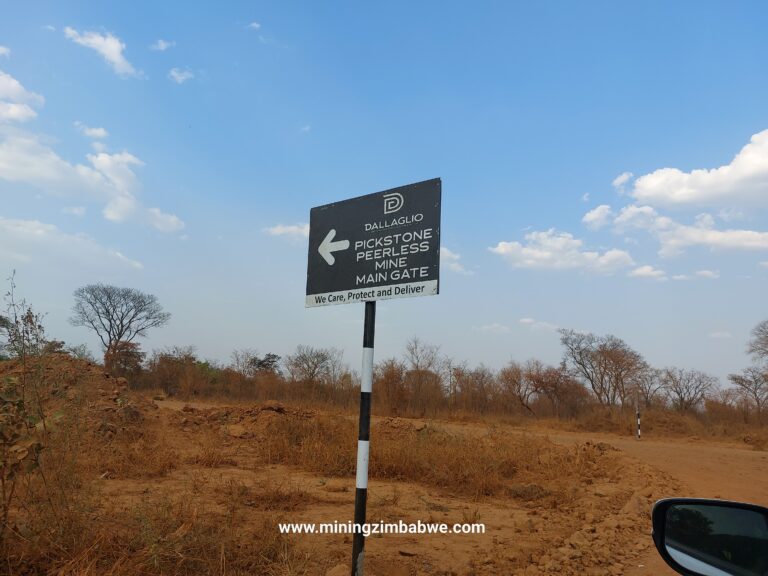
Four illegal miners lost their lives in the early hours of Tuesday, 28 May 2025, following a tragic incident at Pickstone Peerless Mine in Chegutu, owned by Dallaglio Investments (Pvt) Ltd.

The fatal accident occurred after a group of approximately 30 individuals unlawfully entered the open pit mine and detonated an unauthorised blast, causing a collapse that trapped five people.

In an official statement, Dallaglio Investments confirmed the fatalities and expressed deep sorrow over the loss of life.

“Dallaglio Investments (Pvt) Ltd. regrets to announce the tragic and untimely deaths of four individuals who were involved in illegal mining activities in an open pit at Pickstone Peerless Mine,” the company said. “Upon receiving an alert regarding the incident, our emergency response team was immediately deployed to the scene. One person was successfully rescued alive, while, regrettably, four were recovered deceased.”

The Zimbabwe Republic Police (ZRP) also confirmed their presence at the scene, where they assisted in the recovery and transfer of the deceased to ZRP Chegutu.

“The ZRP promptly attended the scene and facilitated the transfer of the deceased to ZRP Chegutu,” Dallaglio noted.

The mining company has issued a stern warning to local communities, urging them to avoid illegal mining practices, particularly those involving explosives, which pose grave dangers.

“Dallaglio strongly urges all community members to prioritize their safety and refrain from entering mine sites unlawfully or engaging in illegal mining activities, particularly those involving explosives. Such actions pose severe risks to life and undermine community well-being,” the statement read.

As the mining sector continues to grapple with the challenges posed by illegal operations, Dallaglio reaffirmed its commitment to supporting community awareness and collaborating with law enforcement to prevent further tragedies.

“Our thoughts are with the families affected by this loss. We remain committed to working closely with law enforcement and community leaders to enhance awareness around mine safety and prevent future occurrences.”

This incident adds to a troubling pattern of fatalities linked to illegal mining activities across Zimbabwe, highlighting the urgent need for increased safety education, law enforcement, and alternative livelihood strategies for artisanal miners.

Gold buying prices per gram in Zimbabwe, 29 May 2025

Gold buying prices per gram in Zimbabwe today, 29 May 2025, from the official gold buyer and exporter Fidelity Gold Refinery (FGR).

SG 90% and ABOVE US$100.28/g.
SG ABOVE 89% BUT BELOW 90% US$99.22/g.
SG ABOVE 80% BUT BELOW 85% US$98.16/g.
SG ABOVE 75% BUT BELOW 80% US$97.10/g.
SAMPLE BELOW 10g BUT ABOVE 5g US$95.51/g.

Fire Assay CASH $100.81/g.

NB: Fire Assay cash price is for gold above 100g; no sample is deducted.
A sample of not more than 10g is deducted for the Fire Assay Transfer price.
A 2% royalty is charged on all deposits (Small-scale miners).
A 5% royalty is set for Primary Producers.

Gold Surge Slashes Zimbabwe’s April Trade Deficit as Mining Drives Gains

0

Zimbabwe recorded its first trade deficit contraction in 2025, largely due to the strong performance of the mining sector, particularly gold and nickel exports, which offset declining imports.

By Ryan Chigoche

According to newly released Zimstat data, the country’s trade deficit narrowed sharply to US$118.7 million in April 2025, a 49.5% decline from the US$235.2 million registered in March. This marks the first monthly contraction in the trade deficit this year, following a persistent widening trend since January.

A contraction in the trade deficit means that the gap between imports and exports has narrowed, often due to increased export earnings, reduced imports, or a combination of both. This signals improved trade performance and can ease pressure on foreign currency reserves.

The improvement in trade performance was underpinned by a surge in mineral exports, with gold and nickel mattes leading the way. Export earnings rose sharply, while imports dipped for the second consecutive month.

A key driver of the gold boom is the escalation of global geopolitical tensions, which has prompted investors to seek safe-haven assets like gold. As a result, gold prices soared to a historic high of US$3,500 per ounce in April, providing a windfall for Zimbabwe’s gold producers.

Gold output for April surged to 3.82 tonnes, the highest monthly total since December 2021, when 4.3 tonnes were produced. This production boost translated into US$303.9 million in gold export revenues, making it the second-highest monthly figure in the country’s history, after the US$361 million recorded in November 2024.

In addition to gold, nickel mattes—another critical mining export—played a key role in lifting export earnings. These gains reflect the continued importance of mineral commodities in sustaining Zimbabwe’s economy.

Total exports for April reached US$662.6 million, with the United Arab Emirates (49.8%), South Africa (24.0%), and China (15.9%) emerging as the top three destinations. Together, these countries accounted for approximately 90% of the total export value, reaffirming the strategic importance of Zimbabwe’s mineral trade with key global partners.

On the import side, Zimbabwe saw a 4.5% decline in April, with total imports falling to US$781.3 million from US$818.3 million the previous month. This was largely due to a steep 43% drop in maize imports, which fell from US$686.9 million to US$393.3 million.

Other key declines included soya bean oil and commercial vehicle imports. However, import expenditure shifted toward petroleum oils, machinery, and cereal inputs that are often essential for industrial operations, including mining, indicating a reallocation of resources rather than a broad-based decline in demand.

Despite this positive shift in the trade balance, Zimbabwe’s mining sector continues to grapple with structural challenges.

Restrictions on selling gold directly to the London Bullion Market limit earnings potential and increase costs for local producers. Additionally, persistent electricity shortages compel mining firms to rely on expensive backup power, pushing up operational costs and constraining productivity.

To sustain and build upon the recent gains, the government needs to implement a series of targeted reforms.

Ensuring a consistent electricity supply to mines is essential, as is reducing tax burdens and streamlining regulatory procedures to create a more competitive operating environment.

Addressing gold smuggling—estimated to be costing the country billions annually—is also vital, along with reconsidering gold surrender requirements, which many in the industry view as overly punitive.

Gold remains Zimbabwe’s most important export commodity, accounting for roughly one-third of export earnings and contributing around 60% of the country’s foreign currency inflows.

The sector is supported by both large-scale miners, such as Kuvimba Mining House, Padenga Holdings, and Freda Rebecca, and by thousands of artisanal and small-scale miners whose collective output forms a significant share of total gold production.

Supporting both groups through improved access to finance, better infrastructure, and more inclusive policies will be crucial to boosting national output.

In line with this, ZimTrade aims to grow Zimbabwe’s exports by at least 10% annually, targeting US$14 billion by 2030.

Given mining’s dominant share of foreign exchange earnings, the sector is expected to be a cornerstone of this strategy and of broader efforts to transition Zimbabwe into an upper-middle-income economy.

The Zimstat April trade data signals what is possible when mining thrives, but sustaining this momentum will depend on addressing long-standing bottlenecks and fostering an enabling environment for miners at all levels.

Anglo to Relinquish Control of Unki as Valterra Goes Independent

0

Unki Mine will next week officially become part of a fully independent entity, as Anglo American Plc prepares to relinquish control of its platinum business, marking a significant shift in southern Africa’s platinum group metals (PGM) landscape, Mining Zimbabwe can report.

By Rudairo Mapuranga

The London-based mining heavyweight will distribute its controlling stake in the Johannesburg-listed Valterra Platinum—formerly Anglo American Platinum (Amplats)—to shareholders, completing a corporate restructuring first announced in May. This move comes as part of Anglo’s broader strategy to streamline operations by exiting PGMs, coal, nickel, and diamonds, to focus more intently on copper and iron ore.

Unki Mine, Anglo’s flagship Zimbabwean PGM asset, is one of Valterra’s crown jewels. Nestled in the Great Dyke, the mine has become a symbol of operational efficiency in Zimbabwe’s mining sector. With its mechanised operations and a growing reputation for delivering steady returns, Unki remains a critical contributor to Valterra’s long-term strategy and global supply footprint.

Valterra Platinum, now the world’s fourth-largest PGM producer, will take on the challenge of navigating a future clouded by PGM price volatility and structural shifts in demand. The company inherits an industry under pressure: palladium and rhodium prices have slumped 43% and 56%, respectively, since early 2023, drastically reducing revenues from the highs seen in the early 2020s.

Despite those headwinds, Valterra insists it is built to weather the storm. CEO Craig Miller has met with over 90% of Anglo’s shareholders and says the majority intend to hold or even increase their stakes. This level of confidence, he argues, underscores belief in the resilience of Valterra’s assets and management.

Anglo American will retain a 19.9% stake in Valterra for now, partly to reduce potential “flowback” from foreign investors who may see the demerger as an increased risk. Valterra has also secured a secondary listing on the London Stock Exchange to broaden its investor appeal.

The newly independent miner controls about 30% of the world’s known PGM reserves, with major operations in South Africa and Zimbabwe. Among its standout assets are the Mogalakwena Mine—a low-cost, high-margin operation with more than 80 years of mine life—and the Unki Mine, which continues to provide stability and solid returns despite global market uncertainties.

However, the broader outlook for PGMs is still being shaped by the energy transition. Catalytic converters, which accounted for about two-thirds of PGM demand in 2024, are increasingly threatened by the rise of electric vehicles. Palladium, in particular, is exposed—about 80% of global demand comes from internal combustion engines, and the metal comprises around 40% of Valterra’s output.

To mitigate this, Amplats—and now Valterra—have been investing heavily, over $500 million in recent years, to develop new uses for PGMs. These include hydrogen-powered transport, cloud-based technologies, and food preservation systems. The company has even backed innovations in electric vehicle battery design that incorporate palladium to reduce weight and improve efficiency.

Despite the uncertain terrain, there is cautious optimism. Major investors like South Africa’s Public Investment Corporation, BlackRock, and Invesco have all recently increased their stakes in Valterra, suggesting a growing belief that PGM prices are approaching a floor. Platinum prices, notably, have already rebounded over 20% in 2024, as the market continues to tighten.

“PGM prices are unsustainably low,” one institutional investor recently noted. That sentiment is echoed by UBS analysts, who highlighted Valterra’s more mechanised and higher-margin operations as key strengths in navigating this period of adjustment.

For Unki Mine and its stakeholders in Zimbabwe, the demerger could mark a new chapter—one of a more tailored strategy and direct investment by a management team laser-focused on PGMs. Valterra’s leadership, including Executive Head of Marketing Hilton Ingram, remains bullish on hybrid vehicle demand propping up PGM use for longer than previously forecast.

“We believe catalysed vehicles will retain market share for longer,” said Ingram earlier this year. CEO Craig Miller added, “The deficits we see in the market and our positive long-term outlook give us confidence that PGM prices will rebound.”

As Valterra officially steps into the spotlight, Unki Mine will play a pivotal role in grounding the company’s Zimbabwean operations in solid, long-term value. For the local mining sector, it is yet another indication that Zimbabwe remains a relevant and strategic player in the global PGM value chain.