Home Blog Page 104

Copper Price Surge Squeezes CAFCA’s Margins, Slashing Profits by 72% Despite Revenue Surge

0

A sharp spike in global copper prices has dealt a heavy blow to CAFCA Limited’s bottom line, slashing its profit after tax by a staggering 72% for the half-year ended March 31, 2025.

By Ryan Chigoche

Despite a robust 76% rise in revenue to ZWG478.5 million, profits tumbled to just ZWG15.7 million from ZWG58.2 million recorded in the same period last year.

The drastic drop in profitability underscores the immense cost pressures facing the country’s only listed cable manufacturer, largely driven by copper price volatility.

Copper, which is the ZSE-listed entity’s primary raw material, has surged 30% this year alone, spurred by tariff fears, rising global demand in the energy and technology sectors, and sustained appetite from China.

This spike has intensified a bullish trend that began in 2023, with copper prices rising 18% into 2024 and now outpacing even gold’s 16% rise this March.

With the world projected to meet only 70% of copper demand by 2035, price pressures are expected to persist.

CAFCA, unable to pass rising input costs to customers due to an influx of counterfeit and informal competitors, was forced to absorb the cost increase.

The situation was exacerbated by a 30% hike in foreign currency surrender requirements to the Reserve Bank of Zimbabwe, further eating into export earnings.

To mitigate the copper burden, CAFCA has shifted focus to aluminium—an abundant, cost-stable alternative.

This strategic pivot drove volume growth in key sectors, with utilities up 75% and commercial business increasing by 39% year-on-year.

Aluminium’s affordability and adaptability to infrastructure projects made it an appealing substitute.

Yet, the transition isn’t without trade-offs. Aluminium’s lower conductivity demands thicker cables, complicating precision-dependent applications such as industrial machinery.

Additionally, retooling production lines for aluminium introduced short-term costs and operational strain.

Despite efforts to cushion the impact, copper’s central role in premium and high-performance products means CAFCA could not completely sidestep its pricing pains.

Copper cable volumes fell 12%, contributing to an overall 5% decline in total sales volumes. Aluminium volumes also dropped by 10%, reflecting worsening market conditions in the second quarter.

The retail and distribution segment was particularly hard-hit, suffering a 27% volume plunge due to the spread of counterfeit products and competition from informal markets.

Amid these headwinds, CAFCA maintained its delivery efficiency, achieving hit rates above 100% even as production scaled down. However, the company’s future resilience may hinge on adopting advanced technologies.

Artificial intelligence could help CAFCA navigate commodity price swings and streamline production transitions between copper and aluminium.

AI-enabled quality control might also differentiate CAFCA’s genuine products from counterfeits.

As copper’s soaring cost has sharply narrowed CAFCA’s margins, this illustrates the challenges manufacturers face when core input costs spiral beyond control even in the face of strong revenue growth.

No Environmental Responsibility? Lose Your Mining Title Warns Minister Chitando

0

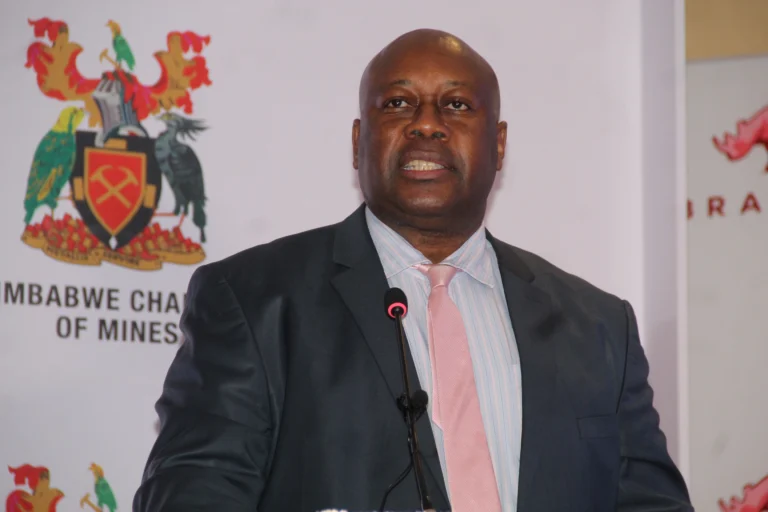
Zimbabwe’s Minister of Mines and Mining Development, Hon Winston Chitando, has issued his sternest warning yet to mining operators flouting environmental and legal regulations: follow the law or lose your mining title, Mining Zimbabwe can report.

By Rudairo Mapuranga

Speaking on Friday at the 2025 Chamber of Mines Annual Mining Conference and Exhibition held in Victoria Falls, Chitando said the time for tolerating environmental degradation and speculative mining claims was over. The minister said the government, under President Emmerson Mnangagwa’s Responsible Mining Initiative, will now revoke licences of miners who violate their Environmental Impact Assessments (EIA) or operate outside approved practices.

“You don’t mine when you don’t have an EIA. And when you do have one, you mine according to what you committed to in that EIA,” Chitando said. “Some of the sites where granite or coal mining is happening are a sorry sight. Public roads have disappeared, and the environment is in ruins. That has to stop.”

The Minister said the government is finalising the second phase of the Responsible Mining Initiative, which will be launched by President Mnangagwa in July 2025. The new version will contain concrete measures designed to tackle environmental indiscipline head-on.

‘If You Damage the Environment, You Lose Your Title’

Chitando made it unequivocal that irresponsible miners will lose their claims.

“Without any doubt, it has now come to a stage whereby if you violate the environment, you lose your mining title. There is no reason to maintain a mining title when you damage the environment,” he said to rousing applause from industry players and policymakers.

While acknowledging the mining sector’s significant contributions to foreign currency earnings and GDP, the minister emphasised that mining must not come at the expense of communities or the environment.

“The environment and the community should be happy that mining is taking place, not sad. The moment they are sad, there is something wrong,” he said.

Use It or Lose It

Beyond environmental compliance, Chitando took aim at those holding mining claims purely for speculative purposes. The long-awaited “use it or lose it” principle is now being operationalised.

“Some of the claims date back to 1970. When such a person gets a letter from the ministry asking them to justify holding the title, they call it a threatening letter. It’s not threatening—it’s the law,” said Chitando.

He urged all miners—including those aligned with political structures like ZANU PF’s Miners for ED and the Zimbabwe Miners Federation (ZMF)—to meet and agree on enforcing the law transparently and fairly.

“If you are holding a mining title and doing nothing, you must lose it. The amendments to the Mines and Minerals Act, which are expected to be gazetted within two weeks, will make this even clearer and enforceable.”

He added that there are platinum and copper concessions that have been lying idle for over a decade, hampering growth in the sector.

New Legal Framework, Clearer Rules

Chitando revealed that the amendments to the Mines and Minerals Act will introduce tighter rules, including reserving certain mine sizes for locals, classifying specific minerals as strategic, and restructuring how Special Mining Leases (SMLs) are granted.

“A Special Mining Lease guarantees policy consistency over 20 to 25 years, but it must also come with upside for government,” said the minister. “Some investors want guarantees on taxes and royalties but offer nothing in return. That’s unreasonable. Don’t submit those applications.”

He called for a balanced, win-win approach where the state guarantees a favourable investment climate, but investors also commit to mutual growth and fair contribution.

“Let’s respect the law. Some investors think the government should follow the law while they break it. No, we must all follow the law.”

Funding, Power, and Regulation Still on the Agenda

The minister acknowledged outstanding issues in power supply, foreign currency retention, and financing, all of which had been raised by mining leaders and the Chamber of Mines during the conference.

He called on the financial sector to be more connected to the mining industry, noting that “there is a lot we can do to fund our mining sector if we’re deliberate about it.”

The government, he said, remains committed to a collaborative approach, where policy clarity, enforcement, and industrial growth go hand in hand.

Industry Applause for Accountability

Chitando also commended the Chamber of Mines for hosting a “brilliant” AGM, saying the presentations and documentation set a new standard.

“This was an exceptionally well-done conference. When I was president of the Chamber, we never did anything at this level. So, well done,” he said.

He urged strong industry associations to play their part in shaping responsible mining, saying the government alone cannot reach all miners without working through their representative bodies.

As Zimbabwe positions itself as a global mining destination, Chitando’s message was unambiguous: the country is open for business, but only to those who are responsible, law-abiding, and development-oriented.

“We must unlock the full growth potential of the mining industry—but we must do so in a responsible manner. That’s non-negotiable.”

Dedollarisation Needs Mining: Viability and Profitability Must Lead the Way – Mnangagwa

0

Zimbabwe’s economic strategy of de-dollarisation will only succeed if the mining sector remains viable, profitable, and competitive, Deputy Minister of Finance and Investment Promotion, David Kudakwashe Mnangagwa, told delegates at the 2025 Chamber of Mines Annual Mining Conference and Exhibition in Victoria Falls last Friday.

By Rudairo Mapuranga

Addressing mining executives, government officials, and industry leaders during a high-level plenary at the 86th AGM, the Deputy Minister underscored the critical role of mining in Zimbabwe’s economic recovery and monetary reform efforts.

“There seemed to be a bit of anxiety during the Deputy Governor’s presentation,” he joked, referencing the Reserve Bank’s outline of de-dollarisation steps. “But the message has driven home: de-dollarisation is not an event; it is a process. And stability in the mining sector is key to achieving that.”

Mnangagwa emphasised that the mining industry, which accounted for over 70% of export revenues in 2024 and nearly 10% of GDP, must be placed at the centre of economic planning if Zimbabwe is to move away from dollar dependence without disrupting growth.

“Gold alone contributed 38% of that foreign currency, with 60% coming from small-scale miners,” he noted. “That should tell us where the lifeblood of our economy lies and where our policy efforts must focus.”

The Deputy Minister said that while Zimbabwe is blessed with abundant resources—from lithium and platinum to gold and diamonds—the full value of these endowments can only be realised if the fiscal environment enables growth.

“We must balance the tax and incentive framework so that mining companies are profitable, especially when commodity prices soften, as they inevitably do.”

Balancing the Tax Burden and Incentives

Responding to Chamber President Thomas Gono’s earlier remarks lamenting the high cost of doing business in Zimbabwe, Mnangagwa acknowledged the tension between collecting adequate state revenue and maintaining sectoral viability.

“On one side, miners say the tax burden is too high. On the other hand, you have stakeholders saying the government isn’t collecting enough from the sector,” he said. “So Treasury finds itself in the middle. But profitability and viability must always be at the centre of our policy.”

To support this balance, the Deputy Minister outlined a range of fiscal tools already in place: VAT deferment on imported capital equipment, accelerated depreciation, indefinite carry-forward of losses, and up to 70% foreign currency retention.

“These incentives exist to provide cash flow relief in a capital-intensive industry,” he said. “But many small-scale miners remain informal and unaware of these benefits. We urge them to formalise. You cannot scale up running informally.”

5% Gold Incentive and Small-Scale Formalisation

Mnangagwa lauded the 5% gold incentive introduced for small-scale producers delivering to Fidelity Gold Refinery as a successful move to increase formalisation and boost official deliveries. The incentive, paid in USD, provides additional returns over and above the standard price and has helped lift small-scale miners’ contribution to over 60% of Zimbabwe’s gold output.

“We are already seeing the results,” he said. “But we want to hear from miners—how is it working? What can we improve? Because incentives must be accessible and impactful.”

Mining Cadastral System and Transparency Drive

The Deputy Minister also highlighted the operationalisation of the new Mining Cadastral Information Management System, calling it a “transformative” step toward transparency, efficiency, and fairness in mining title management.

“This system shifts us from manual paper-based licensing to a digital platform. Claims are processed in real time with GIS mapping and first-come, first-served applications,” he said. “It will curb corruption, eliminate overlapping claims, and improve investor confidence.”

Treasury, he confirmed, remains committed to funding and supporting the full rollout of the cadastral system and resolving any technical issues that may arise during its implementation.

Value Addition and Beneficiation: The Future

The government’s long-term vision for mining, Mnangagwa said, goes beyond extraction. He called for intensified investment in value addition and beneficiation, arguing that downstream processing is the only path to sustainable economic transformation.

“We must move beyond raw exports. Let us unlock the full economic value of our minerals through local transformation. This creates jobs, transfers technology, and boosts our industrial base,” he said. “Value addition is not optional—it is the future.”

A Call to Shared Responsibility

Ending on a note of partnership, Mnangagwa appealed to mining companies to work closely with the government in designing a fair, effective fiscal regime. “Let’s assess and implement an optimum tax structure together. We want one that balances national revenue needs with investor confidence and long-term sector growth.”

He also reaffirmed the government’s commitment to responsible and sustainable mining, pledging support for environmental stewardship, community share ownership schemes, and inclusive development.

“Together, we can ensure that Zimbabwe’s mining sector not only recovers, but thrives—contributing to national prosperity and global competitiveness.”

In an address that drew nods and applause from industry veterans and newcomers alike, the Deputy Minister made clear that de-dollarisation, economic reform, and national recovery all begin with a strong, viable, and inclusive mining sector.

ZMF to Name and Shame Illegal Chrome Miners as Night-Time Raids Worsen

0

The Zimbabwe Miners Federation (ZMF) has issued a stern warning to unscrupulous chrome miners who have taken to violating legal mining rights under the cover of darkness, vowing to “name and shame” offenders as a way of defending legitimate small-scale miners.

By Rudairo Mapuranga

Speaking during a hard-hitting plenary discussion at the Chamber of Mines Annual Mining Conference and Exhibition on Thursday, ZMF President Ms. Henrietta Rushwaya described the rise of unauthorised chrome mining operations—mostly carried out at night using heavy machinery—as a new cancer in the sector.

Her address came during the “Business of Gold” symposium sponsored by Kuvimba Mining House, and it set the tone for an urgent call to action.

“Minister, let me take this opportunity to bring to your attention the fact that I was very touched when the outgoing president of the Chamber alluded to the fact that small-scale miners should be accommodated and their issues attended to,” Rushwaya said. “Let me bring to this house the occasion of a new type of illegal small-scale miner who has come on board—those who come overnight and perform illegal mining in your areas. During the day, you find the illegal small-scale miner you are used to, who is just tilling your area—but at night, there are big trucks and excavators seen working illegally.”

She accused these actors, many operating with Chinese capital and local fronts, of not only stealing from registered miners but also tarnishing the image of small-scale mining through their rogue behaviour. In some cases, she said, mines with a projected lifespan of 10 years are being depleted in half that time because of aggressive nocturnal mining.

“These are not just illegal miners; they are criminal entrepreneurs exploiting the system, undermining our livelihoods, and destabilising our mining communities,” Rushwaya said. “They operate with impunity, bringing in trucks and excavators after sundown. By dawn, significant damage has already been done.”

Rushwaya noted that many of these operations have mushroomed in the chrome sector, where disputes over ownership, pegging, and production have been exacerbated by weak enforcement and corruption. She also took issue with how these groups have managed to blend into the small-scale mining community, giving the entire sector a bad name.

“It is unfortunate that we, as small-scale miners, continue to carry the label of ‘illegal miners’ while these sophisticated syndicates run operations on our claims at night. These are not artisanal miners using picks and shovels. These are well-resourced groups deliberately disrespecting our rights,” she added.

In response to this growing threat, ZMF is lobbying the government to allow the federation to take a more active role in identifying and exposing these perpetrators publicly. The federation believes that public exposure could serve as a deterrent and bring pressure on law enforcement and regulatory agencies to act.

“We are making a clarion call to the Minister to allow us to name and shame those new illegal miners who have overtaken us, stolen our identity, and caused a lot of damage,” Rushwaya declared.

The move comes amid growing frustration from registered miners across the country who are finding their operations encroached upon and exhausted by illegal miners operating in collusion with certain local officials and claim holders. Several cases have emerged where foreign-linked operations—especially involving Chinese syndicates—have been accused of bypassing local procedures and bribing their way into disputed claims.

Rushwaya emphasised that ZMF’s proposed name-and-shame initiative is not a witch-hunt but a protective measure for honest miners who are losing ground and confidence in the sector’s regulatory framework.

“We cannot continue to tolerate these night-time operations while legitimate miners are left fighting over scraps. Mines that should support families for a decade are now being looted in two to three years. If no one is willing to speak up, we as ZMF will,” she said.

The ZMF President also called for increased cooperation between the Ministry of Mines, the Environmental Management Agency (EMA), the Zimbabwe Republic Police, and the Zimbabwe Revenue Authority to ensure that only those complying with regulations are allowed to operate.

“If we are serious about formalisation, transparency, and value addition, we must protect our own,” she said. “Let this be the turning point.”

Her remarks were met with wide approval from delegates, especially from representatives of the artisanal and small-scale mining (ASM) sector, who have long voiced concern about illicit activities eroding their income and threatening their legal standing.

The Chamber of Mines’ outgoing president, Thomas Gono, had earlier acknowledged the critical role of small-scale miners and the challenges they face, which include access to electricity, high operating costs, and a lack of modern equipment. Rushwaya’s call for accountability, therefore, landed in a room already primed for reform and action.

As Zimbabwe positions itself to achieve the ambitious goal of producing 100 tonnes of gold per annum and revitalising its chrome and lithium sectors, the issue of illegal mining, particularly under the cover of darkness, threatens to derail progress. ZMF’s bold stance signals a growing resolve within the sector to demand fairness, protection, and enforcement.

If allowed to proceed, the “name and shame” strategy could become a critical pillar in the fight against shadowy operations and could help reassert the legitimacy and dignity of Zimbabwe’s genuine small-scale mining community.

The message from Rushwaya was clear: the days of silence are over. Those exploiting the country’s resources unlawfully will now be held to account—publicly.

Dozens Rescued, 181 Still Underground After Shaft Malfunction at Sibanye-Stillwater Mine in South Africa

0

Nearly a third of the 260 miners trapped underground following a shaft accident at Sibanye-Stillwater’s Kloof gold mine have been brought to the surface, the company confirmed on Friday, as rescue efforts continued with no reported injuries.

Keith Sungiso

The incident occurred on Thursday when a hoist system used to access the Kloof 7 shaft, located roughly 60 kilometres west of Johannesburg, sustained damage. The malfunction left 260 miners deep underground at one of Sibanye’s deepest operations, extending about 3,200 meters (2 miles) below the surface.

By early Friday afternoon, 79 miners had been safely hoisted out of the shaft.

“The remaining 181 employees … have been provided with food and will be hoisted to surface as soon as safety to hoist is confirmed,” Sibanye-Stillwater said in a statement.

A company spokesperson later told Reuters that the process of bringing all remaining workers to the surface was expected to be completed “soon.”

There were no casualties or injuries reported.

“Fortunately, there were no fatalities or injuries,” said Duncan Luvuno, Health and Safety Chairperson of the National Union of Mineworkers (NUM), during a briefing at the site. “But for … 24 hours, people were not eating or drinking anything. This is not adequate. Some have chronic diseases.”

Journalists were denied access to the mine shaft, but a Reuters reporter observed miners, appearing exhausted yet physically unharmed, boarding buses at the mine’s perimeter after being rescued.

Outside the mine, concern gripped relatives of those still underground.

“I haven’t slept a wink,” said Mamodise Mokone, whose husband was among the trapped miners. “I just want to tell the management or whoever is in charge: I just want my husband out alive.”

Sibanye-Stillwater earlier described the accident as a “shaft incident” and stated all workers had been gathered safely at an underground assembly point while rescue operations commenced.

Kloof mine contributes 14% of Sibanye’s total gold production. In addition to gold mining, the Johannesburg-based company operates platinum group metal mines in South Africa and the United States.

South Africa’s mining sector, while heavily regulated, has a long history of accidents. The country is home to some of the world’s deepest and oldest mines, many of which are now disused and overrun by informal miners. In a separate incident earlier this year, at least 78 bodies were recovered from an illegal mine following a months-long crackdown.

Rescue efforts at Kloof are ongoing, with workers and families anxiously awaiting a safe resolution to what could have been a far more tragic event.

Gold buying prices per gram in Zimbabwe, 23 May 2025

Gold buying prices per gram in Zimbabwe today, 23 May 2025, from the official gold buyer and exporter Fidelity Gold Refinery (FGR).

SG 90% and ABOVE US$99.77/g.
SG ABOVE 89% BUT BELOW 90% US$98.72/g.
SG ABOVE 80% BUT BELOW 85% US$97.66/g.
SG ABOVE 75% BUT BELOW 80% US$96.60/g.
SAMPLE BELOW 10g BUT ABOVE 5g US$95.02/g.

Fire Assay CASH $100.30/g.

NB: Fire Assay cash price is for gold above 100g; no sample is deducted.
A sample of not more than 10g is deducted for the Fire Assay Transfer price.
A 2% royalty is charged on all deposits (Small-scale miners).
A 5% royalty is set for Primary Producers.

Caledonia Contributes US$23.7 Million to the National Fiscus in 2024

0

Victoria Falls Stock Exchange-listed Caledonia Mining Corporation has reaffirmed its pivotal role in Zimbabwe’s economy by contributing US$23.745 million to the national fiscus in 2024 through various tax payments.

By Ryan Chigoche

The disclosure was made in the company’s latest Environmental, Social, and Governance (ESG) Report, covering the full year from January 1 to December 31, 2024.

The ESG report highlights Caledonia’s commitment to operating sustainably and responsibly, while also fulfilling its fiscal obligations. The company’s payments to the Zimbabwean government encompassed a wide range of taxes, including income tax on profits from Blanket Mine, PAYE (Pay-As-You-Earn) tax on employee wages, a 5% gold royalty, withholding tax on cross-border transactions, dividends to the National Indigenisation and Economic Empowerment Fund (NIEEF), and customs duties.

Of the total amount, US$11.9 million was paid directly to the government, excluding gold royalties. The gold royalty component alone amounted to US$9.081 million, underscoring the significance of Blanket Mine’s contributions to Zimbabwe’s mining revenue.

Beyond financial contributions, Caledonia continues to deepen its engagement with local communities through a range of sustainability initiatives. In 2024, the company expanded efforts to support education, healthcare, and clean energy access in areas surrounding its operations. These included investments in schools and clinics, complemented by the installation of solar photovoltaic systems to provide reliable, renewable energy.

“We believe our success is intertwined with the well-being of our people, our communities, and the environment in which we operate,” said Chief Executive Officer Mark Learmonth. “As we look ahead, our focus remains on balancing responsible growth with lasting impact, ensuring that Caledonia is not only well-positioned for the future but is actively shaping it.”

Caledonia’s transparency in both financial and non-financial reporting aligns with recent regulatory changes in Zimbabwe. The government has made sustainability reporting mandatory for all companies listed on the Zimbabwe Stock Exchange (ZSE) and the Victoria Falls Stock Exchange (VFEX), a move that brings the country in line with global best practices in corporate governance.

Through the publication of ESG reports, companies like Caledonia showcase their adherence to ethical practices, effective risk management, and long-term financial resilience.

Further underscoring its transparency, Caledonia’s financial disclosures also meet the requirements of the UK Reports on Payments to Governments Regulations, with payment details publicly accessible via UK Companies House and EDGAR in the USA. This approach reinforces the company’s role in promoting fiscal stability and supporting Zimbabwe’s broader economic development.

Eastern Asia Mine Blast Sparks Outcry in Mhangura: Hospital Damaged, Community Demands Accountability

0

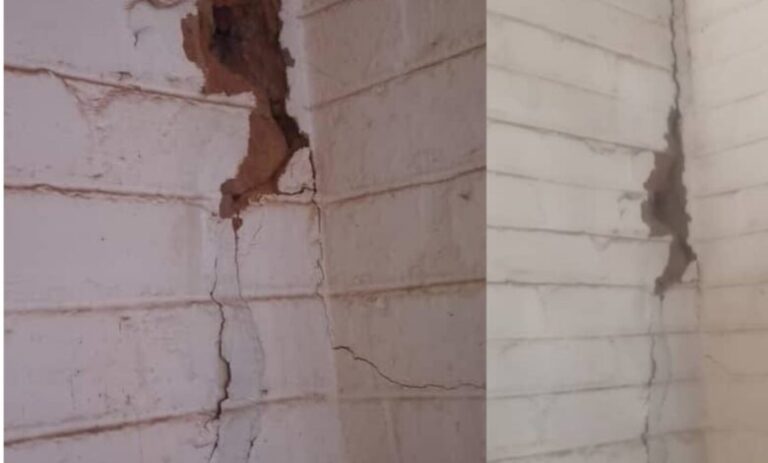
A routine Thursday afternoon turned into a scene of fear and alarm for patients and medical staff at Makonde Christian Hospital after a powerful blast from the nearby Eastern Asia Mine — formerly known as Mhangura Copper Mine — shook the area, shattering windows and triggering visible structural cracks in the hospital building.

By Rudairo Mapuranga

The blast, which allegedly occurred around 5:00 p.m. on May 15, 2025, has since ignited public outrage over the mine’s proximity to the hospital, a facility that serves as a referral point for 10 clinics in the Mhangura Constituency. Concerned citizens allege that this was the 72nd blast carried out by the Chinese-run Eastern Asia Mine in close range of sensitive infrastructure, accusing the mine of reckless disregard for human life and public safety.

Residents near the hospital, including some within one to two kilometres of the site, reported deepening wall cracks, broken windows, and fears of long-term structural instability. One patient on life-saving support allegedly narrowly escaped injury, with the blast shaking the intensive care unit.

“The mining site’s proximity to the hospital, within the buffer zone, raises serious concerns,” read one account from a concerned local. “The site is approximately 150 meters away from the hospital structure, which is alarming.”

The sentiment among residents is one of betrayal and disappointment — a deep frustration over the perception that the community’s well-being is being subordinated to mining interests.

Eastern Asia Mine, which is operating the former Zimbabwe Mining Development Corporation (ZMDC) copper mine, has been operating in Mhangura on a site that once represented the pride of Zimbabwean copper mining. Yet while the Chinese investor has reignited mining operations, questions are being raised over whether this revival has come at the cost of the health and safety of Mhangura’s residents.

Historically, the Mhangura Copper Mine had considered relocating the hospital to the Mhangura Golf Club area, citing the presence of high-grade copper beneath the hospital. However, the plan was scrapped after internal disagreements, and efforts to establish a replacement facility in Alaska also failed to materialise.

Fast forward to 2025, and the explosion at Eastern Asia Mine suggests that little has changed in terms of prioritising people over profit. Worse still, allegations suggest that the May 15 blast proceeded despite prior knowledge that officials from the Environmental Management Agency (EMA) and the Ministry of Mines were en route to stop it.

“It’s concerning that the company proceeded to set up and charge such a large blast despite knowing that regulatory bodies were on their way to intervene,” said one informant, echoing the fears that regulation is being undermined by corporate indifference.

When contacted for comment, Eastern Asia Mine’s manager, Samantha, referred all questions to ZMDC, the state-owned entity overseeing the mining operation. In response to a formal inquiry, ZMDC General Manager Blessing Chitambira acknowledged the incident and said the issue was receiving “the utmost attention.”

“As a stakeholder, you will be notified of actions to be taken regarding the above subject matter and issues you have raised. In the meantime, all blasting activities have been suspended to pave the way for lasting solutions,” Chitambira said.

The statement, though welcome, has done little to ease community anxiety. For many in Mhangura, this is not the first time a mining company has promised to listen after the damage has already been done. The residents want more than a temporary suspension — they are calling for an urgent, independent structural assessment of the hospital, an enforceable buffer zone, and full transparency on future blasting protocols.

There is a sense, too, that ZMDC must do more than issue reassurances. In a series of questions directed to Chitambira, I asked whether ZMDC had sanctioned the May 15 blast, whether any rehabilitation efforts would be undertaken, and whether the corporation intended to revisit the idea of relocating the hospital — a conversation that dates back to the pre-2000s but has remained largely shelved.

Blasting 150 meters from a hospital, particularly one that provides critical services to a catchment area as wide as Mhangura, is not only a question of law, but of morality. While ZMDC has promised to investigate and respond, it remains unclear how the institution will enforce accountability on its Chinese partners, who have shown what residents describe as “little to no regard for humanitarian considerations.”

What complicates matters further is the historical baggage of SMM and Mhangura Copper Mine, once a state-run enterprise. After its collapse due to mismanagement and political infighting, the community was left in economic limbo, and any hope of industrial revival was quickly overshadowed by disillusionment. Now, with the resurgence of mining under Eastern Asia Mine, the community hoped for economic revitalisation, not the demolition of its healthcare infrastructure.

As one resident aptly put it, “We didn’t sign up for development at the expense of our safety. You can’t talk about job creation when your hospital is crumbling.”

Whether the Makonde Christian Hospital will recover from the damage remains to be seen. What is certain is that Mhangura’s people are no longer silent, and their voices — tired but resolute — are demanding answers, safeguards, and a mining future that places people before profit.

Khayah Cement to Delist as Fossil Mining Faces Strategic Crossroads

0

Khayah Cement is set to delist from the Zimbabwe Stock Exchange (ZSE), following creditor approval of a business rescue plan aimed at salvaging the company’s distressed operations.

By Ryan Chigoche

The decision comes amid mounting financial pressure, inherited debt, and U.S. sanctions that have hampered efforts by majority shareholder Fossil Mining to stabilise the business.

Fossil Mining, which acquired Khayah Cement (then Lafarge Zimbabwe) from Holcim in 2022 for US$29.7 million, inherited significant liabilities, chief among them, a legacy debt of US$11 million.

Since the acquisition, the company has struggled to modernize its infrastructure, with key assets like a 26,000-tonne-per-month clinker kiln overdue for maintenance and critical production capacity locked in two mothballed ball mills.

The delisting proposal, led by Corporate Rescue Practitioner Bulisa Mbano of Grant Thornton, was finalised at a creditors’ meeting in May.

Mbano argues that withdrawing from public markets will give Khayah the operational flexibility to restructure, renegotiate debt, and implement cost-cutting strategies without the constraints of shareholder reporting requirements.

However, the turnaround plan is unfolding under complex conditions. Sanctions imposed by the U.S. government on Fossil Mining and its shareholders have severely restricted the company’s access to global financial markets.

These sanctions not only inhibit Khayah’s ability to attract foreign investment but also complicate the procurement of financing necessary for rehabilitating essential production assets.

Khayah’s assets, including a 700,000-tonne-per-year Vertical Cement Mill and the two idle ball mills with 450,000 tonnes of combined annual capacity, remain underperforming.

Restoring these facilities is central to Mbano’s recovery strategy, but funding remains uncertain in Zimbabwe’s constrained economic environment.

The broader implications for Fossil Mining are significant. If the company proceeds with an exit, finding a new investor capable of navigating both Zimbabwe’s macroeconomic volatility and international sanctions will be a major challenge. Conversely, if Fossil remains committed, it will need to secure alternative funding channels and withstand geopolitical headwinds.

Khayah’s restructuring reflects the wider fragility of Zimbabwe’s industrial value chain, where mining-linked industries remain vulnerable to both legacy inefficiencies and global financial restrictions.

Whether the delisting results in a sustainable recovery or a strategic withdrawal will depend largely on how the company addresses these dual pressures—internal operational failure and external financial isolation.

Kuvimba Needs US$950 Million to Fund Operations, CEO Reveals at Gold Symposium

0

Kuvimba Mining House CEO Trevor Barnard has revealed that the diversified, Mutapa Investment Fund-owned mining giant requires approximately US$950 million to bring its full portfolio of mining operations to optimal production capacity, Mining Zimbabwe can report.

By Rudairo Mapuranga

Speaking at the Gold Symposium during the Chamber of Mines of Zimbabwe (CoMZ)’s Annual Mining Conference and Exhibition 2025 —an event sponsored by Kuvimba, Barnard provided an in-depth overview of the company’s strategic direction, financial needs, and long-term vision for the Zimbabwean mining sector.

“Our vision is to create a better, sustainable future for Zimbabweans,” Barnard said in his opening remarks. “Mining is a long-term industry. You don’t plan for today and tomorrow. You plan 10, 20, even 30 years into the future.”

Barnard explained that Kuvimba’s mission is centred on unlocking the country’s mineral wealth to create enduring value for stakeholders while improving livelihoods across Zimbabwe. He emphasised that these improvements must be sustainable across generations and that every decision taken today must be made with the future in mind.

Outlining Kuvimba’s operational structure, Barnard said the company’s assets are divided into four clusters: gold, energy, bulk minerals, and platinum group metals (PGMs). The gold cluster includes well-known operations like Freda Rebecca Gold Mine and Shamva Gold Mine. In the energy cluster, the company has lithium and nickel assets (Sandawana Mines and Trojan Nickel Mine), though Bindura Nickel Corporation’s Trojan Nickel Mine is currently under care and maintenance. The bulk minerals cluster includes chrome miner ZimAlloys, while PGMs form another important part of Kuvimba’s portfolio—mines include Great Dyke Investment.

In discussing the strategic objectives, Barnard noted that efficient mining asset management, sustainable resource management, and profitability enhancement are key pillars of Kuvimba’s future. These objectives are underpinned by values such as zero harm, integrity, teamwork, resilience, and diversity—principles that guide the company’s operations.

However, the CEO underscored that realising this ambitious vision hinges on one critical factor: funding.

“We require a significant amount of funding to make our businesses work,” Barnard stated. “We’ve done some preliminary work on our funding requirements, and currently we sit around US$950 million required to fund our operations and bring them to full production capacity.”

Barnard also pointed out that resource definition remains a core component of the company’s planning, adding that processing and production capacity development will be vital for expansion.

“We need to make sure we’ve got the right capacity to process and develop all our resources. That’s key,” he said.

Compliance—both regulatory and operational—was another area Barnard highlighted as essential for Kuvimba’s success. “Compliance is not negotiable. We need to support the industry and government in ensuring we operate within a realistic but robust framework,” he said.

Infrastructure development—especially vault infrastructure—was cited as critical not only to Kuvimba but to the mining sector at large. Finally, Barnard stressed the importance of building a competent and cohesive team to drive the company’s success across its diversified operations.

Kuvimba Mining House, whose assets contribute significantly to Zimbabwe’s mining sector, is a flagship for the country’s push toward value addition and beneficiation. However, with the company’s US$950 million capital requirement, the road ahead will depend on attracting investment, securing financing, and executing a long-term development strategy.