Home Blog Page 108

Local Manufacturer Calls for Policy Reform to Protect Zimbabwe’s Mining Supply Chain

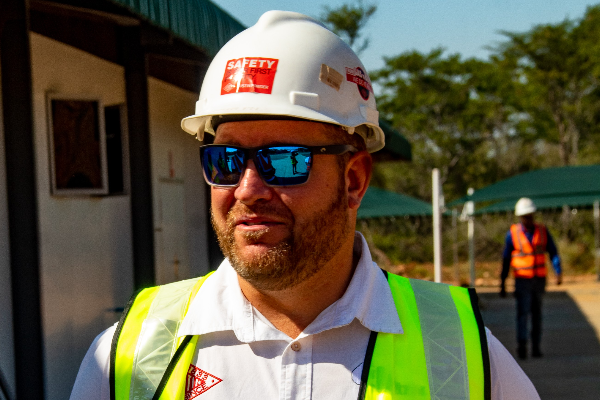
Explosives giant Intrachem has raised concerns over structural and policy-driven disadvantages that are undermining local industry competitiveness.

Speaking to Mining Zimbabwe Intrachem’s Managing Director, Darryn Brider said, despite having ample production capacity to meet market demand, rising raw material costs, limited local supply options, and skewed import policies are threatening the sustainability of domestic manufacturing.

“We have more than sufficient supply capacity to meet the market requirements,” the Brider said, “but the high cost base—especially for raw materials—is what puts us at a disadvantage compared to foreign competitors.”

Local sourcing of raw materials is proving to be neither feasible nor affordable.

“We have little to no availability of local suppliers for critical inputs, and when they are available, their pricing is simply too high for us to remain competitive in certain segments of the mining industry,” Brider explained.

As a result, many manufacturers turn to South Africa, where supply chains are more robust. However, this reliance is not without risk, Brider said.

“South African supply can be fragile,” he cautioned, “but for now, it gives us the capacity to meet and grow with market demand.”

In a bid to ensure continuity and buffer against regional supply shocks, the company has invested in infrastructure, including a new ammonium nitrate (AN) dissolving plant and expanded storage facilities. These initiatives are aimed at boosting self-sufficiency and guaranteeing a consistent supply for both existing and prospective mining clients.

But the real hurdle remains policy. Imported raw materials used by local manufacturers attract tariffs and duties, while finished goods imported by foreign competitors benefit from SADC exemptions.

“This creates an uneven playing field. We’re penalised for trying to manufacture locally, while importers enjoy duty-free access, even though it drains mining procurement funds out of the country and worsens our trade deficit,” he said.

Of particular concern is the misuse of VAT-free and duty-free AN fertiliser, intended for agriculture, being repurposed for mining operations.

“This loophole is distorting the market and undermining legitimate industrial supply chains,” he lamented.

Brider called for urgent policy reforms to support domestic production, curb misuse of duty exemptions, and encourage local procurement in the mining sector.

“We have the capacity, the commitment, and the infrastructure. What we need is a fair operating environment.” Brider concluded.

Gold buying prices per gram in Zimbabwe, 5 May 2025

Gold buying prices per gram in Zimbabwe today, 5 May 2025, from the official gold buyer and exporter Fidelity Gold Refinery (FGR).

SG 90% and ABOVE US$98.73/g.
SG ABOVE 89% BUT BELOW 90% US$97.68/g.
SG ABOVE 80% BUT BELOW 85% US$96.64/g.
SG ABOVE 75% BUT BELOW 80% US$95.59/g.
SAMPLE BELOW 10g BUT ABOVE 5g US$94.03/g.

Fire Assay CASH $99.25/g.

NB: Fire Assay cash price is for gold above 100g; no sample is deducted.
A sample of not more than 10g is deducted for the Fire Assay Transfer price.
A 2% royalty is charged on all deposits (Small-scale miners).
A 5% royalty is set for Primary Producers.

EMA Approves Invictus Energy’s Pilot Gas Production at Cabora Bassa

0

Invictus Energy Limited, listed on both the Australian and Victoria Falls stock exchanges, has been granted approval by Zimbabwe’s Environmental Management Agency (EMA) to proceed with pilot production activities at its Cabora Bassa Project, following a successful Environmental and Social Impact Assessment (ESIA) for the quarter ending March 31, 2025.

By Ryan Chigoche

This clearance paves the way for the company to begin commercial development of the Mukuyu Gas Field and other nearby discoveries, positioning Invictus as a potential solution to Zimbabwe’s ongoing energy deficit.

According to the company’s quarterly update, the ESIA builds upon a thorough 2019 assessment—one of the most detailed environmental reviews ever carried out in the country. This approval marks a turning point in the company’s efforts to unlock the commercial potential of natural gas in the Cabora Bassa Basin.

Invictus is also spearheading a Gas-to-Power initiative at Eureka Gold Mine in partnership with Dallaglio, which owns the mine, and Spanish energy firm Himoinsa SA.

The project plans to convert natural gas from Mukuyu into liquefied form and transport it to the mine to provide a stable and cost-effective power supply, reducing reliance on the national grid.

Initial studies suggest the project could generate electricity at over US$10 per gigajoule, a rate that is competitive with current power tariffs, underscoring the economic strength of the venture.

This initiative is not only aimed at powering the Eureka Mine but could also serve as a regional energy source, especially as southern Africa continues to struggle with energy shortages.

Beyond this, Invictus is exploring further gas extraction opportunities within its broader license area, including Special Grant 4571 and Exclusive Prospecting Orders 1848 and 1849, as it looks to expand the scale of the project.

The company is currently focused on conducting detailed feasibility studies and finalising technical plans for pilot production. It is also reviewing technology partners for gas liquefaction and transportation logistics, in collaboration with Himoinsa.

By tapping into local gas reserves, Invictus aims to lower energy costs, improve electricity reliability, and stimulate industrial growth in Zimbabwe, where power outages remain a major obstacle.

This approach also supports the global transition toward cleaner energy sources, as natural gas produces significantly fewer emissions than coal or diesel fuels that currently dominate Zimbabwe’s energy landscape.

ZMF Secures Chrome Breakthrough as DISCO Agrees to Offtake and Equip Small-Scale Chrome Miners

0

The Zimbabwe Miners Federation (ZMF) has clinched a crucial agreement with Dinson Iron and Steel Company (DISCO), which will see DISCO become an official chrome offtaker and machinery supplier for artisanal and small-scale chrome miners.

By Rudairo Mapuranga

Announcing the development after a tour of DISCO’s massive facility in Manhize, ZMF President Henrietta Rushwaya described the partnership as a “game-changer” for small-scale chrome miners. Many of these miners have long been excluded from value chains due to a lack of market access and limited access to affordable equipment.

“Dinson has agreed to become an offtaker of chrome from our small-scale miners,” Rushwaya said. “They will also supply our miners with the requisite machinery, which reduces downtime and increases production efficiency.”

The new arrangement means small-scale miners will now be able to sell chrome directly to DISCO and receive immediate payment—bypassing the bureaucratic red tape and costly delays associated with export formalities, such as CD1 forms and permits.

“This will revolutionise how our chrome miners operate,” said Rushwaya. “They will no longer go through the rigorous process of export documentation. DISCO will pay them directly and instantly, creating a sustainable and secure market for their output.”

Zimbabwe’s small-scale chrome sector has grown significantly over the past decade, with artisanal miners contributing a substantial portion of national production. However, erratic pricing, high logistical costs, and dependency on exports have hindered growth and limited income for thousands of miners.

Rushwaya said the collaboration with DISCO will inject certainty into the sector, ensure stability, and empower miners to scale up operations. With the availability of locally manufactured machinery, production bottlenecks—often caused by equipment breakdowns—are expected to decrease significantly.

“This initiative puts the chrome sector on a strong footing,” she added. “It shows that Zimbabwe’s mining industrialisation agenda is not just about large corporations—it is about uplifting the thousands of Zimbabweans in small-scale mining.”

She called on other mining firms and industrial players to take a leaf from DISCO’s model and forge inclusive partnerships that promote local procurement and domestic beneficiation.

“This is a shining example of how mining and manufacturing can work together to build Zimbabwe’s economy. We are proud to have DISCO as a partner in this national development journey,” Rushwaya concluded.

The Zimbabwe Miners Federation represents over 1.5 million artisanal and small-scale miners and is the country’s largest organised body for small-scale mining. With strategic collaborations such as this, ZMF is positioning itself as a driving force behind the formalisation, modernisation, and prosperity of Zimbabwe’s mining sector.

ZINIRE to Conduct Technical Visit to Zimplats on 30 May 2025

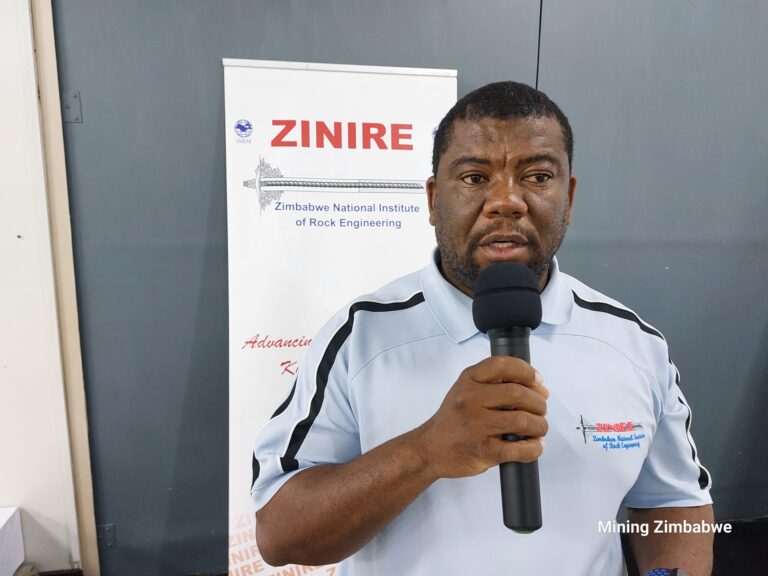
The Zimbabwe National Institute of Rock Engineering (ZINIRE) has announced that its First Technical Visit of 2025 is scheduled for Friday, 30 May 2025, at Zimbabwe Platinum Mines (Zimplats) in Ngezi.

This exclusive event offers members a unique opportunity to gain firsthand insights into one of Zimbabwe’s largest platinum operations. Attendees will explore Zimplats’ cutting-edge mining technologies, sustainability practices, and operational excellence.

Key Details:

  • Event: ZINIRE Technical Visit to Zimplats
  • Location: Zimplats, Ngezi
  • Date: Friday, 30 May 2025
  • Slots Available: Only 20 spots available

Priority registration is open to fully paid-up ZINIRE members—first come, first served! The visit will allow members to experience one of Zimbabwe’s flagship mining operations up close.

📩 Register now via this link: https://forms.gle/FK5CzXWKrEd5Jx2y5

Gold buying prices per gram in Zimbabwe, 2 May 2025

Gold buying prices per gram in Zimbabwe today, 2 May 2025, from the official gold buyer and exporter Fidelity Gold Refinery (FGR).

SG 90% and ABOVE US$97.67/g.
SG ABOVE 89% BUT BELOW 90% US$96.63/g.
SG ABOVE 80% BUT BELOW 85% US$95.60/g.
SG ABOVE 75% BUT BELOW 80% US$94.57/g.
SAMPLE BELOW 10g BUT ABOVE 5g US$93.02/g.

Fire Assay CASH $98.18/g.

NB: Fire Assay cash price is for gold above 100g; no sample is deducted.
A sample of not more than 10g is deducted for the Fire Assay Transfer price.
A 2% royalty is charged on all deposits (Small-scale miners).
A 5% royalty is set for Primary Producers.

Invictus Advances Cabora Bassa Partnerships and Licence Extension

0

Australian oil and gas company Invictus Energy is making steady progress on its flagship Cabora Bassa Project in northern Zimbabwe, according to its quarterly activities report and cash flow statement for the period ending March 31, 2025.

By Ryan Chigoche

During the quarter, Invictus advanced talks with several potential farm-out and strategic partners. These include oil and gas companies as well as investment groups with the capacity to bring both funding and technical expertise to the table.

The aim is to share development costs and fast-track exploration and appraisal efforts.

A farm-out deal would involve Invictus transferring part of its interest in the project to another party, in exchange for that party covering certain exploration or development expenses.

This is a common strategy in the oil and gas sector to reduce risk while keeping projects moving forward.

The company’s main focus remains the Mukuyu gas field, where the Mukuyu-2 well confirmed the presence of multiple gas-bearing zones in late 2023.

This was Zimbabwe’s first hydrocarbon discovery and a major milestone that could reshape the country’s energy sector. Invictus is now working to bring Mukuyu closer to commercial production.

In support of this goal, the company secured an extension of its key exploration licence earlier this year. In January, the Zimbabwean government granted a three-year renewal of Special Grant 4571 (SG 4571), which is now valid until December 19, 2027.

The licence is held by Geo Associates (Pvt) Ltd, a Zimbabwean subsidiary in which Invictus holds an 80 per cent stake.

The extension allows Invictus to launch a new phase of work, including 3d seismic surveys, more exploration and appraisal drilling, and well testing to evaluate commercial potential.

The company also retains the right to apply for a production licence at any time during the current licence term.

Cabora Bassa is well-positioned in terms of infrastructure and market access. Its location near existing transport routes makes it easier to deliver gas to domestic users as well as to high-demand export markets, particularly South Africa and the wider SADC region.

As regional energy shortages persist, Invictus sees an opportunity to help Zimbabwe become a key supplier of natural gas.

The company says it remains focused on building strong partnerships that will help unlock long-term value from what could be one of Southern Africa’s most promising new energy assets.

Pickstone Peerless Secures Triple ISO Certification for Quality, Safety, and Sustainability

0

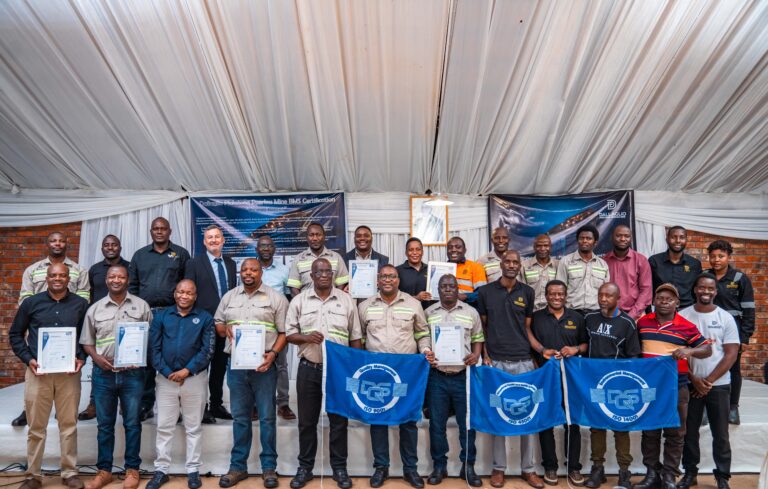
Pickstone Peerless Mine has marked a major milestone in its operational journey by receiving three internationally recognised ISO certifications. At a ceremony held at Manna Resorts, the mine was officially awarded ISO 9001:2015 for Quality Management, ISO 14001:2015 for Environmental Management, and ISO 45001:2018 for Occupational Health and Safety.

By Ryan Chigoche

The achievement highlights the mine’s commitment to global best practices in quality control, environmental sustainability, and workplace safety—principles that have become increasingly important amid evolving operational demands.

The certifications come at a pivotal moment for Pickstone Peerless, following its transition to underground mining in the second half of 2024. The US$18 million investment in this shift aimed to unlock higher-grade ore and improve overall efficiency.

Despite the challenges typically associated with such a major operational change, the mine maintained solid performance throughout the year.

Management credits the implementation of ISO-compliant systems with helping to stabilise operations during this transition.

The structured approach to quality, safety, and environmental management has laid a foundation for improved consistency, risk mitigation, and long-term sustainability.

As the mine targets increased production and efficiency in 2025, the ISO certifications are expected to play a critical role in supporting these goals.

They not only enhance internal processes but also position Pickstone Peerless as a more attractive partner to investors, regulators, and customers alike.

The certificates were presented by the Chief Executive Officer of DQS South Africa, a globally recognised certification body.

The ceremony was attended by senior government officials, regulatory representatives, and business partners, underscoring the broader significance of the achievement.

Mine Workers Drive Zimbabwe’s Mining Engine Amid Rising Fatalities and Wage Injustices – ZDAMWU

0

Zimbabwe’s mining industry employs over 50,000 formal workers and contributes 70% to foreign direct investment, 80% to exports, and 19% to government revenues, making mine workers the undeniable backbone of the national economy. Yet, despite their indispensable role, their welfare continues to be compromised by low wages, unsafe working conditions, and policy neglect, the Zimbabwe Diamond and Allied Minerals Workers Union (ZDAMWU) said.

By Rudairo Mapuranga

This Workers’ Day, ZDAMWU has sounded the alarm on these “long-standing injustices.” Under the theme “Empowering Mine Workers, Building Union Power in Unity and Shaping Our Future for Transformation,” ZDAMWU has declared 1 May 2025 not just a celebration, but a moment of reckoning.

“We are not just labourers; we are builders of a better future,” ZDAMWU General Secretary Justice Chinhema declared. “This Workers’ Day must renew our collective resolve. We owe it to ourselves and to future generations of mine workers to create an industry that is equitable, resilient, and humane.”

According to Chinhema, while Zimbabwe boasts over US$6 billion in annual mineral output, mine workers continue to bear the brunt of its dangers. According to statistics cited by ZDAMWU, the mining sector recorded 121 fatal accidents in 2021, 179 in 2022, and a staggering 237 fatalities in 2023—a nearly 96% increase over two years. Most of these fatalities occurred in under-regulated operations, especially artisanal and small-scale mines, where safety standards are often an afterthought.

“Our celebration is tempered by the sobering reality of high mine fatalities,” Chinhema said. “It is not enough to merely gather in commemoration. We must remember—and act on behalf of—those who have paid the ultimate price.”

The growing death toll underscores the urgent need for a national strategy on occupational health and safety. ZDAMWU is calling for non-negotiable safety reforms, including stringent monitoring, regular health screenings, and accessible medical services for all mine workers.

According to Chinhema, Zimbabwe’s mining sector, according to the Zimbabwe Investment and Development Agency (ZIDA), contributes 13.5% to national income, with over $3 billion in taxes and royalties generated annually. Yet, the workers generating that wealth often live in poverty, with salaries far below regional benchmarks.

The latest wage negotiations under the National Employment Council (NEC) secured a 4% increase from January to June and a 5% rise from July to December 2025. While this was a modest gain, it fell significantly short of ZDAMWU’s demand for a living wage pegged at USD 600.

“In the context of a global downturn in mineral markets—excluding gold—we acknowledge this as a strategic gain,” Chinhema noted. “But make no mistake, the fight for a living wage is far from over.”

ZDAMWU’s admission to the NEC for the mining industry in 2025 marked a major victory for the young union, which has been vocal in pushing for a pro-worker agenda. Chinhema emphasized that unity is the workers’ greatest defence.

“We urge all mine workers to actively participate in union activities. Workers must recognize that a stronger union yields stronger protections, fairer wages, and enhanced job security,” he said.

As part of its 2025 campaign, the union has outlined bold policy targets:

  • End Labour Casualisation: By capping short-term contracts and ensuring permanent positions for permanent work.

  • Enforce Occupational Health Standards: Including mental health support.

  • Secure a Living Wage: One that reflects the hazardous nature of mining.

  • Promote Decent Housing: By ending mining compounds and developing inclusive communities.

  • Advocate for Environmental Justice: Ensuring mining doesn’t destroy the ecosystems communities rely on.

Chinese Investment: A Double-Edged Sword

The rise of Chinese capital in Zimbabwe’s mining sector has brought mixed outcomes. While it has revived defunct operations and injected liquidity, concerns over labour rights violations, poor wages, and environmental degradation have intensified.

“Economic growth must never come at the cost of human dignity,” Chinhema said. “Reports of exploitation in Chinese-run mines must be taken seriously and addressed through transparent, enforceable laws.”

ZDAMWU has called on the government to demand strict compliance with labour laws from foreign investors, especially in lithium and chrome mining operations where abuses have been reported.

For ZDAMWU, May Day is not merely symbolic—it is a call to conscience. As Zimbabwe enters a new phase of economic growth driven by lithium, platinum, and gold, the union argues that workers must not be left behind.

“May Day must stand as a resolute tribute to the unsung heroes of our mining sector. It is a day to demand accountability from employers, policymakers, and investors alike,” said Chinhema.

He added that the future of mining must be inclusive, safe, and just—built not only on minerals but also on the sweat and dignity of workers.

ZDAMWU has laid out a transformative vision anchored in job security, environmental stewardship, and technological adaptation. With automation threatening traditional mining jobs, the union is also calling for robust re-skilling programmes to help workers transition into future-ready roles.

“We must adapt strategically,” Chinhema said. “As we confront global market volatility and the challenges of modern mining, our union must lead the call for responsible and inclusive practices.”

This Workers’ Day, ZDAMWU has reaffirmed its place as Zimbabwe’s most vocal champion for mine workers’ rights. While the journey toward justice remains long, the message is clear: Failure is not an option.


Gold buying prices per gram in Zimbabwe, 30 April 2025

Gold buying prices per gram in Zimbabwe today, 30 April 2025, from the official gold buyer and exporter Fidelity Gold Refinery (FGR).

SG 90% and ABOVE US$100.41/g.
SG ABOVE 89% BUT BELOW 90% US$99.35/g.
SG ABOVE 80% BUT BELOW 85% US$98.29/g.
SG ABOVE 75% BUT BELOW 80% US$97.22/g.
SAMPLE BELOW 10g BUT ABOVE 5g US$95.63/g.

Fire Assay CASH $100.94/g.

NB: Fire Assay cash price is for gold above 100g; no sample is deducted.
A sample of not more than 10g is deducted for the Fire Assay Transfer price.
A 2% royalty is charged on all deposits (Small-scale miners).
A 5% royalty is set for Primary Producers.