Home Blog Page 114

Local Suppliers Told to Be Fair in Their Pricing, Warned Against Profiteering

0

Local suppliers have been urged to act responsibly and avoid profiteering when selling goods and services to Zimbabwe’s small-scale mining sector. There is growing concern that inflated prices are threatening the viability of operations for many small-scale miners.

By Ryan Chigoche

The call was made by Mashonaland West small-scale miner, Chiedza Chipangura, during a Zimbabwe Miners Federation (ZMF) meeting with suppliers in the capital.

This meeting was part of ZMF’s ongoing efforts to foster better relationships between suppliers and the small-scale mining community.

ZMF, which represents over 1.5 million miners, opened its doors to suppliers, providing them with direct access to miners to enhance trust and collaboration.

Chipangura pointed out that many local suppliers source most of their products cheaply from China but then impose exorbitant markups when selling them to miners.

“Local suppliers must act with integrity and responsibility when dealing with the small-scale mining sector. These miners are not only the backbone of our economy but also key players in job creation and rural development. It is therefore imperative that suppliers offer fair and reasonable prices for goods and services, rather than taking advantage of the sector through excessive markups,” Chipangura said.

She further warned that if suppliers continue to inflate prices, miners will be forced to look for alternative sources, including importing equipment directly, which could leave local suppliers without business.

“If the prices aren’t fair, miners will have no choice but to bypass local suppliers and import equipment on their own. That would leave suppliers out of work and harm the local economy,” she added. “We want to work with the value chain—that’s how we grow together.”

The initiative, according to ZMF officials, aims to create a platform for direct engagement between suppliers and miners, fostering transparency and accountability.

The hope is that this will encourage suppliers to adjust their pricing to reflect the realities of the small-scale mining sector and reduce the practice of overcharging.

Participants at the meeting cautioned that continued profiteering could derail efforts to formalize the artisanal and small-scale mining (ASM) sector, which already plays a vital role in Zimbabwe’s economy.

With miners responsible for a significant portion of the country’s gold production, any disruption to their operations could have far-reaching consequences.

With over half a million Zimbabweans directly employed in small-scale mining, ensuring fair pricing is seen as essential for the sustainability and long-term success of the sector.

By sourcing locally, miners not only support the economy but also enjoy faster access to necessary resources, ensuring smoother operations.

Gold, Cash, and Guns Stolen in Armed Robbery at a Shamva Mine

0

A heavily armed gang of about 30 robbers, some dressed in camouflage, stormed a Chinese-owned gold mine in Shamva on the night of April 13, making off with gold, cash, mobile phones, and firearms, police have confirmed.

The brazen heist took place at Ming Chang Sino Africa Mine in the Tafuna area of Mashonaland Central. The attackers reportedly got away with US$7,000 in cash, 20 grams of gold, 50 mobile phones, and two Mossberg shotguns.

The robbery began around 11:20 PM when 13 masked assailants—10 of them wearing military-style fatigues and armed with pistols and baton sticks—approached the mine’s main entrance and overpowered two security guards.

Simultaneously, another group of about 17 suspects breached the perimeter fence and rounded up more than 50 workers.

“The suspects ordered the workers to lie on the ground while assaulting them and demanding cash and valuables,” police said in a statement.

The Mine’s General Manager, Yuehui Du (45), was force-marched to his office, where he surrendered five mobile phones and US$1,200 in cash. In a separate incident, the Stores Manager, Jie Bao (38), was robbed of US$3,200, 20 grams of gold, and two mobile phones.

The workers were also searched, collectively losing US$2,564 in cash. In total, 50 mobile phones were taken from both staff and management.

The robbers also disarmed security personnel, seizing two Mossberg shotguns during the raid.

Although the gang appeared highly coordinated, police believe the sheer number of attackers may have introduced vulnerabilities, potentially leaving behind clues that could aid investigators.

The use of camouflage uniforms has raised concerns about the possible involvement of individuals with access to military-style gear.

Police are now reviewing CCTV footage from the mine as part of their investigation.

Authorities are also working closely with the mine’s management to assess security lapses and strengthen safety protocols at mining operations across the region.

UPDATE: 3 Killed, 6 Injured in Mine Shaft Collapse at Boss Mine, Mashava

0

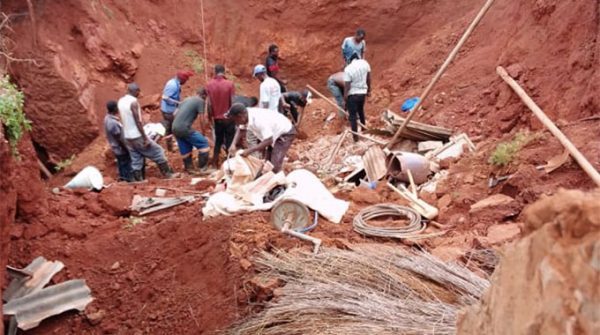
Mashava, Masvingo – The Zimbabwe Republic Police (ZRP) have confirmed that 3 people were killed and six injured in an incident that occurred in the early hours of April 12, 2025, at Bere SP Mining Syndicate, located at Village 1, Boss Mine in Mashava.

According to the ZRP, the accident happened around 0300 hours when a mine shaft collapsed while workers were underground. Three individuals lost their lives in the incident, while six others sustained injuries.

The deceased bodies were transported to the Masvingo General Hospital mortuary for post-mortem examination. The injured victims are currently receiving treatment at the same hospital.

Further details, including the identities of the victims, are expected to be released once their next of kin have been notified.

The incident raises renewed concerns over mine safety protocols and the conditions under which many artisanal and small-scale miners operate across the country.


We had reported earlier that 25 people were feared dead, according to our sources. However, the Police have given the actual number rather than the estimate from the initial reports. Mining Zimbabwe regrets any inconvenience this may have caused.

Gold buying prices per gram in Zimbabwe, 14 April 2025

Gold buying prices per gram in Zimbabwe today, 14 April 2025, from the official gold buyer and exporter Fidelity Gold Refinery (FGR).

SG 90% and ABOVE US$98.15/g.
SG ABOVE 89% BUT BELOW 90% US$97.11/g.
SG ABOVE 80% BUT BELOW 85% US$96.07/g.
SG ABOVE 75% BUT BELOW 80% US$95.03/g.
SAMPLE BELOW 10g BUT ABOVE 5g US$93.47/g.

Fire Assay CASH $98.66/g.

NB: Fire Assay cash price is for gold above 100gs; no sample is deducted.
For the Fire Assay Transfer price, a sample of not more than 10g is deducted.
A 2% royalty is charged on all deposits (Small-scale miners).
A 5% royalty is set for Primary Producers.

BREAKING: Miners feared dead in Mine shaft collapse in Mashava

0

As a matter of fact:- We had reported earlier that 25 people were feared dead, according to our sources. However, the Police have given the actual number rather than the estimate from the initial reports. Mining Zimbabwe regrets any inconvenience this may have caused.

Miners are feared dead after a mine shaft collapsed at Bosso Mine in Mashava, reports reaching Mining Zimbabwe indicate.

According to sources, Police vehicles were seen speeding to the scene, and mine owners were reported to have fled.

Mining Zimbabwe tried contacting National Police spokesperson Assistant Commissioner Paul Nyathi, whose phone was unreachable. We also tried contacting Masvingo rural and central Police, but calls went unanswered.

This is a developing story…


Gold buying prices per gram in Zimbabwe, 11 April 2025

Gold buying prices per gram in Zimbabwe today, 11 April 2025, from the official gold buyer and exporter Fidelity Gold Refinery (FGR).

SG 90% and ABOVE US$95.49/g.
SG ABOVE 89% BUT BELOW 90% US$94.48/g.
SG ABOVE 80% BUT BELOW 85% US$93.47/g.
SG ABOVE 75% BUT BELOW 80% US$92.46/g.
SAMPLE BELOW 10g BUT ABOVE 5g US$90.94/g.

Fire Assay CASH $96.00/g.

NB: Fire Assay cash price is for gold above 100gs; no sample is deducted.
For the Fire Assay Transfer price, a sample of not more than 10g is deducted.
A 2% royalty is charged on all deposits (Small-scale miners).
A 5% royalty is set for Primary Producers.

ZMF Urges Banks to Hire Mining Experts to Ease Miners’ Access to Funding

0

The Zimbabwe Miners Federation (ZMF) is calling on local banks to employ mining professionals, such as geologists and industry experts, to create specialized desks aimed at improving small-scale miners’ access to crucial financial resources.

By Ryan Chigoche

Tafi Chitsunge, a senior official at ZMF, emphasized that small-scale miners face significant challenges in securing capital due to stringent bank requirements that do not take into account the unique aspects of mining operations.

During a recent ZMF meeting with industry suppliers, Chitsunge pointed out the importance of having professionals who understand the complexities of the mining sector.

He stressed that, “Local banks must have mining professionals who understand the technical and operational aspects of the mining sector in order to effectively assess and support viable projects. This will enhance small-scale miners’ access to much-needed capital, which has long been a major challenge due to a lack of sector-specific knowledge within financial institutions.”

Small-scale miners are a key part of Zimbabwe’s gold sector, accounting for approximately 65% of total gold production in 2024, which equates to around 23.69 tonnes. In contrast, large-scale miners contributed the remaining 35%, or about 12.79 tonnes.

Despite their vital role in the economy, small-scale miners continue to face significant hurdles when it comes to accessing the necessary funding to expand and modernize their operations.

Many small-scale miners lack formal geological surveys and resource evaluations, making it difficult for banks to assess the viability of their projects.

As a result, traditional financial institutions often reject applications from these miners, who are unable to meet the stringent criteria required for securing loans.

This lack of financial support limits their ability to invest in modern equipment or improve production methods.

Chitsunge emphasized that one way to address this issue is by hiring professionals with a deep understanding of the mining sector.

He explained that a dedicated mining desk, staffed by experts familiar with the unique challenges of small-scale mining, would streamline the loan approval process and better align financial support with the needs of miners.

Such an initiative would also play a crucial role in helping Zimbabwe achieve its ambitious gold production target of 40 tonnes by 2025.

With small-scale miners expected to play a central role in reaching this target, providing them with the financial support they need is essential for the country’s economic growth.

The ZMF has called for greater collaboration between the government, financial institutions, and mining associations to create a more inclusive financial ecosystem for small-scale miners. Chitsunge stressed that improving access to capital is not only necessary to meet Zimbabwe’s gold production goals but also crucial for ensuring the long-term sustainability and growth of the sector.

By securing improved financial resources, small-scale miners can modernize their operations, adopt more sustainable practices, and continue to play a key role in the country’s economic recovery.

ZMF opens doors for suppliers to access its 1,5 million members

0

Over 40 companies that supply goods and services to the mining sector have expressed satisfaction with the Zimbabwe Miners Federation’s (ZMF)’s stakeholder engagement efforts, saying the platform is opening up real business opportunities with the often-overlooked small-scale mining sector.

By Rudairo Mapuranga

The companies attended a breakfast meeting organised by the Zimbabwe Miners Federation (ZMF) at its head office on Thursday, and the message from service providers was clear: ZMF is creating real opportunities for business growth across the mining supply chain.

The event was part of ZMF’s stakeholder engagement drive and also gave suppliers insight into the organisation’s calendar of activities, including the rescheduled National Suppliers Conference, now set for October 30, 2025. The meeting was described by several attendees as productive and filled with potential partnerships.

Rutendo Chabururuka from Principle Truck Sales said the engagement was productive and created important links within the mining value chain.

“As an equipment supplier, I’ve seen there’s a lot of potential in what our miners are already doing. We’ve opened doors for a lot of networking, and we’re looking forward to collaborating with more stakeholders in the sector,” he said.

“ZMF is well-positioned, especially with the international event they’re planning. It shows Zimbabwe is on the global map when it comes to mining.”

Karol Ziwonye from Expo Mix based in Graniteside said the meeting gave her business the exposure it has long been seeking.

“We’ve been supplying big mines, but we never had the chance to introduce our products to Makorokoza. This year looks good. We now have the opportunity to connect with small and medium miners, thanks to ZMF,” she said.

She added that knowing the ZMF calendar will help them plan better and take advantage of key events to market their products and services.

Tawanda Chawira from Performance Laboratories described the engagement as timely.

“The meeting was positive. There are many areas we can collaborate on. It’s definitely in our plan to grow business from small-scale miners. ZMF, as the biggest representative body for them, gives us that access.”

The Federation’s decision to move the Suppliers Conference to October was influenced by feedback from stakeholders who want more time to prepare and align with ZMF’s broader international plans. According to ZMF, the event will bring together service providers, financiers, and development partners under one roof to discuss value chain synergies.

With over 1.5 million artisanal and small-scale miners operating in Zimbabwe, many of whom lack access to formal suppliers and support services, ZMF’s approach is bridging the gap between miners and the services they desperately need.

As one of the few organised platforms linking miners to industry partners, ZMF’s supplier engagements are proving to be a win-win for both miners and businesses looking to grow their footprint in the mining sector.

Gold buying prices per gram in Zimbabwe, 10 April 2025

Gold buying prices per gram in Zimbabwe today, 10 April 2025, from the official gold buyer and exporter Fidelity Gold Refinery (FGR).

SG 90% and ABOVE US$93.44/g.
SG ABOVE 89% BUT BELOW 90% US$92.45/g.
SG ABOVE 80% BUT BELOW 85% US$91.46/g.
SG ABOVE 75% BUT BELOW 80% US$90.47/g.
SAMPLE BELOW 10g BUT ABOVE 5g US$88.99/g.

Fire Assay CASH $93.93/g.

NB: Fire Assay cash price is for gold above 100gs; no sample is deducted.
For the Fire Assay Transfer price, a sample of not more than 10g is deducted.
A 2% royalty is charged on all deposits (Small-scale miners).
A 5% royalty is set for Primary Producers.

Straight Talk with Elizabeth Nerwande – Championing Competence Over Gender

0

Elizabeth Nerwande is a trailblazer in Zimbabwe’s mining sector, known for her groundbreaking leadership and unwavering commitment to inclusive, responsible mining. Currently serving as Head of Corporate Affairs at Mimosa Mining Company, Nerwande brings a rich background in social work and industrial psychology to the industry—fields that have uniquely shaped her human-centered leadership style.

From leading national institutions like ZimTrade and the Consumer Council of Zimbabwe to becoming the first woman to serve as President of the Chamber of Mines of Zimbabwe, her journey is one of resilience, purpose, and transformation.

In this exclusive interview, Elizabeth Nerwande reflects on her path, the evolving role of women in mining, and her vision for a more sustainable and inclusive industry.

Can you start by telling us about yourself—who is Elizabeth Nerwande, and how did your personal and professional journey shape the leader you are today?

EN: I am Head of Corporate Affairs at Mimosa Mine. I am a social worker and psychologist by training. I hold an Honours Degree in Industrial Psychology and a Bachelor of Science Degree in Social Work. Before joining Mimosa, my previous work experience included serving as Executive Director of the Consumer Council of Zimbabwe, Chief Executive Officer of ZimTrade, and Commissioner General for Zimbabwe during the 2015 Aichi World Expo held in Japan.

I had a normal Zimbabwean upbringing, and I was always driven by a desire to do better in life.

You have a strong background in social work and psychology. How did you transition from these fields into the mining industry, and what drew you to it?

EN: My work has always focused on understanding communities and bridging the gap between community expectations and business obligations. Most major mining companies have a dedicated department for this role. So, it was not surprising that in 2009, I found myself consulting for three mining companies on strategic forward-planning issues. I was part of a team that was instrumental in providing innovative solutions and leadership direction in my area of expertise. Based on the work I did for Mimosa, they requested me to join them on a full-time basis in 2011.

What have been some of the defining moments in your career, particularly as you navigated a traditionally male-dominated industry like mining?

My election as President of the Chamber of Mines of Zimbabwe is particularly memorable, as I was the first woman to hold that position. I’m glad to say the Chamber was able to embrace people irrespective of their gender. I had known it as an organisation solidly built around its values, traditions, and norms, and one of its most sacrosanct traditions was respect for leadership and competency.

Can you share an experience that helped shape your leadership approach?

I believe leadership is shaped not so much by single incidents but by everyday lived experiences. The challenging situations we face daily require us to rethink our strategies and adapt quickly. In my case, I have learned that instead of making unilateral decisions, it’s more fruitful to engage my team in open discussions, ensuring that every voice is heard. This experience has reinforced the power of inclusive leadership—when people feel valued and empowered, they contribute their best ideas and efforts. This aligns with our organisational philosophy at Mimosa, where we say that if our people have Mimosa in their hearts and minds, they perform better.

My guiding principle has been that opportunity favours the prepared mind.

Big dreams require healthy habits, and healthy habits require self-discipline.

As the first woman to lead the Chamber of Mines Zimbabwe, how did this experience shape your perspective on women’s roles in the mining sector?

My perspective is that, as in any profession, your competence must speak for itself. We must de-emphasise gender and focus on competence and capability. Having said this, I’m glad to note that during my tenure at the Chamber, people saw me not as a woman but as a competent professional leader. I believe women intending to enter the mining sector must aim to achieve this. No company would want to employ a woman just for the sake of it. So, I encourage women to acquire the requisite training and skills if they want to enter the mining sector. It’s encouraging to note that we now have women engineers, geologists, and professionals in other technical fields that were previously male-dominated.

Over the years, you’ve held significant leadership roles in Zimbabwe’s mining industry. How have you seen the sector evolve since you first joined, and what has your role been in influencing these changes?

EN: The mining sector in Zimbabwe has evolved tremendously since I first joined, particularly in governance, sustainability, and inclusivity. In the past, mining was largely viewed through the lens of extraction and economic gain. Today, there is a greater emphasis on responsible mining practices, environmental stewardship, and community engagement. The role of technology has also expanded, improving efficiency and safety while creating new opportunities for a more diverse workforce.

One of the most notable shifts has been the increasing recognition of women’s contributions to the industry. When I began my journey, mining was predominantly male-dominated, with limited opportunities for women in leadership and technical roles. Today, we see more women not only entering the industry but also taking up influential positions in operations, policy, and governance.

Throughout my career, I have been committed to driving these positive changes. Whether through policy advocacy or corporate governance initiatives, I have worked to create an environment where diversity and inclusion are seen as strengths rather than challenges. I have also championed ethical leadership and ESG (Environmental, Social, and Governance) principles to ensure that mining benefits not just companies but also communities and the nation at large.

What were some of the challenges you faced as a woman in mining, and how did you overcome them?

Working in an industry dominated by men comes with its challenges. I realised I needed to make certain adjustments and work on managing the dynamics of gaining entry and acceptance into the “big boys’ club.” The pressure was real, and sometimes the fear of failure was overwhelming. However, I soon realised that we are not meant to compete with our male counterparts but to complement each other.

The workplace does not need more women trying to be men—it just needs more women. Women bring a humane element to work, which is invaluable in ensuring psychosocial well-being and long-term sustainability.

Were there any specific moments where your gender posed unique challenges or perhaps even advantages?

Yes, there were moments when my gender posed challenges, particularly in gaining initial acceptance in leadership circles. However, I also found that being a woman sometimes gave me an advantage—especially in stakeholder engagement, where empathy, collaboration, and strong communication skills were highly valued.

What has been your approach to building relationships with key stakeholders, including communities, governments, and other industry players, in your role as Head of Corporate Affairs at Mimosa Mining Company?

At Mimosa, we have fully embraced the culture of building relationships with all our stakeholders. We strive for success in delivering value to our stakeholders. In this respect, we have a well-structured stakeholder engagement plan, which involves regular meetings to exchange ideas on how to improve our relations. Stakeholder relations are one of Mimosa’s strongest areas, and we will continue to nurture mutually beneficial relationships.

Can you describe the impact of your leadership on the initiatives you have championed within the mining sector, especially those that support women’s participation and advancement?

Through our CSR work, we have positively impacted communities by providing health services to women, educational infrastructure and support for girls, and potable water, which eases the burden of water collection in rural communities. Our horticulture gardens initiative has also helped women provide food for their families.

The mining industry is continually evolving with a focus on sustainability, modernization, and gender inclusivity. How do you see the role of women changing in the current mining setup, and what more can be done to create equal opportunities?

EN: The role of women in mining has significantly evolved over the years. With the industry’s increasing focus on sustainability, modernization, and inclusivity, we are seeing more women taking up technical, operational, and leadership roles that were once male-dominated. The adoption of new technologies, automation, and ESG (Environmental, Social, and Governance) principles has further opened doors for women, as physical barriers are reduced and skill-based opportunities expand.

We need to empower women with the requisite training so that they attain the competency needed by the industry. This may entail the promotion of STEM subjects for girls. Collaboration between industry leaders, policymakers, and educational institutions is also critical in encouraging more women to pursue careers in mining. By investing in STEM education, scholarships, and outreach programs, we can inspire the next generation of female mining professionals.

Ultimately, gender inclusivity is not just about fairness—it is about industry sustainability. A diverse workforce drives innovation, enhances decision-making, and strengthens business resilience. The mining industry must continue to embrace this transformation to remain competitive and socially responsible.

Reflecting on Zimbabwe’s previous goal of a US$12 billion mining industry by 2023, how do you feel this target has impacted the current mining landscape, and what do you think women, specifically, have contributed to this vision?

EN: I think there was a convergence of minds that the mining industry could chase that target, and I believe that with the sustained growth we are witnessing in mining, it’s only a matter of time before it is achieved. In the last five years or so, the growth has been phenomenal.

As to what women have contributed, let me say it’s not about women—it’s about the industry accepting women as co-participants. The focus must be on understanding that women can also excel in the industry. Let us emphasize competency across the board. We must move away from the notion that simply because we are women, our competence must be questioned or defined by our gender. No, we are humans. Competence must be assessed equally for both genders.

How does Mimosa Mining Company navigate the challenges of balancing profitability with its corporate social responsibility (CSR) and environmental sustainability commitments?

In 2019, we unveiled our Investing Beyond Mining logo to affirm our commitment to sharing the benefits of our operations with the community. Every year, we allocate a percentage of our revenue to CSR initiatives, which we regard with utmost commitment. Over the years, we have made sustained, impactful investments in the areas of health, education, infrastructure development, water and sanitation, as well as sustainable projects.

With the increasing focus on ESG (Environmental, Social, and Governance) principles, how do you see the mining sector in Zimbabwe evolving in the next five to ten years, and what role do you believe women will play in this shift?

EN: The mining sector in Zimbabwe is poised for significant transformation over the next five to ten years, largely driven by the increasing focus on ESG principles. Sustainability will no longer be a peripheral concern but a core part of business strategy. Companies will be expected to adopt greener technologies, reduce their carbon footprint, and implement responsible mining practices that minimize environmental impact. Community engagement and ethical governance will also play a critical role in ensuring that mining benefits local populations and aligns with national development goals.

As I have indicated earlier, the main issue is to de-emphasize gender and stress competency. I believe many competent women will take up influential positions in mining in the next few years.

As someone who has broken barriers in the mining industry, what message or advice would you give to young women aspiring to join the sector?

EN: To young women aspiring to join the mining industry, my message is simple: Be bold, be resilient, be competent, and believe in your potential. The mining sector is no longer just a man’s world—it is evolving, and there is growing recognition of the value that women bring to the industry.

Challenges will come, but do not let them define your journey. Equip yourself with knowledge and never stop learning. Technical skills and expertise will open doors, but confidence and perseverance will keep them open.

Lastly, as we celebrate Women’s Month, what does this celebration mean to you personally, and how do you continue to champion women’s empowerment in the industry and beyond?

EN: Women’s Month is a time of reflection, celebration, and renewed commitment to advancing gender parity. To me, it is a reminder of the resilience, strength, and contributions of women across all industries, including mining, where we continue to break barriers and redefine possibilities.

Women’s Month is not just about celebration; it is about pushing forward with the work that still needs to be done. Together, we can build a more inclusive and equitable future for all.


This interview first appeared in the Mining Zimbabwe Magazine, Edition 77