Home Blog Page 115

The return of Bindura Nickel – Creditors and Shareholders to Convene

0

In a significant move aimed at salvaging Zimbabwe’s sole integrated nickel producer, Bindura Nickel Corporation Limited (BNC) has called for the first statutory meetings of creditors and members under the Insolvency Act [Chapter 6:04], Mining Zimbabwe can report.

By Rudairo Mapuranga

As per a notice issued by the Administrator, Mr. Mutsa M.J. Remba, the meetings will be held on April 23, 2025, at Chapman Golf Club in Harare. The creditors’ meeting is scheduled for 10:00 AM, followed by the members’ meeting at 2:30 PM.

These meetings are being held in accordance with Section 194 of the Insolvency Act (read with Section 191), also known as the Reconstruction Act. They aim to provide an opportunity for creditors to prove their claims and for members to receive a comprehensive update on the proposed reconstruction plan and the prospects of the Companies’ return to solvency.

To be eligible to claim any debts owed, creditors must complete and submit an Affidavit Form for Proof of Claim, available from the Companies’ offices or via email request. Supporting documents must be filed in duplicate at the Master of the High Court.

Reconstruction Mandate and Legal Moratorium

BNC and Trojan Nickel Mine were placed under reconstruction following a Government Reconstruction Order in terms of the Reconstruction of State-Indebted Insolvent Companies Act [Cap 24:27], which transferred control of the companies to the Administrator. The order imposes a moratorium on legal proceedings and asset disposals, unless approved by the Administrator, as part of efforts to stabilize the entities and allow for financial recovery.

Trading Suspension on VFEX

Following this restructuring development, BNC shares were voluntarily suspended from trading on the Victoria Falls Stock Exchange (VFEX), effective May 6, 2024. This decision, announced by VFEX Head of Markets Robert Mubaiwa, was aligned with provisions under the Reconstruction Act and supported by the Securities and Exchange Commission of Zimbabwe.

“Although the Reconstruction Order was issued against Trojan Nickel Mine Limited, BNC as the holding company is equally affected by the order pursuant to Section 4(3)(a) of the Reconstruction Act,” Mubaiwa stated. “As a result, the Administrator applied for the voluntary suspension in trading of BNC shares.”

Despite the suspension, BNC remains obliged to meet all its shareholder and VFEX obligations under Section 9 of the VFEX Listings Requirements during the reconstruction.

Financial Woes Rooted in Operational and Market Challenges

BNC’s placement under reconstruction reflects the broader financial distress facing Zimbabwe’s mining sector. The company, majority-owned by state-controlled Kuvimba Mining House, has been severely impacted by falling global nickel prices and rising operational costs.

Nickel prices, which peaked at a record US$100,000 per tonne in 2022 due to geopolitical tensions, have since plummeted to under US$19,000 per tonne—a 25% year-on-year decline. The drop has rendered BNC’s operations economically unsustainable, with energy costs alone having surged by 40% in 2023.

Operations at the Trojan Nickel Mine ceased last year due to the breakdown of a critical ore-hoisting component, the Sub-Vertical Rock Winder (SVR) bull gear. Although a replacement has been installed, full production is yet to resume due to ongoing technical setbacks.

The upcoming creditors and members meetings will be crucial in determining the viability of the proposed reconstruction plan. Stakeholders will be closely monitoring whether this process can revive Zimbabwe’s flagship nickel operation and stabilize the company amid global market headwinds.

Pambili Raises Fresh Capital to Accelerate Gold Projects in Zimbabwe

0

Toronto Stock Exchange (TSX)-listed Pambili Natural Resources Corporation has announced plans to raise C$500,000 (US$352,000) through a series of convertible loan notes issued to qualified investors. The raise is subject to approval by the TSX Venture Exchange (TSX-V).

By Ryan Chigoche

Kavango Resources Plc, Pambili’s largest shareholder, has committed C$340,000 (US$239,000) to the raise, reaffirming its position as a cornerstone investor in the company.

According to a company circular, the funds will be used for general working capital purposes, including debt settlement and the initial evaluation of the London Wall group of mines, over which Pambili has secured a purchase option.

Jon Harris, Chief Executive Officer of Pambili Natural Resources, emphasized that the proceeds would support exploration and development of the company’s Zimbabwean gold assets, including the Golden Valley A1 gold claim.

“Kavango is Pambili’s largest shareholder. Its participation in this raise demonstrates its continued support for our strategic approach to developing the vast modern mining and production potential on offer across Zimbabwe’s underexplored gold belts.

“The proceeds of the raise will provide Pambili with the working capital required to develop its Golden Valley A1 mining claim, as well as to conduct initial due diligence on the London Wall option. We believe the London Wall mine has significant potential to be a company builder, and we look forward to being able to announce positive news from that opportunity in the near future,” he said.

The transaction is subject to TSX-V approval. Redemption will be made through the issuance of Units priced at C$0.05 per Unit.

Each Unit will consist of one Pambili share and one-half of a common share purchase warrant (each whole warrant being a “CLN Warrant”).

Each CLN Warrant will entitle the holder to purchase one additional share (a “CLN Warrant Share”) at C$0.10 within 12 months of notice.

Subject to regulatory approval, Pambili will also pay finder’s fees of up to 7% on funds raised, to be settled through the issuance of shares and warrants on the same terms as the Units.

All securities issued under the transaction will be subject to a four-month-and-one-day statutory hold period from the date of closing, in accordance with Canadian securities laws, in addition to any other restrictions applicable in jurisdictions outside Canada.

Last year, Pambili entered a 12-month agreement with Long Strike Investments to acquire the London Wall group of 21 gold assets in Gwanda, located in Zimbabwe’s Matabeleland South Province.

The option agreement for the London Wall group of gold mines, which includes two previously producing mines—London Wall and New Jessie—covers claims situated along three major regional gold-bearing geological structures. The company believes this acquisition has the potential to be a transformative asset.

The company also owns and operates two gold mines near Bulawayo: the Golden Valley Mine (GVM) and the Happy Valley Mine, which is located approximately 15 km from the city. Pambili sees strong acquisition potential in the region, supported by a track record of historical mining success.

With continued backing from key investors and a growing portfolio of promising gold assets, Pambili Natural Resources is positioning itself as a key player in Zimbabwe’s mining revival.

As exploration and development efforts ramp up across underexplored gold belts, the company’s strategic focus on sustainable growth and operational expansion could mark a pivotal chapter in its journey—and potentially, in Zimbabwe’s booming gold mining sector.

Gold Deliveries Surge by Over 40% as ASM Powers Sector Growth

0

Gold deliveries to Fidelity Gold Refinery (FGR) continued to rise in the first quarter of 2025. The increase was driven largely by the outstanding performance of Artisanal and Small-Scale Miners (ASM).

Total gold deliveries reached 8,496.4132 kilograms in Q1 2025. This represents a 40.49% increase from the 6,044.8689 kilograms delivered in the same period last year, Mining Zimbabwe can report.

By Rudairo Mapuranga

Gold deliveries in March 2025 amounted to 2,793.8132 kg, reflecting an 8.80% increase from the 2,568.2544 kg delivered in February 2025. This growth was almost entirely driven by ASM, who delivered 1,864.9957 kg—up 13.68% from 1,640.3149 kg the previous month.

Large-scale miners (LSM), in contrast, showed minimal growth month-on-month, with March deliveries at 928.8175 kg—a modest 0.09% rise from 927.9395 kg in February.

For the first quarter of 2025, ASM delivered a staggering 5,770.8580 kg, more than double the 2,901.8006 kg they delivered in Q1 2024—marking a 98.85% year-on-year increase.

Meanwhile, large-scale miners contributed 2,725.5552 kg in Q1 2025, a 13.30% decline from the 3,143.0683 kg in Q1 2024. This highlights ongoing struggles in the formal mining sector due to factors such as operational constraints, undercapitalization, and electricity costs.

Total deliveries in Q1 2025 thus rose to 8,496.4132 kg, compared to 6,044.8689 kg delivered during the same quarter in 2024—translating to a 40.49% year-on-year growth.

In February 2025, gold deliveries totaled 2,568.2544 kg, up 38.63% from 1,853.0017 kg in February 2024. However, this marked an 18.06% decline from the 3,134.3456 kg delivered in January 2025.

ASM’s February contribution stood at 1,640.3149 kg, a remarkable 89.79% increase from the 864.3061 kg delivered in February 2024, despite falling from January’s 2,265.5474 kg. Large-scale miners delivered 927.9395 kg, representing a 6.14% decline from 988.6956 kg in February 2024 but an improvement from 868.7982 kg in January 2025.

The gold delivery trend in early 2025 echoes the performance seen throughout 2024, where ASM delivered 23,745.6423 kg compared to 12,741.1103 kg from large-scale miners, accounting for nearly two-thirds of Zimbabwe’s total gold output of 36,486.7526 kg—a 21.22% rise from 2023.

December 2024 capped the year with ASM delivering 3,127.7228 kg, up 19.57% from the previous month. LSM, however, saw an 8.16% drop to 1,034.517 kg.

The robust growth in gold deliveries so far in 2025 is underpinned by the resilience of ASM players, who continue to thrive despite rising operational costs, power challenges, and forex retention concerns. Their agility and responsiveness to market changes have made them the backbone of Zimbabwe’s gold sector.

Moving forward, targeted support for both ASM and large-scale miners—such as improved access to capital, reliable power, and fair market conditions—will be essential to sustaining and surpassing current growth levels.

With ASM showing no signs of slowing down, and with large-scale mining requiring urgent revitalization, Zimbabwe’s gold industry stands at a critical juncture—with massive potential waiting to be fully unlocked.

Zimbabwe’s Policy Environment adds to Karo Setbacks – Tharisa

0

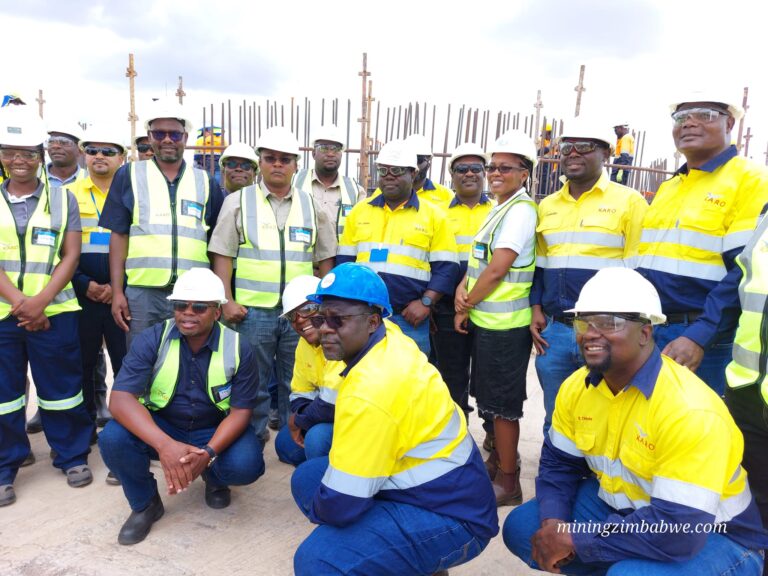
The commissioning of the Karo Platinum Project in Zimbabwe has been delayed several times, primarily due to falling platinum group metal (PGM) prices and related funding challenges.

By Ryan Chigoche

Originally scheduled for July 2024, the project was first pushed to June 2025. Most recently, the timeline has been extended to the second half of 2026.

Beyond the impact of declining global commodity prices, Tharisa has also cited Zimbabwe’s policy environment as a key factor behind the delays. In particular, the lack of strong incentives for large-scale greenfield investments has made it difficult to attract the kind of capital required to advance the project.

The Karo Project stands out as a rare greenfield development in the PGM sector. It gives Tharisa a chance to implement cutting-edge technologies that lower costs and boost efficiency—something far more challenging in older, brownfield operations.

Given the massive upfront capital needed before any returns are realized, a supportive and predictable investment climate is critical for a project of Karo’s scale.

Speaking at the 2025 PGM Industry Day Indaba in Johannesburg, Tharisa CEO Phoevos Pouroulis highlighted both capital constraints and regulatory challenges as major hurdles to progress.

“Our aspirations are bigger than our balance sheet. Part of the reason we have delayed the Karo Project is the capital to complete it… we are big employers, we contribute to the fiscus, and I think there needs to be recognition. At the moment, we feel like we are a little bit of a punching bag. We hope that the Minister can support us in our initiatives,” he added.

Despite these challenges, work on the project continues.

Pouroulis confirmed that key infrastructure projects, such as bringing power and water to the site, are currently underway.

“All the earthworks have been completed, about 70% of the civils are complete, and we have also procured around 70% of the mechanicals.”

Looking ahead, Tharisa expects the Karo Project to more than double its platinum output within the next three years. The company sees the project as a long-term, transformative investment.

“We are targeting about 200,000 ounces in the next 24 to 36 kilotonnes, which dovetails with the commissioning and the steady-state production of the Karo Project. Phase One only deals with 10% of the resource endowment. This is a 96-million-ounce resource with reserves just over 11 million ounces. It’s a multi-generational opportunity,” Pouroulis said.

Once operational, the Karo Project is expected to add approximately 200,000 ounces of PGMs annually, doubling Tharisa’s current output from its Tharisa Mine.

As the company navigates a tough global market and Zimbabwe’s challenging regulatory terrain, the Karo Platinum Project remains central to Tharisa’s long-term strategy.

With meaningful progress already made and a clear roadmap ahead, the company is positioning Karo as a generational asset—provided the necessary support structures are in place.

Gold buying prices per gram in Zimbabwe, 9 April 2025

Gold buying prices per gram in Zimbabwe today, 9 April 2025, from the official gold buyer and exporter Fidelity Gold Refinery (FGR).

SG 90% and ABOVE US$91.61/g.
SG ABOVE 89% BUT BELOW 90% US$90.64/g.
SG ABOVE 80% BUT BELOW 85% US$89.67/g.
SG ABOVE 75% BUT BELOW 80% US$88.70/g.
SAMPLE BELOW 10g BUT ABOVE 5g US$87.25/g.

Fire Assay CASH $92.09/g.

NB: Fire Assay cash price is for gold above 100gs; no sample is deducted.
For the Fire Assay Transfer price, a sample of not more than 10g is deducted.
A 2% royalty is charged on all deposits (Small-scale miners).
A 5% royalty is set for Primary Producers.

ZMF Sets New Date for Key Suppliers Meeting

0

The Zimbabwe Miners Federation (ZMF) has postponed its upcoming breakfast meeting for prospective suppliers and service providers, Mining Zimbabwe can report.

By Ryan Chigoche

The meeting, which was originally planned to take place today, the 8th of April 2025, will now take place on Thursday, 10 April 2025, at 10:00 AM.

The venue for the anticipated event, however, remains unchanged at the ZMF Head Office, 80 Mutare Road, Msasa, Harare.

In a statement, ZMF said the postponement was due to unforeseen circumstances, and they apologized for the late change.

Despite the delay, ZMF stressed the importance of the meeting. The event is a key opportunity to build partnerships between suppliers and Zimbabwe’s small-scale mining sector.

“We truly value your participation and look forward to a productive discussion on the new date,” the Federation said.

These meetings are important for both miners and suppliers.

They give suppliers a chance to learn about the needs of small-scale miners and explore ways to support their work.

At the same time, they help miners find reliable partners and improve their operations.

In the long run, this helps strengthen Zimbabwe’s mining sector and supports its formalization and growth.

Over the years, the ZMF has been actively advocating for the small-scale mining sector.

The Federation, since its inception, has held various meetings and events to address the needs of miners and suppliers, with a focus on bridging the mechanization gap and fostering sustainable mining practices.

Meanwhile, sustainable and increased production have already been key focus areas for ZMF, and this meeting aims to build on that momentum.

It will serve as a platform for practical discussions between suppliers and small-scale miners, highlighting solutions that improve operational efficiency, promote environmental responsibility, and drive output.

Dokwe Gold Project Hits US$160 Million Valuation

0

The Dokwe Gold Project in Zimbabwe has been valued at US$160 million following an updated resource estimate. The project, operated by AIM-listed Ariana Resources, saw a significant boost in its mineral resources, strengthening its potential as one of the country’s most promising undeveloped gold assets.

By Ryan Chigoche

This follows a 9% rise in the project’s In-Pit Mineral Resource Estimate announced in March. The updated Measured and Indicated resource now stands at 19.7 million tonnes at 1.54 grams of gold per tonne, equating to 977,000 ounces of gold using a 0.6g/t cut-off grade.

Including all categories—Measured, Indicated, and Inferred—the resource totals 44.9 million tonnes at 0.98g/t, approximately 1.42 million ounces of gold at a 0.3g/t cut-off.

The company attributes the stronger resource base to an improved geological model, providing greater flexibility in mine planning and supporting the updated project valuation.

Ariana presented the US$160 million valuation to its shareholders last week. This figure pertains solely to the Dokwe North deposit and excludes the 0.5% net smelter return royalty owed to Yataghan Investments.

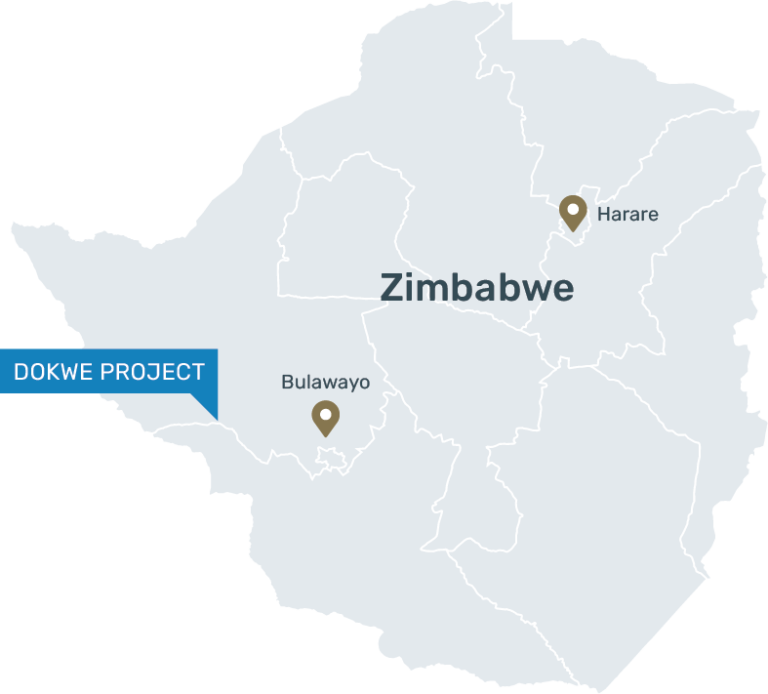
Located in Tsholotsho District, about 110 kilometers northwest of Bulawayo, the Dokwe Project’s new model assumes a gold price of US$2,000 per ounce and targets an annual gold output of 60,000 ounces.

The company has also increased its expected capital expenditure to US$82 million, up from US$80 million, aiming to unlock value from the current 1.4 million ounces of gold within the optimized pit shells at Dokwe North and Central.

Ariana plans to update its pre-feasibility study (PFS) after completing a revised reserve estimate for both Dokwe North and Central.

The company sees strong potential to enhance the project’s economics by increasing gold output to 100,000 ounces per year and extending the mine life beyond 10 years. Plans include constructing a processing plant capable of handling 2 million tonnes of ore annually to support this expansion.

Between late 2023 and early 2024, Ariana drilled 1,222 meters of PQ and HQ diamond holes across both deposits. The drilling confirmed previous exploration data and indicated further growth potential.

Ariana identifies significant exploration opportunities near Dokwe North and Central. In the short term, the focus will be on areas with known gold anomalies and untested zones. Additional areas such as Dokwe Central, Siduli Pan, and Dokwe South remain underexplored and are considered key to future value.

Zimbabwe’s gold potential remains robust. In 1980, the country produced more gold than Western Australia. However, years of underinvestment have caused Zimbabwe to lag behind while WA has become a leading gold producer.

Experts highlight Zimbabwe’s promising geology, noting that the Zimbabwe Craton shares similarities with Western Australia’s Yilgarn Craton, one of the world’s richest gold regions. Companies like Caledonia Mining have demonstrated successful gold mining operations in the country.

Zimbabwe also boasts significant reserves of other minerals, including lithium and platinum group elements (PGEs), enhancing its appeal as a destination for international mining investment.

Ariana believes its early entry into Zimbabwe positions it advantageously. The company plans to advance the Dokwe Project into production while exploring additional growth opportunities as the country’s mining sector develops.

Gold Price Trends and Implications for the Dokwe Project

As of April 4, 2025, gold prices have surged to record highs, reaching approximately US$3,037.36 per ounce, driven by investor concerns over geopolitical tensions and economic uncertainties.

This marks a significant increase of over 18% since the beginning of the year.

Analysts attribute this surge to factors such as recent tariff announcements by President Trump, leading investors to seek safe-haven assets like gold.

Major financial institutions, including Goldman Sachs and Bank of America, have adjusted their gold price forecasts upward, anticipating continued gains driven by trade-war tensions and central bank demand.

This upward trend in gold prices could have positive implications for Ariana Resources’ Dokwe Gold Project. Higher gold prices may enhance the project’s profitability and attract additional investment, supporting Ariana’s plans to increase production and extend the mine’s operational life.

However, the gold market remains volatile, and prices can fluctuate based on global economic developments.

Ariana Resources will need to monitor these trends closely to optimize the project’s economic outcomes.

Gold buying prices per gram in Zimbabwe, 8 April 2025

Gold buying prices per gram in Zimbabwe today, 8 April 2025, from the official gold buyer and exporter Fidelity Gold Refinery (FGR).

SG 90% and ABOVE US$91.59/g.
SG ABOVE 89% BUT BELOW 90% US$90.62/g.
SG ABOVE 80% BUT BELOW 85% US$89.65/g.
SG ABOVE 75% BUT BELOW 80% US$88.68/g.
SAMPLE BELOW 10g BUT ABOVE 5g US$87.23/g.

Fire Assay CASH $92.08/g.

NB: Fire Assay cash price is for gold above 100gs; no sample is deducted.
For the Fire Assay Transfer price, a sample of not more than 10g is deducted.
A 2% royalty is charged on all deposits (Small-scale miners).
A 5% royalty is set for Primary Producers.

CNRG Calls for Immediate Shutdown of Chinese Mine in Wake of Fatal Shooting

0

The Centre for Natural Resource Governance (CNRG) is calling for the immediate closure of Sino Africa Huijin’s Premier Estate mine in Old Mutare, following the fatal shooting of an artisanal miner, Alfred Dodzo.

By Ryan Chigoche

Dodzo was killed by a security guard after allegedly being caught stealing gold ore from the mine. The tragic incident has sparked outrage in the local community, with residents demanding justice and accountability.

CNRG is urging the government to permanently shut down the mine and ensure accountability for the killing while also addressing ongoing labour and environmental concerns at the operation.

Acting Manicaland Police Spokesperson, Assistant Inspector Wiseman Chinyoka, confirmed the incident and stated that authorities were on-site gathering evidence.

In response to Dodzo’s death, around 70 local community members stormed the mine. Enraged, they attacked the security guards, accusing them of taking the law into their own hands. While the guards managed to escape, several were injured.

The mine manager, Daniel Panganai, was not as fortunate. He was pelted with stones and seriously injured. He was rushed to Hartzell Mission Hospital and later transferred to Mutare General Hospital.

CNRG, which visited the scene, highlighted longstanding concerns among workers at Sino Africa Huijin. Workers have repeatedly raised alarms about the mine’s poor living and working conditions. They also allege that the Chinese nationals who own the mine are smuggling gold and failing to declare it to the government, depriving Zimbabwe of critical revenue.

CNRG also pointed to stark segregation at the mine. Zimbabwean workers live in wooden shacks, while Chinese nationals reside in comfortable accommodations within a secure compound. This inequality raises serious questions about the government’s commitment to fairness and equality, especially in light of Zimbabwe’s history of resistance to racial oppression.

Dodzo’s killing reflects a broader, troubling pattern at Chinese-owned mines in Zimbabwe. These companies have faced mounting criticism for violating labour rights, neglecting safety standards, and damaging the environment.

As reported by Mining Zimbabwe, in a separate incident at Sino Africa Huijin, a worker named Taurai Dozva died under mysterious circumstances during a night shift. His family was reportedly given just US$2,000 in compensation—an amount many considered a gross insult to his life and service.

These incidents underscore systemic issues at Chinese-run mines in Zimbabwe, where workers frequently report exploitation, unsafe conditions, and inadequate pay. Many such operations function with minimal oversight, often in violation of labour and environmental laws.

In response, CNRG is calling for the permanent closure of Sino Africa Huijin’s mine.

They propose reopening the site to Zimbabwean artisanal miners to operate under the supervision of the Zimbabwe Mining Development Corporation (ZMDC) and the Minerals Marketing Corporation of Zimbabwe (MMCZ). This, CNRG argues, would enable local communities to benefit directly from their natural resources while ensuring the government receives the revenue it is due.

CNRG has also called for a thorough investigation into the killing of Alfred Dodzo and demanded that those responsible be prosecuted under Zimbabwean law.

Additionally, the organisation is pressing for a full audit of Sino Africa Huijin’s financial activities, particularly in relation to alleged gold smuggling and other illegal practices.

CNRG is urging the government to take stronger action against companies that exploit workers, flout safety regulations, and engage in illicit activities.

Their ultimate goal is to ensure that Zimbabwe’s natural resources benefit all citizens—not just foreign investors.

Unki to Invest US$700K in Expansion, Solar Project Despite Dip

0

Unki Mine, Zimbabwe’s third-largest producer of platinum group metals (PGMs), will invest US$700,000 in 2025 to expand its open-pit operations and solar energy infrastructure, Mining Zimbabwe can report.

By Rudairo Mapuranga

According to the 2025 Commodity Outlook Report by the Chamber of Mines of Zimbabwe, the mine will allocate US$500,000 to open-pit expansion and US$200,000 to solar projects. These efforts are expected to boost production by 1% while improving energy resilience and operational efficiency.

The investment comes as Unki faces production setbacks. In Q4 2024, PGM output fell 2% to 60,300 ounces due to a three-day nationwide power outage, according to its parent company, Anglo American Platinum (Amplats).

Earlier in 2024, Unki faced more challenges. In Q2, production dropped 7% to 54,700 ounces after mining through a lower-grade ore zone. Platinum output declined 9% to 25,700 ounces compared to Q2 2023.

Amplats CEO Craig Miller reaffirmed the company’s focus on safety and sustainability, stating, “We are resolute in our commitment to eliminate fatalities from our workplace and ensure zero harm becomes a daily reality.”

Despite challenges, Unki remains a key asset for Amplats. The Q4 2024 report showed a 6% decline in total group PGM output to 875,700 ounces, though own-mined production rose 1%, reflecting improved operations at mines like Unki.

Unki also contributed to a 20% increase in Amplats’ nickel production in Q2 2024, with total output reaching 7,300 tonnes. This resilience, despite a 37% drop in global rhodium prices, highlights the mine’s strategic value.

The US$700,000 investment in expansion and renewable energy positions Unki for stability and growth in 2025, reinforcing its role in Zimbabwe’s PGM sector and contribution to national mining revenues.