Home Blog Page 116

ZimAlloys’ Revival to Drive Zimbabwe’s Chrome Production Growth in 2025

0

Zimbabwe’s chrome production is projected to rise to 2.7 million metric tonnes in 2025, up from 2.5 million metric tonnes in 2024, as key industry player ZimAlloys, under Kuvimba Mining House, revitalizes its high-carbon ferrochrome plant in Gweru, signaling a strong recovery in the sector, Mining Zimbabwe can report.

By Rudairo Mapuranga

ZimAlloys, one of Zimbabwe’s largest ferrochrome producers, has been at the forefront of chrome production revitalization. Once struggling, the company’s Gweru ferrochrome plant is now back in operation, significantly boosting Zimbabwe’s output.

“The restoration of ZimAlloys’ plant is a game-changer for Zimbabwe’s chrome sector,” said an industry analyst. “With Kuvimba Mining House’s backing, the company is well-positioned to contribute meaningfully to national production targets.”

Several key projects are expected to drive further growth in Zimbabwe’s ferrochrome industry:

  1. Zimasco’s $22.6 Million Smelter Expansion

Zimasco Mining Company is investing $22.6 million in mine exploration and smelting upgrades to sustain ferrochrome production.

The company is also allocating $43,243 for the 19M01 Ngezi 3D 24 underground mine, enhancing the raw material supply.

  1. Afrochine Smelting’s New Smelters

Afrochine Smelting, a subsidiary of Tsingshan Holdings, is constructing two new smelters with an estimated investment of $3 million.

The project, set for completion by October 2025, is expected to increase production by 28%.

  1. Ferrochrome Mine Expansion

A strategic initiative is underway to ensure a steady supply of lumpy chrome ore, targeting 2,500 tonnes per month.

The government has been actively supporting chrome producers through favorable policies, including the lifting of the chrome ore export ban, which has incentivized production growth.

“Zimbabwe’s chrome sector is on an upward trajectory,” said the Chamber of Mines. “With ZimAlloys back in full swing and new investments coming online, we expect record output in 2025.”

Despite the positive outlook, challenges such as power shortages and logistical constraints remain. However, with Kuvimba Mining House’s financial muscle and ongoing private-sector investments, Zimbabwe is poised to solidify its position as a leading chrome producer in Africa.

As the country moves toward Vision 2030, the chrome sector’s resurgence—led by ZimAlloys and other key players—will be critical in driving industrial growth, job creation, and export earnings.

Gold buying prices per gram in Zimbabwe, 7 April 2025

Gold buying prices per gram in Zimbabwe today, 7 April 2025, from the official gold buyer and exporter Fidelity Gold Refinery (FGR).

SG 90% and ABOVE US$92.80/g
SG ABOVE 89% BUT BELOW 90% US$91.82/g
SG ABOVE 80% BUT BELOW 85% US$90.83/g
SG ABOVE 75% BUT BELOW 80% US$89.85/g
SAMPLE BELOW 10g BUT ABOVE 5g US$88.38/g

Fire Assay CASH $93.29/g

NB: Fire Assay cash price is for gold above 100gs; no sample is deducted.
For the Fire Assay Transfer price, a sample of not more than 10g is deducted.
A 2% royalty is charged on all deposits (Small-scale miners).
A 5% royalty is set for Primary Producers.

RioZim Crisis Deepens: ZDAMWU Appeals to Parliament and Labour Ministry for Urgent Intervention

0

The Zimbabwe Diamond and Allied Minerals Workers Union (ZDAMWU) has escalated its calls for urgent government intervention to address the worsening humanitarian crisis faced by RioZim employees, who have gone without salaries for five months, Mining Zimbabwe can report.

By Rudairo Mapuranga

In separate letters dated April 1 and April 4, 2025, the union appealed to the Minister of Public Service, Labour and Social Welfare, Hon. Moyo, and the Parliamentary Portfolio Committee on Mines, Hon. Matangira, to take immediate action to alleviate the suffering of workers and their families.

The letters highlight the devastating impact of unpaid wages on workers at RioZim’s operations—Cam & Motor Mine (Kadoma), Renco Mine (Masvingo), and Murowa Diamonds (Zvishavane). General Secretary Justice Chinhema described the situation as a “humanitarian crisis,” with employees unable to afford basic necessities such as food, school fees for children sitting for national examinations, and rent.

“Workers are struggling to meet basic needs, leaving families in severe financial hardship and emotional distress,” Chinhema wrote. “The company’s cautionary announcements about potential investors offer no immediate relief, and our members are losing hope.”

Failed Promises and Systemic Failures

RioZim’s management has repeatedly extended unpaid leave, while a March 4, 2025, cautionary statement revealed ongoing negotiations with a lender and a potential investor. However, Chinhema criticized these measures as inadequate, stating:

“A month has lapsed since this announcement, yet workers see no light. The approach does not address their immediate plight. We fear this points to a collapsing company that will leave thousands without livelihoods.”

Calls for Government Action

ZDAMWU has urged the Labour Ministry to:

  1. Provide emergency aid through social welfare, including financial payments and food hampers.

  2. Facilitate dialogue between the government, RioZim, and shareholders to resolve unpaid wages.

  3. Establish a task force to address systemic issues and prevent future crises.

In its appeal to Parliament, the union demanded that the Mines Committee summon RioZim’s shareholders to explain their plans for workers’ welfare and operational sustainability.

Chinhema emphasized the broader implications of the crisis, linking it to Zimbabwe’s economic stability:

“Our country’s resources must be protected from investors who sabotage development. Workers deserve safeguards to prevent such disasters. They are the backbone of our economy, and their dignity must be restored.”

Both letters conclude with a call for urgent action, underscoring the union’s reliance on government leadership to uphold workers’ rights.

“We are hopeful for your swift response,” Chinhema wrote. “Together, we can ensure these workers and their communities thrive again.”

As the situation reaches a breaking point, all eyes are now on the government to intervene before RioZim’s collapse triggers irreversible social and economic consequences.

Caledonia Foreign Exchange Losses Widen

0

The Victoria Falls Stock Exchange-listed Caledonia Mining Corporation has reported a net foreign exchange loss of US$9.7 million in 2024, up from US$6.8 million the previous year, marking a 30% increase. The rise in these losses reflects the ongoing depreciation of the local currency, which continues to impact the mining industry’s financial performance.

By Ryan Chigoche

At the center of the crisis is Zimbabwe’s new monetary policy requiring exporters to convert 30% of their foreign currency earnings into the Zimbabwe Gold (ZIG) currency at the official interbank rate.

While the government insists that the policy will stabilize the economy, businesses argue that it is accelerating financial losses. The continuous decline of ZIG means that every forced conversion results in an immediate loss of value, reducing the real earnings of exporters and increasing their exposure to currency risk.

For the mining sector, which relies on predictable revenue flows to fund operations and expansion, this depreciation is a major challenge.

With key costs, including wages, fuel, and locally sourced inputs, rising due to the weakening currency, miners are struggling to balance their books in an environment where their retained earnings lose value almost immediately.

The Chamber of Mines of Zimbabwe has repeatedly warned that the current 70% forex retention threshold is inadequate and that businesses need a higher percentage of their earnings protected from currency fluctuations.

The issue is further compounded by inflationary pressures, which continue to drive up operational costs. As the local currency depreciates, suppliers adjust their prices upward to hedge against losses, creating a vicious cycle that raises the cost of doing business.

This instability threatens to derail the mining industry’s ambitious plans to invest US$600 million in capital projects and increase mineral exports from US$5.5 billion to US$6 billion in 2025.

While authorities remain firm on the new policy, industry players warn that unless measures are taken to address the rapid loss of value in the local currency, foreign exchange losses will continue to rise.

Without a reversal or adjustment to the retention framework, mining companies and other exporters could see profitability further eroded, dampening investor confidence and slowing economic growth in a sector that remains crucial to Zimbabwe’s economy.

Zimbabwe’s Export Earnings Drop as Key Commodities’ Earnings Plunge

0

Zimbabwe’s export earnings fell significantly in February 2025, dropping by 21.4% from US$652 million in January to US$512.6 million. The decline was driven by sharp reductions in revenues from key commodities, including gold, tobacco, diamonds, and ferroalloys, exposing deep vulnerabilities in the country’s export sector, according to the latest data from ZimStats.

By Ryan Chigoche

Gold, the country’s top export, which accounted for 42.3% of total exports, saw earnings contract from US$291 million in January to US$216 million in February, despite global gold prices being on the rise. This sharp decline points to persistent smuggling and under-reporting within the sector, long-standing issues that continue to erode Zimbabwe’s foreign currency inflows.

Tobacco, a vital cash crop making up 15.8% of Zimbabwe’s exports, also experienced a steep fall, with earnings dropping from US$120 million to US$83 million. The decline is likely linked to unfavorable weather conditions and inadequate support for farmers. Meanwhile, ferroalloy exports fell from US$22 million to US$14 million, and diamonds recorded a downturn from US$15 million to US$10 million. Power shortages and a lack of investment in value addition remain major constraints on these industries.

With exports contracting sharply and imports remaining high, Zimbabwe’s trade deficit widened to US$217.7 million in February, marking a staggering 124.2% increase from the US$97.1 million recorded in January. The growing deficit highlights structural weaknesses in the economy, where foreign currency earnings are failing to keep pace with the country’s rising import bill.

Imports decreased slightly by 2.5% from US$749.2 million in January to US$730.3 million in February. However, spending on petroleum products, motor vehicles, machinery, and wheat remained elevated, indicating continued reliance on imported goods.

Petroleum oil, the leading import, rose from US$117.8 million to US$129.9 million, reflecting Zimbabwe’s ongoing lack of refining capacity and growing fuel demand. Imports of transport vehicles increased from US$17 million to US$21 million, while industrial machinery imports rose from US$9 million to US$15 million, signaling efforts to improve infrastructure and mining operations, albeit at a high cost.

The sharp decline in export earnings highlights deep-rooted structural weaknesses in Zimbabwe’s economy. The gold sector continues to suffer from illicit flows, with estimates suggesting that up to 20% of production is lost through informal channels. In the tobacco sector, contract farming models often limit farmers’ ability to reinvest in production, affecting long-term sustainability.

Chronic power shortages have further weakened the export sector, disrupting mining and manufacturing activities and making Zimbabwe’s commodities less competitive in global markets. The economy’s heavy reliance on imports for essential goods also underscores the need for policy interventions to boost local production and reduce dependency on foreign suppliers.

To address these challenges, economic experts recommend key reforms. Reducing export retention rates from 30% to 10% could increase liquidity for exporters, encouraging reinvestment in production. Expanding renewable energy infrastructure and upgrading existing power facilities would help stabilize mining and manufacturing output. Additionally, curbing gold smuggling through enhanced oversight, including digital tracking systems, could recover lost revenue and strengthen formal trade channels.

With export earnings under severe pressure and the trade deficit widening, Zimbabwe faces growing economic strain. Immediate reforms are needed to restore the country’s export competitiveness, support key industries, and prevent further deterioration in foreign currency earnings.

Gold buying prices per gram in Zimbabwe, 4 April 2025

Gold buying prices per gram in Zimbabwe today, 4 April 2025, from the official gold buyer and exporter Fidelity Gold Refinery (FGR).

SG 90% and ABOVE US$94.73/g
SG ABOVE 89% BUT BELOW 90% US$93.73/g
SG ABOVE 80% BUT BELOW 85% US$92.73/g
SG ABOVE 75% BUT BELOW 80% US$91.72/g
SAMPLE BELOW 10g BUT ABOVE 5g US$90.22/g

Fire Assay CASH $95.23/g

NB: Fire Assay cash price is for gold above 100gs; no sample is deducted.
For the Fire Assay Transfer price, a sample of not more than 10g is deducted.
A 2% royalty is charged on all deposits (Small-scale miners).
A 5% royalty is set for Primary Producers.

Mining Revenue Generation Goes Beyond 3% Royalties

0

The mining sector in Zimbabwe is often misrepresented in public discourse, particularly when discussing its contribution to government revenue. While official figures from the Zimbabwe Revenue Authority (ZIMRA) indicate that mining royalties contribute just 3% of total revenue collections, this figure alone does not reflect the sector’s overall economic impact, Mining Zimbabwe can report.

By Rudairo Mapuranga

The reality is that mining plays a far more significant role in Zimbabwe’s economy, contributing between 12% and 15% of the Gross Domestic Product (GDP) and accounting for approximately 70% of total export earnings.

Beyond direct royalties, mining companies contribute significantly to Zimbabwe’s fiscal revenues through multiple tax avenues, including corporate income tax, customs and excise duties, withholding taxes, and Pay-As-You-Earn (PAYE). Furthermore, mining firms are mandated to surrender 30% of their foreign currency earnings to the Reserve Bank of Zimbabwe (RBZ), effectively functioning as an additional indirect tax, given the disparities between official exchange rates and parallel market rates.

Moreover, mining companies invest millions of dollars annually in Environmental, Social, and Governance (ESG) initiatives, directly benefiting communities and contributing to sustainable development. This article explores the full scope of mining’s fiscal and socio-economic contributions beyond the commonly cited royalty figures, providing a comprehensive analysis of the industry’s financial footprint in Zimbabwe.

The Mining Industry’s True Fiscal Contribution to Zimbabwe

1. Corporate Income Tax

Corporate Income Tax (CIT) is one of the major revenue sources for the Zimbabwean government, and the mining industry is a key contributor. In Zimbabwe, the standard corporate tax rate is 24%, but mining companies often pay higher effective tax rates due to additional levies, royalties, and other sector-specific obligations.

Estimated Contribution of Mining to Corporate Income Tax

In H1 2024, Zimbabwe collected a total of ZIG 10.07 billion in Corporate Income Tax, which translates to approximately USD 359.64 million at the exchange rate of 1 USD = 28 ZIG. Given that mining contributes between 12% and 15% of the GDP, it is reasonable to estimate that the sector contributed between ZIG 1.21 billion and ZIG 1.51 billion (USD 43.21 million – USD 53.93 million).

2. Customs and Excise Duties

Customs and excise duties are levied on imported and locally manufactured goods, and the mining industry is subject to various such duties. While mining equipment imports often benefit from tax rebates, other consumables and inputs used in the mining process attract customs duties.

Estimated Contribution of Mining to Customs and Excise Duties

ZIMRA collected ZIG 3.53 billion in customs and excise duties in H1 2024, which is approximately USD 126.07 million. Mining-related imports, including fuel, chemicals, and spare parts, likely contribute around 3-5% of customs and excise duties, translating to an estimated ZIG 106 million to ZIG 176 million (USD 3.79 million – USD 6.29 million).

3. Pay-As-You-Earn (PAYE)

Mining is one of the largest employers in Zimbabwe, with thousands of workers employed directly and indirectly. PAYE taxes are levied on employee salaries, with mining employees generally earning higher-than-average wages, leading to substantial PAYE contributions.

Estimated Contribution of Mining to PAYE

In H1 2024, PAYE collections amounted to ZIG 5.22 billion (USD 186.43 million). Given that mining is among the highest-paying sectors and employs a significant workforce, it is reasonable to estimate that 10-12% of total PAYE revenue originates from the mining sector, amounting to between ZIG 522 million and ZIG 626 million (USD 18.64 million – USD 22.36 million).

4. Withholding Taxes

Mining companies engage numerous service providers, contractors, and consultants who are subject to withholding taxes on payments received from mining firms.

Estimated Contribution of Mining to Withholding Taxes

Withholding tax accounted for ZIG 1.28 billion (USD 45.71 million) in H1 2024. Given the extensive outsourcing practices in the mining sector, mining companies likely contribute around 30-40% of withholding taxes, equating to an estimated ZIG 384 million to ZIG 512 million (USD 13.71 million – USD 18.29 million).

The Hidden Tax: Foreign Currency Surrender Requirements

A major yet often overlooked contribution of the mining industry to Zimbabwe’s economy is the foreign currency retention policy imposed by the RBZ. Under the current policy, mining companies are required to surrender 30% of their export earnings at the official interbank rate. Given that the mining sector generates over USD 5 billion annually in export revenues, this means that approximately USD 1.5 billion is forcibly converted to local currency at the interbank rate. Due to the significant gap between the interbank and parallel market rates, this results in an effective loss for mining companies, functioning as an implicit tax.

Mining Sector’s Commitment to ESG: Investments in Communities

Mining companies in Zimbabwe have also made substantial contributions to social and environmental sustainability through ESG initiatives. These programs include investments in education, healthcare, infrastructure, and environmental conservation.

ESG Spending by Major Mining Companies

Zimplats

Zimplats, Zimbabwe’s largest platinum producer, has been at the forefront of ESG investments, spending over USD 45 million in 2023 alone on various social and environmental projects. Some key initiatives include:

  • Healthcare Investments: Funding hospitals and clinics in mining communities.

  • Education Support: Building schools and offering scholarships for students.

  • Infrastructure Development: Constructing roads, bridges, and water supply systems.

  • Environmental Conservation: Implementing sustainable mining practices and land rehabilitation projects.

Caledonia Mining Corporation (Blanket Mine)

Caledonia Mining, which operates the Blanket Mine, spent USD 1.5 million on community development in 2023, with 92% of its procurement sourced locally.

Other Major Mining ESG Investments

  • Mimosa Mining Company: Invested in renewable energy and waste management.

  • Freda Rebecca Gold Mine: Supports local entrepreneurship through business grants and training programs.

Wrapping up

The mining sector’s financial contributions to Zimbabwe extend far beyond the 3% in royalties reported by ZIMRA. Through corporate income tax, customs duties, PAYE, withholding taxes, and foreign currency surrender requirements, the industry plays a vital role in sustaining the economy. Furthermore, mining companies invest heavily in ESG initiatives, positively impacting local communities and ensuring long-term sustainability.

A more nuanced understanding of mining’s contributions is essential for crafting policies that balance economic growth with fiscal sustainability. Rather than focusing solely on royalties, policymakers and stakeholders should recognize and support the mining industry’s broader economic impact, ensuring that it continues to drive Zimbabwe’s development for years to come.


Zimbabwe’s Platinum Industry Poised for Expansion Despite Weak Price Recovery

0

Zimbabwe’s platinum industry is set for growth in 2025, with production expected to rise despite a sluggish recovery in global metal prices, Mining Zimbabwe can report.

By Ryan Chigoche

According to the Chamber of Mines, platinum output is projected to reach 19.6 tonnes, up from 18.9 tonnes in 2024, while palladium production is set to increase by 3% to 16 tonnes. Major producers, including Zimplats, Mimosa, and Unki Mines, are expected to maintain full-capacity operations, ensuring a steady supply even amid challenging market conditions.

Driving this growth are significant investments aimed at sustaining and enhancing production. Zimplats is leading the way with a US$190 million investment to refurbish its Base Metal Refinery (BMR) and complete several projects between 2025 and 2028. This initiative is expected to strengthen local refining capacity and improve long-term profitability.

Meanwhile, Mimosa Mining Company is allocating US$2.1 million toward developing tailings storage facilities, extending the mine’s operational lifespan.

Unki Mines is also focusing on expansion and sustainability, investing US$500,000 in open-pit mining and US$200,000 in solar energy projects, which are projected to increase production by 1%.

However, despite these investments, the sector continues to face financial pressures due to weak metal prices.

While some companies anticipate a price rebound, cash flow constraints have forced them to put large expansion projects on hold. Nonetheless, the commitment to ongoing development reflects confidence in the long-term viability of Zimbabwe’s platinum industry.

Market analysts predict a continued weak recovery in PGM prices in 2025, with platinum expected to average $965 per ounce, up slightly from $955 per ounce in 2024. Palladium prices are forecasted to average $985 per ounce, compared to $970 per ounce the previous year. This sluggish price movement is largely attributed to an oversupply of PGMs and declining demand, particularly from the automotive sector, which has traditionally been a key consumer.

Adding to the uncertainty are global concerns about the long-term demand for PGMs as the world accelerates its shift toward renewable energy. While platinum has been considered a substitute for palladium in autocatalysts, the narrowing price gap between the two metals has limited its impact on overall demand. This trend raises further questions about the future role of PGMs in industrial applications.

Despite these market challenges, Zimbabwe’s platinum sector remains resilient. Steady production growth and strategic investments are positioning the industry for long-term stability. While weak prices may slow down large-scale expansions, ongoing development projects and the country’s abundant platinum reserves provide a strong foundation for sustained growth in the years ahead.

Gold buying prices per gram in Zimbabwe, 3 April 2025

Gold buying prices per gram in Zimbabwe today, 3 April 2025, from the official gold buyer and exporter Fidelity Gold Refinery (FGR).

SG 90% and ABOVE US$94.78/g
SG ABOVE 89% BUT BELOW 90% US$93.78/g
SG ABOVE 80% BUT BELOW 85% US$92.77/g
SG ABOVE 75% BUT BELOW 80% US$91.77/g
SAMPLE BELOW 10g BUT ABOVE 5g US$90.27/g

Fire Assay CASH $95.28/g

NB: Fire Assay cash price is for gold above 100gs; no sample is deducted.
For the Fire Assay Transfer price, a sample of not more than 10g is deducted.
A 2% royalty is charged on all deposits (Small-scale miners).
A 5% royalty is set for Primary Producers.

Pickstone to Boost Production by 26% with Multi-Million Dollar Investment

0

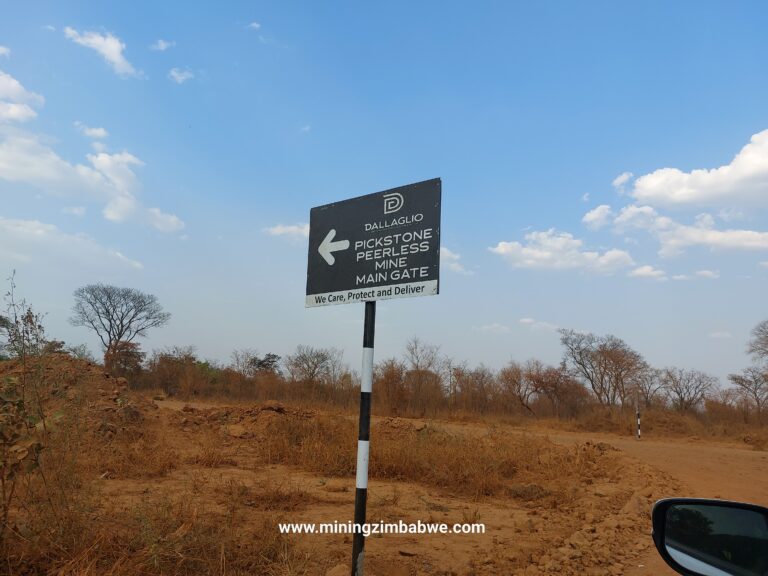
Pickstone Peerless Mine, operated by Padenga’s gold business, Dallaglio Investment, is set to invest US$15 million to increase its gold production by 26%.

By Ryan Chigoche

This substantial capital expenditure will fund exploration and expansion projects, marking a pivotal move as the mine refines its production strategy and infrastructure in response to surging gold prices.

This investment aligns with the positive outlook from the Chamber of Mines, which projects a 7% increase in mineral output across Zimbabwe in the coming year. Specifically, gold production is expected to rise to 42 tons in 2025, up from 38.5 tons in 2024.

This growth will be driven by the expansion of existing operations like Pickstone Peerless, as well as new projects in the sector.

The US$15 million investment is also part of the mine’s strategic shift from open-pit mining to underground operations. This transition was bolstered by an US$18 million underground mining project commissioned in August 2024, expected to continue until mid-2025.

The underground mining operations are expected to enhance ore grades significantly, improving the mine’s production efficiency.

With underground ore grades ranging between 3 to 5 grams per tonne, compared to the open-pit grades of 1.8 grams per tonne, this shift is anticipated to lead to higher-quality production, taking advantage of rising gold prices.

In addition to the underground transition, Pickstone Peerless is making significant investments in infrastructure to improve gold recovery.

The mine’s current recovery rate stands at 70%, but the addition of three large Carbon-in-Leach (CIL) tanks, alongside the installation of a fourth ball mill, is expected to increase recovery rates, boosting overall output.

These upgrades are vital for capitalizing on high gold prices, ensuring that the mine maximizes the value extracted from its ore.

Pickstone Peerless has already contributed significantly to Zimbabwe’s gold output, producing 750 kilograms in 2024.

Combined with production from Eureka Mine in Guruve, the two mines currently produce 210 kilograms per month. The mines are on track to increase this to 230 kilograms in 2025 and 250 kilograms per month by 2026.

This growth trajectory is in line with the broader positive outlook for Zimbabwe’s gold industry, fueled in part by bullish gold prices, which are expected to sustain demand and profitability.

Meanwhile, gold revenues are projected to exceed US$3 billion in 2025, up from US$2.5 billion in 2024. Furthermore, the average capacity utilization for the gold sector is set to increase to 96% in 2025, from 95% in 2024.

The mine’s ongoing investments in efficiency, recovery systems, and higher ore grades from underground operations are perfectly positioned to capitalize on surging gold prices.

This development not only strengthens Pickstone Peerless’ role within Zimbabwe’s mining sector but also signals the broader industry’s potential for continued growth, driven by favorable market conditions and strategic investments.

With rising gold prices and increasing production efficiency, Pickstone Peerless stands as a key player in Zimbabwe’s mining sector, poised to thrive amidst global gold demand and contribute to the country’s growing gold revenue.