Home Blog Page 118

Shamva Reaches Over 1.3 Million Fatality-Free Shifts

0

Kuvimba Mining House-owned Shamva Gold Mine continues to set impressive safety standards in Zimbabwe’s mining industry, with over 1,380,000 fatality-free shifts, recording no fatalities since Kuvimba took over operations in 2020, Mining Zimbabwe can report.

By Rudairo Mapuranga

This milestone is a testament to the company’s commitment to responsible and world-class mining practices, according to Shamva Mine SHEQ Officer Gole Ncube, who delivered an induction speech during the Association of Mine Surveyors of Zimbabwe (AMSZ) technical visit held on Friday.

“We are currently at 1,380,000 shifts without any fatalities,” Ncube stated. “Since reopening the mine in 2020, we have maintained a spotless safety record, which speaks to how well we manage our assets and prioritize the well-being of our workforce.”

Shamva Gold Mine had also gone 566 days without a Lost Time Injury (LTI), underscoring the company’s strong safety culture. The mine operates under robust management systems, certified by international standards, including ISO 14001, ISO 45001, and ISO 9001, ensuring adherence to environmental, occupational health, and safety protocols.

As the parent company of Shamva Gold Mine, Kuvimba Mining House has made safety a cornerstone of its operations, striving to be an example of responsible mining. The company is committed to safeguarding its workers while contributing to Zimbabwe’s mining sector growth. Through systematic investments in safety training, equipment, and compliance with global standards, Kuvimba aims to lead by example in creating a safe and sustainable working environment.

“We want to be recognized not just for our production success but as a leader in responsible mining. Our safety strategies are focused on reducing risks and ensuring that every worker returns home safely at the end of each shift,” Ncube added.

With over 1.3 million fatality-free shifts, Shamva Gold Mine remains a beacon of best practices, setting a benchmark for others in the industry to follow. Through continued dedication to safety and responsible mining, the company hopes to maintain this record for years to come, reinforcing Kuvimba Mining House’s vision of world-class mining.

The Next Mining Breakthrough: What Happens When Starlink Meets Cutting-Edge Connectivity?

0

The mining industry is facing an unprecedented shift – speed, automation, and real-time decision-making are no longer luxuries but necessities. However, without high-speed, reliable internet, this transformation is impossible. Imagine AI-driven systems failing due to slow connections, autonomous equipment halting mid-operation, or safety systems failing to alert workers in time. The result? Millions lost in downtime, inefficiencies, and safety risks.

The Game-Changer: Starlink + SD-WAN + WAN Bonding

What if the answer to these challenges was simple, reliable, and blazing fast? Through Dandemutande’s innovative connectivity solutions, combining Starlink’s high-speed satellite internet with SD-WAN and WAN Bonding, mining operations are set to experience a revolution in connectivity. This solution ensures that sites, even in the most remote locations, stay online and operational.

  • Starlink: Delivers fast, stable broadband to even the most isolated mining locations, eliminating traditional network limitations.
  • SD-WAN: Acts as a smart traffic controller, prioritizing the most critical mining operations and ensuring they run without interruptions.
  • WAN Bonding: Merges multiple internet connections into one super-reliable network, boosting performance and eliminating downtime.

How These Technologies Work Together

When Starlink is combined with SD-WAN and WAN Bonding, mining operations experience remarkable improvements in speed, reliability, and efficiency:

  • Speed: By integrating SD-WAN and WAN Bonding with for instance three Starlink connections, we can increase internet speeds up to 300%. This enables high-bandwidth operations like real-time video feeds, remote monitoring, and cloud computing to function without delays.
  • Reliability: The combination of SD-WAN and WAN Bonding means 99% uptime, ensuring that even during peak periods or potential network congestion, mining operations never experience downtime.
  • Efficiency: For mines with multiple sites, these technologies can link various locations together, enabling instantaneous data sharing across remote operations. This ensures teams are always in sync, reducing delays caused by poor connectivity and optimizing decision-making.

These technologies create a unified, robust network that boosts bandwidth, reliable connection, and connects multiple mine sites into a single cohesive system, ensuring faster and more reliable operations.

The Result? Unstoppable Mining Operations

  • Seamless Automation & IoT – AI-powered equipment monitoring, autonomous mining trucks, and real-time safety systems operate without lag.
  • Uninterrupted Video Surveillance & Remote Monitoring – 24/7 live security feeds and instant collaboration between mine sites and headquarters.
  • Cloud-Driven Efficiency – Instant access to critical operational data by remote experts, maximizing output and minimizing delays.
  • Environmental Compliance & Sustainability – Effortless data collection and reporting for environmental standards and sustainability goals.

What Happens Without This Connectivity?

Without a robust, high-speed network, mining operations face major disruptions:

  • Millions Lost in Downtime – Automated systems fail, causing costly delays and halted production.
  • Increased Safety Risks – Delayed emergency alerts put workers in jeopardy.
  • Operational Bottlenecks – Slow data transfer hinders fleet tracking, supply chain management, and equipment optimization.

The Future of Mining Starts Now

Investing in Dandemutande’s Starlink, SD-WAN, and WAN Bonding solution means future-proofing your mining operations. With flexible financing options, it’s easier than ever to secure uninterrupted, high-performance connectivity that ensures smooth, efficient, and reliable mining operations.

Stay ahead. Stay connected. Let’s build your digital mining future today.


Court Dismisses Afrochine Smelting’s Appeal in ZIMRA Tax Dispute

0

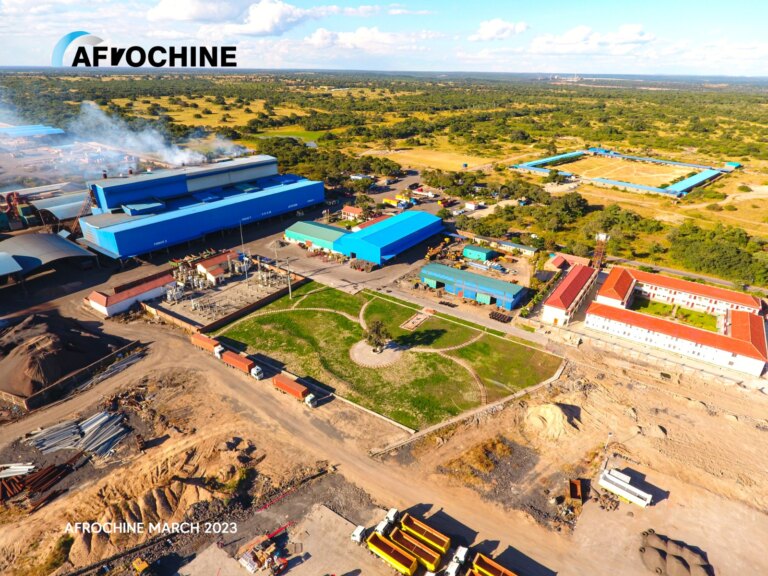
In a significant ruling, the Supreme Court of Zimbabwe has upheld the Zimbabwe Revenue Authority’s (ZIMRA) determination that Afrochine Smelting (Private) Limited must calculate its royalties based on the gross fair market value of the ferrochrome it sold, rejecting the company’s claim to deduct freight charges from the sale price, Mining Zimbabwe can report.

By Ryan Chigoche

The case has set an important precedent for how mining royalties should be calculated, reaffirming the government’s stance on ensuring that the value of minerals extracted is not artificially lowered for tax purposes.

The dispute began over Afrochine’s sale of ferrochrome to XHF Hong Kong Limited between January 1, 2019, and December 31, 2021. Afrochine had agreed to sell the minerals at an ex-works price of US$0.60/lb, which included a 10-cent deduction for ocean freight from the benchmark Fastmarkets Ferro-Alloys price of US$0.70/lb. However, ZIMRA argued that Afrochine’s sale price was understated and did not accurately reflect the value of the minerals in the market.

According to ZIMRA, royalties should be calculated based on the gross fair market value of the minerals, which, in this case, ZIMRA argued should be US$0.70/lb—the price at which the ferrochrome could be sold in international markets.

The core of the case centered on the interpretation of the term “gross fair market value” as defined in Zimbabwe’s Finance Act. ZIMRA contended that this term prohibits any deductions, including freight or other shipping costs, from the sale price of the minerals when calculating royalties. According to Section 37(9) of the Finance Act, costs like transportation and beneficiation are not allowed to be deducted from the price of the minerals for the purpose of calculating royalties.

The Supreme Court sided with ZIMRA, ruling that Afrochine’s decision to deduct the freight charges from the sale price was unlawful.

The court stressed that the purpose of mining royalties is to compensate the government for the extraction of the country’s finite mineral resources and that royalties must be based on the true market value of the minerals, without any adjustments for shipping or handling costs.

By declaring the sale price at US$0.60/lb, Afrochine effectively under-declared the amount of royalties owed to the government, the court concluded.

Another key aspect of the case was whether ZIMRA had the authority to collect the underpaid royalties without obtaining a court order, as Afrochine argued. The appellant contended that Section 366 of the Mines and Minerals Act required ZIMRA to first prove its case in court before taking action to recover the unpaid royalties.

However, the court ruled that ZIMRA has the legal power to collect royalties and enforce penalties directly without needing to seek a court order. Under Section 37A of the Finance Act, ZIMRA can recover unpaid royalties, and Section 37(5) allows the authority to impose a primary civil penalty for non-compliance, which can be enforced without judicial approval.

The court’s decision reinforced ZIMRA’s authority to ensure tax compliance within the mining sector, emphasizing that the authority does not need to go through a lengthy court process to collect royalties once they are due.

This ruling also underlined the importance of accurately reporting and paying royalties based on the correct market price, as well as ZIMRA’s ability to enforce such compliance swiftly.

The case is a landmark decision for the mining sector in Zimbabwe, particularly for companies involved in the extraction and export of minerals. It clarifies that mining royalties must be calculated based on the gross fair market value, not the negotiated sale price between parties.

It also serves as a reminder to mining companies that under-declaring the value of minerals to reduce the royalty amount is a serious offense with legal and financial consequences.

For Afrochine Smelting, the ruling is a stark reminder to align its business practices with Zimbabwe’s stringent mining royalty laws. Mining companies across the country will now have to ensure that they do not deduct shipping or other related costs when determining the market value of their minerals for royalty calculations.

This case reinforces the government’s commitment to ensuring transparency and fairness in the mining sector, which is crucial for the country’s economic development.

In the end, the court dismissed the appeal, agreeing with ZIMRA’s calculations of royalties based on the gross fair market value. The appellant’s arguments were found to have no merit, and the court awarded costs to ZIMRA, noting that Afrochine’s insistence on challenging the calculations was unreasonable, given that the facts clearly supported the legality of ZIMRA’s actions. The final order was that the appeal be dismissed with costs.

Zimbabwe’s tax system is often criticized for its complexity, with businesses facing a daunting 51 different taxes, including corporate, value-added, and royalties, among others.

This intricate web of taxes has posed significant challenges to both local and foreign businesses, creating uncertainty and confusion. The case between Afrochine Smelting and the Zimbabwe Revenue Authority (ZIMRA) is the latest example highlighting the struggles businesses face within this convoluted system.

Miners, in particular, have raised concerns about the complicated nature of the tax regime, especially when it comes to calculating royalties and other deductions.

There have been ongoing calls from industry players for a simplified and more transparent tax structure that would reduce the administrative burden and foster a more conducive environment for business growth. This case underscores the need for reform, as businesses navigate the complexities of the tax system, which can often result in costly disputes.

However, the decision by the courts, especially in this case, also serves as a clear indication that mining companies must comply with the law and accurately report the value of minerals they sell to avoid penalties and ensure they contribute fairly to the country’s mineral revenue base.

Gold buying prices per gram in Zimbabwe, 31 March 2025

Gold buying prices per gram in Zimbabwe today, 31 March 2025, from the official gold buyer and exporter Fidelity Gold Refinery (FGR).

SG 90% and ABOVE US$91.54/g
SG ABOVE 89% BUT BELOW 90% US$90.58/g
SG ABOVE 80% BUT BELOW 85% US$89.61/g
SG ABOVE 75% BUT BELOW 80% US$88.64/g
SAMPLE BELOW 10g BUT ABOVE 5g US$87.19/g

Fire Assay CASH $92.03/g

NB: Fire Assay cash price is for gold above 100gs; no sample is deducted.
For the Fire Assay Transfer price, a sample of not more than 10g is deducted
A 2% royalty is charged on all deposits (Small-scale miners)
A 5% royalty is set for Primary Producers

AMSZ Impressed with Shamva Mine’s Geotechnical Planning

0

The Association of Mine Surveyors of Zimbabwe (AMSZ) has expressed admiration for Shamva Gold Mine’s advanced geotechnical planning and operational strategies. The mine’s innovative approach to surveying and production reflects the growing importance of technological advancement in Zimbabwe’s mining sector, Mining Zimbabwe can report.

By Rudairo Mapuranga

Shamva Gold Mine, a flagship operation under Kuvimba Mining House, recently hosted a technical visit from the AMSZ, where members received an in-depth tour of the mine’s underground operations and surveying procedures. The visit, led by AMSZ President Stewart Gumbi, was hailed as a success, fostering significant interaction and engagement between the surveyors and the Shamva team.

Speaking during the visit, Gumbi expressed gratitude to Shamva Mine for granting access to their operations, saying, “The visit has been a success. There has been good interaction and engagement between our surveyors and the Shamva Mine team. We want to thank Shamva for showcasing their survey practices and procedures, which are essential for advancing our profession.”

Gumbi highlighted the importance of such visits in learning from established mining operations. The Shamva Mine team demonstrated their use of technological advancements in surveying, along with other sector-specific innovations critical to the mining profession. AMSZ members were particularly impressed by Shamva’s commitment to cutting-edge geotechnical planning, operational efficiency, and safety procedures.

“We have learned that, as an association, we need to promote and drive sector-specific technological advancements that benefit the mine surveying profession,” Gumbi added, emphasizing the importance of continuous improvement in the field.

During the visit, Shamva Mine outlined its investment plans, including the opening of a new open-pit mine and the geotechnical planning strategies designed to boost production. The visitors also observed the mine’s strong commitment to safety—an area in which Shamva has excelled, maintaining an outstanding safety record with over 1.3 million fatality-free shifts.

“So much has been learned. We have observed their exceptional procedures, which enable them to maintain a stellar safety record. We want to say well done to Kuvimba Mining House. The Shamva team is doing very well,” Gumbi said.

Zim Gold Export Receipts Up 8.64% Amid Surging Global Gold Prices

0

Zimbabwe’s gold export earnings grew by 8.64% in the first two months of 2025, reaching US$240.1 million, up from US$221 million during the same period in 2024, according to official data from the Reserve Bank of Zimbabwe (RBZ).

By Ryan Chigoche

In January 2024, Zimbabwe’s gold exports stood at US$123.1 million, but the figure dipped slightly to US$117 million in February 2024.

Despite this monthly fluctuation, the overall trend points to steady growth in gold export revenues, reflecting increased production, policy interventions, and a stronger formal gold market. The government’s commitment to supporting small-scale miners, who contribute around 65% of the country’s total gold output, has also played a key role in driving higher deliveries.

This increase underscores the continued strength of the gold sector in driving the national economy, with gold maintaining its position as the country’s largest export commodity and a critical source of foreign currency.

Gold production in Zimbabwe has expanded significantly in recent years, with major investments leading to the reopening of mines and the expansion of existing operations.

The country exceeded its 2024 production target, surpassing the previous record set in 2022, further cementing its position among Africa’s top gold producers.

Leading bullion-producing nations on the continent include Ghana, South Africa, Mali, Burkina Faso, and Tanzania, with Zimbabwe increasingly strengthening its presence in this competitive market.

This growth in gold exports coincided with a strong upward trend in global gold prices in early 2025. In January, gold traded between $2,623.91 and $2,798.46 per ounce, averaging $2,707.61—a significant increase compared to the previous year.

February saw further price gains, with gold reaching a high of $2,951.42 per ounce, supporting higher revenues for gold-exporting nations like Zimbabwe.

The rally intensified in March 2025, when gold breached the $3,000 per ounce mark for the first time, hitting a record $3,065.50 on March 27.

This surge was fueled by global economic uncertainty, trade tensions, and strong central bank demand for gold as a safe-haven asset.

Given that Zimbabwe sells its gold at international market rates, the sharp increase in prices further strengthened the country’s export earnings.

Looking ahead, the outlook for gold prices remains bullish, with Goldman Sachs projecting a year-end price of $3,300 per ounce.

If this trend continues, Zimbabwe’s gold revenues could rise even further, potentially setting new records in 2025.

The government’s ongoing efforts to curb smuggling, improve mining efficiencies, and support small-scale producers will be crucial in ensuring that the country fully capitalizes on this favorable global market.

With both rising production and stronger prices, Zimbabwe is well-positioned for a historic year in gold earnings, reinforcing its status as one of Africa’s major gold producers.

Makomo Successfully Exits Corporate Rescue Process, Regains Financial Stability

0

Makomo Resources, a coal mining firm based in Matabeleland North, has successfully exited the corporate rescue process after settling its obligations to creditors and regaining financial stability.

By Ryan Chigoche

The company was officially removed from corporate rescue on February 27, following a decision by the Master of the High Court to grant its request, four years after being placed under curatorship.

Corporate rescue, also known as business rescue or restructuring, is a legal process designed to assist financially distressed companies in Zimbabwe in restoring solvency and continuing operations. It aims to balance the interests of creditors, shareholders, employees, and other stakeholders while preserving the economic value of the company.

In an official notice, Mr. Bulisa Mbano, the Lead Corporate Rescue Practitioner, confirmed that the restructuring and reorganization of Makomo Resources had been successfully completed, ensuring that the company is no longer in financial distress.

“Notice is hereby given to the pre-corporate rescue creditors and members of Makomo Resources (Private) Limited that the company’s restructuring and reorganization has been successfully completed. Through this process, Makomo Resources settled its obligations to creditors and restructured its financial position, ensuring that it is no longer in financial distress,” he said.

Mr. Mbano also extended gratitude to various stakeholders, acknowledging their support throughout the process. “We extend our sincere gratitude to the board, management, staff, creditors, the Ministry of Mines and Mining Development, Zimbabwe Power Company, Zimbabwe Electricity Transmission and Distribution Company, and all other stakeholders for their unwavering support throughout the corporate rescue process. Under our guidance, the company has regained financial stability, and we are confident that Makomo Resources is now well-positioned for future success. We wish the board and management continued growth and prosperity as they create value for stakeholders and contribute to the nation’s economy.”

At one point, Makomo Resources was one of the leading companies contracted by the Zimbabwe Power Company (ZPC) to supply coal to Units 7 and 8 for electricity generation in the country. The company had also planned to build a 600-megawatt power station in Hwange. Operating southeast of Hwange town, Makomo was established more than a decade ago and quickly became a leading coal producer alongside Hwange Colliery Company.

However, in recent years, the company fell under corporate rescue due to being overwhelmed by creditor demands amounting to millions of US dollars. As of January 31, 2025, Grant Thornton reported that Makomo had outstanding liabilities, including unproven claims amounting to Z$13,530.06 and debts to trade creditors totaling US$3.25 million. Additionally, the company owed approximately US$2 million to product creditors, US$49.09 million and Z$221,649.21 to related party creditors, and US$13.91 million to contingent creditors.

Makomo Resources operates in the Bulawayo Mining District, with its mineral resource located at the Entuba Colliery, about 17 kilometers from Hwange in Matabeleland North. The company’s concession covers 7,000 hectares, allowing it to carry out open-cast mining for the next 30 years at a production rate of one million tonnes per annum, with an additional 100 years of potential underground mining.

As reported by Mining Zimbabwe, in line with shifting market demands, Makomo Resources earlier this year announced plans to transition to underground mining operations to focus on the production of coking coal, which has seen a surge in demand.

This strategic move aims to diversify the company’s product offerings and capitalize on the growing market for coking coal. By venturing into underground mining, Makomo seeks to enhance its operational efficiency and meet the evolving needs of both domestic and international markets.

Bilboes to Triple Caledonia Production as Feasibility Study Nears Completion

0

Victoria Falls Stock Exchange-listed, gold-focused miner Caledonia Mining Corporation Plc is poised for transformative growth with its Bilboes project, which is projected to triple the company’s gold production once fully operational, Mining Zimbabwe can report.

By Rudairo Mapuranga

Supported by DRA Projects (Pty) Ltd and other technical consultants, the company has made substantial progress on the Feasibility Study (FS), initially slated for completion in Q1 2025. However, the FS timeline has been extended to explore multiple optimization opportunities that could significantly enhance project economics.

The Bilboes project, once it commences production, is expected to contribute approximately 168,000 ounces (5,225 kg) of gold annually. This would elevate Caledonia’s total gold output to over 240,000 ounces (7,460 kg) per year, positioning the company as a key intermediate gold producer. These projections are based on the Preliminary Economic Assessment (PEA) released in June 2024, which outlined strong project fundamentals, attractive economics, and substantial production potential.

While the focus remains on the future impact of Bilboes, Caledonia continues to demonstrate consistent growth at its flagship Blanket Mine. The mine achieved a total gold production of 76,656 ounces (2,384 kg) in 2024, a 1.6% increase from the previous year’s 75,416 ounces (2,346 kg), exceeding the company’s guidance of 74,000 to 78,000 ounces (2,300 to 2,425 kg).

“Achieving our production guidance at Blanket Mine reinforces our capability to deliver strong, consistent results. This lays a solid foundation as we look ahead to the transformative impact of Bilboes,” said Mark Learmonth, CEO of Caledonia.

The decision to extend the FS timeline is driven by several key optimization opportunities, including:

  • Concentrate Sales: Engaging with authorities to potentially sell concentrate, which could reduce upfront capital expenditures by deferring the cost of building a BIOX processing circuit during the first years of production.

  • Tailings Storage Facility (TSF) Relocation: Exploring relocation of the TSF to Caledonia’s adjacent Motapa property, where advantageous topography could lower initial construction costs.

  • Motapa Exploration: Integrating the positive exploration results at Motapa into the Bilboes FS. Recent exploration has revealed new mineralized zones near the proposed Bilboes processing plant, presenting an opportunity for further resource growth.

Exploration at Motapa, located directly adjacent to Bilboes, has been promising, indicating the potential for resource additions that could improve the long-term economics of the combined Bilboes-Motapa project.

Looking ahead to 2025, Caledonia has allocated a capital expenditure budget of $41.8 million. Of this, $34.9 million will be directed toward Blanket Mine, which has a production guidance of 73,500 to 77,500 ounces (2,286 to 2,411 kg) for the year. Significant investments will go toward:

  • Development and Efficiency: $6.6 million for further underground development and $3.4 million for energy-saving initiatives aimed at reducing operational costs.

  • Operational Resilience: $4.8 million to complete the Tailings Storage Facility, ensuring environmental compliance and operational safety.

With the ongoing expansion at Bilboes and steady production from Blanket, Caledonia expects on-mine costs for 2025 to range between $1,050 and $1,150 per ounce. All-in sustaining costs (AISC) are forecasted to be between $1,690 and $1,790 per ounce, driven by higher labor, IT, and ESG-related expenses.

Is Platinum on Its Way Out? What It Means for Zimbabwe’s Mining Future

0

As global platinum prices continue to fluctuate, Zimbabwe’s mining industry—historically anchored by its three major platinum producers: Zimplats, Mimosa, and Unki—finds itself at a critical crossroads.

By Rudairo Mapuranga

These mines have been the backbone of Zimbabwe’s $5 billion mining industry, contributing significantly to foreign exchange earnings and economic growth. But with platinum prices significantly lower than their peak and palladium also losing much of its value, there is growing concern over the future sustainability of platinum group metal (PGM) mining in the country. What does the shifting value of platinum mean for Zimbabwe’s mining sector, and how can the industry diversify to remain profitable in the face of these challenges?

The Rise and Fall of Platinum and Palladium

Platinum was once the crown jewel of Zimbabwe’s mining industry. Historically, platinum prices traded around $2,200 per ounce, and its value played a crucial role in supporting the country’s top PGM producers. However, by 2022, platinum prices had plummeted to as low as $700 per ounce. Despite a modest recovery in 2025 to around $960 per ounce, the metal is still far from its historic highs, raising questions about its future role in the global mining landscape.

Palladium, another key metal in the PGM suite, has also seen a dramatic decline. Once trading at around $3,000 per ounce, palladium has now fallen to roughly $900 per ounce. This sharp decrease has added to the pressure on Zimbabwe’s PGM producers, who rely heavily on these metals for their revenues. The combined drop in platinum and palladium prices has created an uncertain environment for miners, many of whom are now forced to explore alternative revenue streams to maintain profitability.

Platinum’s Impact on Zimbabwe’s Big Three Producers

Zimbabwe’s three major platinum producers—Zimplats, Mimosa, and Unki—have been central to the country’s mining industry. At their peak, these mines were responsible for generating around $3 billion in revenue, accounting for more than half of Zimbabwe’s total mining output. However, with the decline in platinum and palladium prices, these companies have had to reassess their operational strategies.

For instance, Zimplats, the country’s largest PGM producer, recently reported a 4% drop in overall production for the first half of 2025, largely due to operational disruptions related to the commissioning of a new smelter. While Zimplats saw a 6% increase in 6E (six elements: platinum, palladium, rhodium, ruthenium, iridium, and gold) output in FY2024, the decline in platinum prices has significantly impacted profitability. According to reports, Zimplats’ profits plunged by 96% in FY2024, driven by lower metal prices and higher tax contributions. Despite this, Zimplats has continued to invest in expansion projects, including a sulphur dioxide (SO2) abatement plant and smelter expansion, demonstrating its commitment to long-term sustainability in Zimbabwe.

Unki Mine, another major player in Zimbabwe’s PGM sector, has also faced challenges. While Unki has managed to maintain its production levels, the company has been forced to rely more heavily on other metals in the PGM mix, such as rhodium, to offset the decline in platinum and palladium prices. Rhodium, in particular, has seen a resurgence in demand, with prices surging to over $16,000 per ounce in 2025, providing a much-needed boost to Zimbabwe’s PGM producers.

Rhodium’s Rise: A Silver Lining for Zimbabwe’s PGM Sector

Rhodium, often overshadowed by platinum and palladium, has become a crucial lifeline for Zimbabwe’s PGM producers. The metal’s price has surged in recent years, driven by increased demand for catalytic converters used in automotive emissions control. In 2025, rhodium prices reached new highs, trading at over $16,000 per ounce, far surpassing both platinum and palladium in value. This price surge has allowed Zimbabwe’s PGM producers to maintain profitability, even as platinum and palladium prices remain depressed.

Zimplats, in particular, has benefited from the rising demand for rhodium. The company’s focus on producing a broader range of 6E metals has helped offset the decline in platinum revenues, allowing Zimplats to continue investing in expansion projects and maintaining its position as a key player in Zimbabwe’s mining industry.

Diversification: The Key to Zimbabwe’s Mining Future

While platinum and palladium may no longer dominate Zimbabwe’s mining landscape, the country is far from running out of options. In fact, the decline of platinum could be a catalyst for the diversification of Zimbabwe’s mining sector, with gold and lithium emerging as potential growth drivers.

Gold, long overshadowed by platinum, is now experiencing a resurgence. With gold prices reaching record highs in 2025, Zimbabwe’s gold sector is poised for significant growth. New projects, such as the Motapa and Bilboes mines, are set to become major contributors to the country’s gold output. Motapa, in particular, is expected to triple the production of Blanket Mine, which currently produces an average of 180 kilograms per month. This means Motapa could produce over half a tonne of gold each month, positioning it as one of the country’s largest gold mines.

The rise of lithium is also a game-changer for Zimbabwe’s mining industry. As global demand for electric vehicles (EVs) and renewable energy storage continues to grow, lithium has become one of the most sought-after minerals in the world. Zimbabwe’s vast lithium reserves have attracted significant foreign investment, with companies eager to capitalize on the country’s potential as a major lithium producer. In 2025, Zimbabwe’s lithium sector is expected to play a key role in the country’s mining future, providing a much-needed source of revenue as the PGM sector faces ongoing challenges.

Exploration: The Lifeblood of Zimbabwe’s Mining Sector

To fully realize the potential of its gold and lithium reserves, Zimbabwe must continue to prioritize exploration. Mineral exploration is essential for unlocking new deposits and attracting foreign investment, both of which are critical for the long-term sustainability of the country’s mining sector.

Recent exploration efforts have already yielded promising results. Kavango Resources, for example, has confirmed the existence of a gold-mineralized system at its Nara project in Matabeleland, highlighting the potential for further gold discoveries in Zimbabwe. Similarly, exploration at other sites has revealed significant lithium deposits, further cementing Zimbabwe’s position as a key player in the global lithium market.

However, more investment in exploration is needed to ensure that Zimbabwe’s mining sector remains competitive. Without continued exploration, the country risks missing out on untapped mineral wealth that could provide a crucial boost to its economy. By investing in exploration, Zimbabwe can unlock new opportunities and secure its position as a leading mining destination.

The Role of Infrastructure and Policy in Supporting Growth

While the future of Zimbabwe’s mining sector looks promising, there are still challenges that need to be addressed. One of the most pressing issues is the country’s infrastructure. Poor road networks, unreliable power supply, and outdated mining equipment have all contributed to operational inefficiencies and increased costs for mining companies.

To overcome these challenges, Zimbabwe must invest in upgrading its infrastructure. This includes improving road networks to facilitate the transportation of minerals, expanding power generation capacity to ensure a reliable energy supply, and modernizing mining equipment to increase efficiency. By addressing these issues, Zimbabwe can create a more conducive environment for mining companies to operate and attract further investment.

In addition to infrastructure, the government’s policies will play a crucial role in supporting the growth of the mining sector. Zimbabwe has already made strides in creating a more investor-friendly environment, with policies aimed at encouraging foreign direct investment and promoting sustainable mining practices. However, more work needs to be done to ensure that these policies are implemented effectively and that mining companies are given the support they need to thrive.

Conclusion

While platinum’s dominance may be fading, Zimbabwe’s mining industry is far from finished. The rise of gold, lithium, and rhodium offers new opportunities for growth, and with the right investments in exploration, infrastructure, and policy, Zimbabwe can ensure that its mining sector remains a key driver of economic growth for years to come.

The country’s three major PGM producers—Zimplats, Mimosa, and Unki—have already demonstrated their ability to adapt to changing market conditions, focusing on a broader range of metals to maintain profitability. Meanwhile, new projects like Motapa and Bilboes signal the emergence of a vibrant gold sector, while lithium’s importance in the global energy transition provides a clear path forward for Zimbabwe’s mining future.

With continued investment and strategic planning, Zimbabwe can navigate the challenges posed by platinum’s decline and emerge stronger than ever. The country’s rich mineral resources, combined with a commitment to exploration and innovation, ensure that Zimbabwe’s mining industry will continue to play a vital role in the global economy.


Zimasco Files Complaint Against High Court Judge with Judicial Service Commission

0

Ferrochrome producer Zimasco (Private) Limited has lodged a formal complaint with the Judicial Service Commission (JSC) against High Court judge Justice Joel Mambara, after Mambara granted a default judgment that placed Zimasco under corporate rescue, Mining Zimbabwe can report.

By Rudairo Mapuranga

Following the judgment, Avim Investments, represented by lawyer Wilson Manase, allegedly moved swiftly to seize Zimasco’s bank accounts in an apparent attempt to take over the company.

Zimasco argued that on February 13, 2025, Avim Investments filed a corporate rescue application (case number HOH685/25) on behalf of a company named Sinosteel Zimasco (Private) Limited. However, Zimasco emphasized that it is not Sinosteel Zimasco (Private) Limited, which had been referenced in the application, challenging the validity of the ruling against it.

The complaint states that Zimasco only became aware of the judgment on March 12, 2025, by which time its assets were already frozen. Zimasco claims that Justice Mambara’s ruling was based on fraudulent misrepresentations orchestrated by Shepherd Tundiya and Avim Investments through the agency of Manase and Valentine Kwandu.

Zimasco further noted that despite clear evidence of fraud, Justice Mambara proceeded with the judgment. The company accused the judge of acting willfully, alleging that the handling of the case involved deliberate manipulation of the legal system.

The company has also raised concerns over the suspicious allocation of the same judge to multiple related cases within hours, claiming that this points to a coordinated effort against Zimasco. Additionally, Zimasco questioned why applications for fresh matters were repeatedly referred to Justice Mambara, particularly regarding the improper corporate rescue application filed by Avim Investments.

The company now seeks an investigation into Justice Mambara’s conduct, asserting that his actions were inconsistent with judicial propriety. Zimasco called for the JSC to take appropriate steps to address the situation, as they believe the default judgment was secured unlawfully, in clear violation of legal procedures.