Home Blog Page 129

Gold buying prices per gram in Zimbabwe 24 February 2025

Gold buying prices per gram in Zimbabwe today 24 February 2025, from the official gold buyer and exporter Fidelity Gold Refinery (FGR).

SG 90% and ABOVE US$89.14g
SG ABOVE 89% BUT BELOW 90% US$88.20g
SG ABOVE 80% BUT BELOW 85% US$87.25/g
SG ABOVE 75% BUT BELOW 80% US$86.31/g
SAMPLE BELOW 10g BUT ABOVE 5g US$84.90/g

Fire Assay CASH $89.61/g

NB: Fire Assay cash price is for gold above 100gs, no sample is deducted.
For the Fire Assay Transfer price, a sample of not more than 10g is deducted
A 2% royalty is charged on all deposits (Small-scale miners)
A 5% royalty is set for Primary Producers

Mine Employees Face Armed Robbery Charges

0
Two employees of Thunderbird 42 Mine, owned by former Gweru councillor Charles Simbi, have appeared before the Gweru Magistrate Courts on armed robbery charges. Nyasha Osward Simbi, 27, and Alex Simbi, 42, both relatives of Charles Simbi, are among seven accused of carrying out an armed robbery at MT Mine in Gweru on February 8, 2025, Mining Zimbabwe can report.
By Rudairo Mapuranga
Nyasha and Alex Simbi, both from Gweru, were allegedly part of a gang that stormed MT Mine at around 3 AM, armed with a pistol, machetes, and knobkerries, demanding cash and gold. The other accused are Kimton Sibanda, 25, Samu Sibanda, 24, Takudzwa Nyoni, 33, Hercluse Nhongo, 29, and Bright Ndlovu, 43, who are from various locations across Gweru, Lower Gwelo, Bulawayo, and Zhombe.
The seven were arrested a day later on February 9, 2025, and now face two counts of armed robbery and one count of assault. According to the National Prosecuting Authority (NPA), the group threatened two workers at MT Mine, Shepherd Kutse and Norman Mahlani, with a pistol and knobkerries before assaulting them with machetes. During the attack, the suspects allegedly stole a Samsung A33 from Kutse and a Samsung S23 from Mahlani.
In a separate incident, the gang is also accused of assaulting Stephen Ndlovu with machetes and knobkerries, demanding cash and gold. Although Ndlovu managed to escape, he sustained a deep cut on his left leg during the attack.
Witnesses and victims identified the suspects, leading to their arrest. The accused were remanded in custody until February 25, 2025, and are being represented by lawyer Esau Mandipa of Mandipa, Makwara, and Chikukwa Legal Practitioners.
In addition to this case, Charles Simbi, the owner of Thunderbird 42 Mine and father of one of the accused, is facing separate fraud charges related to the alleged forgery of land ownership documents with his wife, Zodwa Thembinkosi, to seize mining claims near Gweru.

Gold buying prices per gram in Zimbabwe 22 February 2025

Gold buying prices per gram in Zimbabwe today 22 February 2025, from the official gold buyer and exporter Fidelity Gold Refinery (FGR).

SG 90% and ABOVE US$89.14g
SG ABOVE 85% BUT BELOW 90% US$88.20g
SG ABOVE 80% BUT BELOW 85% US$87.25/g
SG ABOVE 75% BUT BELOW 80% US$86.31/g
SAMPLE BELOW 10g BUT ABOVE 5g US$84.90/g

Fire Assay CASH $89.61/g

NB: Fire Assay cash price is for gold above 100gs, no sample is deducted.
For the Fire Assay Transfer price, a sample of not more than 10g is deducted
A 2% royalty is charged on all deposits (Small-scale miners)
A 5% royalty is set for Primary Producers

Cash available. Fidelity Gold Refinery prices will be changing daily to match the world market.

Spend Analysis and Enterprise Resource Planning Tools (ERPs)

0

“Where your money is going, that’s where your heart and mind ought to be as well.”

By Emmanuel Nzombe (MCIPS | CIPP)

In my inaugural installment on Strategic Sourcing, I mentioned spend visibility as one of the key benefits of Strategic Sourcing. In this article, I zoom in on the subject of Spend Analysis more closely as a way of achieving greater visibility.

What is Spend Analysis?

This refers to the process of extracting, cleaning, enriching, classifying, and evaluating historical spend data with a view to bringing out insights into the business’s spend footprint. These insights become the objective basis for making strategic decisions for the business.

Why Spend Analysis?

The business environment is increasingly becoming riskier, with the costs of externally sourced goods and services spiralling out of control, revenues constantly being squeezed, and corporate survival becoming much more difficult to guarantee. Given the nexus between business spend and profits, the focus is now on spending smarter through data-driven sourcing decisions as opposed to guesswork and ill-informed assumptions. Our wits alone, no matter how sharp, can no longer be trusted to lead us into making the right business decisions at all times. Having intimate knowledge and visibility into where and how the business is spending money, down to the tiniest detail, is invaluable.

By laying bare the business spend, it becomes much easier to discern the proverbial “silver lining” of cost-saving opportunities that typically lie hidden and untapped within otherwise disorganized spend data. At the same time, it will also expose the “can of worms” that would otherwise gnaw away at your profits silently and often undetected—until it is too late. As I quoted in the previous article, “If you torture the data, it will confess.” Rogue spending behavior will be revealed, highlighting where the business is receiving suboptimal value from its suppliers, exposing areas where bargaining power is not being fully leveraged, and uncovering irregularities and flaws in procurement processes, among other issues. These “confessions” will then prompt you to ask probing, investigative questions about your spending patterns, leading to deeper insights that enable you to spend more judiciously and achieve significant cost savings.

Why Your ERP Matters

Your ERP—Enterprise Resource Planning tool—is your primary source of spend data, from which useful insights will be derived to guide sound decision-making. This makes it a “gold mine” that, when leveraged, can generate immense strategic value. The ERP houses your taxonomy, which in turn determines the content and quality of spend data. Therefore, choosing the right ERP, best tailored to your business, is just as important as the information and insights you need to make sound decisions.

One of the gravest mistakes corporates make when choosing an ERP is the failure or inability to clearly define the value outcomes they want or expect from the system, or not properly aligning those outcomes with the strategic goals of the business. What they end up with is not a robust ERP but merely a rudimentary “mechanism” for capturing and storing basic or shallow transactional data, which barely addresses the mission-critical KPIs of the business.

A good ERP must elicit not only pertinent and content-rich data but also data that comes in a form readily amenable to granular and exhaustive spend analysis. All the data relevant to your KPIs—those you want to measure and track—must be embedded within the ERP right from the onset. Remember, every bit of relevant data missing from your spend reports means it was not built into the ERP from the beginning. This creates an information gap that will need to be filled manually to enrich the data. Not only does this consume time, but it can also compromise data integrity and the quality of all subsequent outputs. Conversely, irrelevant data adds unnecessary volume to spend reports, further complicating and lengthening the data cleaning and preparation process.

Care must be taken to ensure the ERP is not ironclad—addressing only current business information needs while ignoring ever-evolving future business needs—lest you be forced to purchase a new ERP.

Determining an Appropriate Taxonomy

Determining a taxonomy best tailored to your business is an essential prerequisite for meaningful and exhaustive spend analysis. A taxonomy acts as a framework under which spend data accumulates in the ERP and from which the KPIs your business seeks to track will be derived. It determines the content and quality of the data you will extract from the ERP.

The depth of your taxonomy determines the level of granularity of spend analysis that can be conducted. The more comprehensive the taxonomy, the greater the depth and granularity of the analysis, and the richer the insights derived. Conversely, the shallower the taxonomy, the scantier the data and the poorer and more misleading the insights.

Therefore, it is essential to think ahead and determine your information needs before creating the taxonomy by asking yourself:

  • What KPIs of the business do we need to measure and track?
  • How and to what depth do we want to measure them?
  • What data do we need to effectively measure them?

Just like any system with inputs, processing, and outputs, the quality of the data input underpins the efficiency of the analysis process and, consequently, the quality of the insights. One of the key challenges in spend analysis is cleaning and sifting through the data to remove unnecessary or irrelevant “chaff”—hence the need to begin with the end goal in mind. This allows you to work backward with clarity to determine the most appropriate taxonomy best suited to your business’s specific needs.

What to Analyze and Why?

The parameters of spend analysis vary widely from business to business, depending on the industry, strategic goals, and specific information needs. For example, the parameters of a manufacturing or mining firm may differ in some aspects from those of a hospitality firm.

The best spend analysis should be guided by the business’s strategic priorities. After all, the essence of strategic sourcing (of which spend analysis is a key component) is to align sourcing activities with business objectives.

Some common key dimensions of business spend analysis include:

1. Spend per Category of Goods and Services

Analyzing spend data by broad categories provides a “helicopter” view of how money is allocated across key cost centres. This is particularly useful for C-suite executives who may not have time to dive into granular spend details. It highlights strategic spending priorities and helps procurement teams focus on categories that offer the greatest cost-saving opportunities.

2. Spend by Key Individual Commodities or Products

High-level analysis alone masks detailed spending patterns. A deep dive into individual commodities within each category reveals which products drive business spend the most, their frequency of purchase (trend analysis), pricing, suppliers, and standardization opportunities.

3. Spend by Supplier

Analyzing spend data by supplier identifies key strategic suppliers, over-reliance risks, and potential areas for supplier diversification or consolidation. This ensures the business optimally leverages supply market opportunities.

4. Spend Over a Defined Period

Some business expenses follow cyclical trends. Analyzing spend over time helps predict future spending patterns, align inventory levels with business activity cycles, and avoid costly overstocking or understocking.

5. Pareto Analysis

Cost optimization efforts must be strategic, not random. The Pareto Principle (80/20 rule) helps focus on the vital few categories, suppliers, or products that drive the majority of costs, ensuring that optimization efforts yield the most significant value.

Conclusion

Business spend analysis must be the pivot around which strategic decisions are made. The era of relying solely on expert opinions to determine competitive advantage is long gone. Objectivity—based on accurate, high-quality data—should be the norm, not the exception.


Views expressed in this article reflect the personal opinions and experience of the writer.
Send feedback to [email protected]. WhatsApp: +263 77 643 9591

Five Trapped at Etina Mine After Tunnel Collapse

0

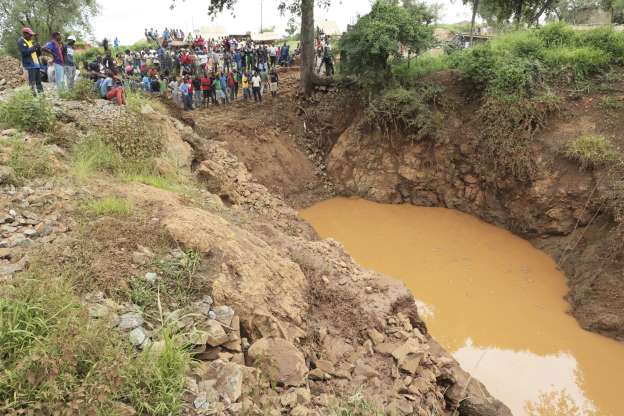
Five miners have been trapped at a small-scale mine in Etina, Mashonaland West Province, following the collapse of a mining shaft due to heavy rains. Rescue operations are underway, with excavators already on the ground, but progress has been hindered by the difficult conditions caused by continuous rainfall, Mining Zimbabwe can report.

By Rudairo Mapuranga

The Zimbabwe Miners Federation (ZMF) Mashonaland West Province Chairman, Timothy Chizuzu, confirmed the incident and expressed concern over the challenging circumstances.

Timothy Chizuzu
Timothy Chizuzu

“The situation is very difficult due to the heavy rains, but efforts are being made to retrieve the miners. We hope to reach them soon,” said Chizuzu.

The mine owner, Sebastian Magodo, explained that the shaft collapsed, causing the tunnel to divide and trapping some miners underground.

“There is no full report yet on what transpired, as we are waiting for rescue operations to be completed. What we know so far is that a shaft used by miners to access the underground subsided because of the rains. Some miners have already managed to come out, but others remain trapped,” said Magodo.

This tragic incident has cast a spotlight on the dangers faced by small-scale miners in Zimbabwe, especially during the rainy season when the ground becomes unstable. The ongoing rescue operation is focused on retrieving the trapped miners as quickly as possible, but the difficult weather conditions have made the process more challenging.

This accident comes just days after a similar tragedy in Kwekwe, where three miners lost their lives at Yellowsnake 37 Mine. The miners were crushed when a safety hook fastening the rope to a cage they were using to exit the shaft broke, causing the cage to fall down the shaft and overturn. The victims were retrieved and taken to Kwekwe General Hospital for post-mortem examinations.

In that incident, ZRP Spokesperson Commissioner Paul Nyathi confirmed, “The victims had entered the mine shaft using a cage. As they were getting out, a safety hook fastening the rope broke, resulting in the cage falling and overturning, crushing the victims.”

The Kwekwe accident highlights the ongoing safety concerns in Zimbabwe’s artisanal and small-scale mining sector, where inadequate safety measures often result in loss of life. Authorities have called for enhanced safety precautions to prevent future tragedies—a call that resonates in the wake of the current Etina Mine incident.

The recent accidents at Etina and Yellowsnake Mines emphasize the urgent need for improved safety protocols in small-scale mining operations across Zimbabwe. The Zimbabwe Miners Federation (ZMF) has been advocating for stricter safety measures and compliance among artisanal miners, but the sector remains fraught with risks, particularly during the rainy season when tunnel collapses become more frequent.

Gold buying prices per gram in Zimbabwe 20 February 2025

0

Gold buying prices per gram in Zimbabwe today 20 February 2025, from the official gold buyer and exporter Fidelity Gold Refinery (FGR).

SG 90% and ABOVE US$89.22g
SG ABOVE 85% BUT BELOW 90% US$88.28g
SG ABOVE 80% BUT BELOW 85% US$87.34/g
SG ABOVE 75% BUT BELOW 80% US$86.39/g
SAMPLE BELOW 10g BUT ABOVE 5g US$84.97/g

Fire Assay CASH $89.70/g

NB: Fire Assay cash price is for gold above 100gs, no sample is deducted.
For the Fire Assay Transfer price, a sample of not more than 10g is deducted
A 2% royalty is charged on all deposits (Small-scale miners)
A 5% royalty is set for Primary Producers

Cash available. Fidelity Gold Refinery prices will be changing daily to match the world market.

Caledonia Announces CFO Transition as Chester Goodburn Steps Down

0

Multi-listed gold-focused miner Caledonia Mining Corporation Plc has announced that CFO Chester Goodburn will step down in March after the publication of the company’s 2024 financial results, with financial expert Ross Jerrard set to succeed him, Mining Zimbabwe reports.

By Rudairo Mapuranga

Goodburn, who has served as CFO since July 2022, will stay on briefly as a consultant to ensure a smooth transition. His leadership has been instrumental in Caledonia’s financial growth and its progress toward becoming a mid-tier, Zimbabwe-focused gold producer.

Caledonia CEO Mark Learmonth expressed gratitude for Goodburn’s contributions, stating, “Chester has made a substantial contribution to Caledonia’s growth since he joined us in 2014. I thank him for his dedication and wish him well in his future endeavours.”

Jerrard, 50, is a member of the Institute of Chartered Accountants of Australia and New Zealand and the Institute of Chartered Accountants of Zimbabwe. He previously served as CFO of Centamin Plc, a former FTSE-250 dual-listed mining company, where he played a key role in its $2.5 billion acquisition by AngloGold Ashanti Plc in November 2024.

Learmonth welcomed Jerrard, saying, “Ross brings a depth and breadth of experience that will be invaluable as we advance our strategy to become a mid-tier, Zimbabwe-focused gold producer.”

This leadership change marks a new chapter for Caledonia as it strengthens its operations and expands its footprint in Zimbabwe’s gold mining sector.

AMSZ Launches Nationwide Register of Qualified Mine Surveyors

0

In a major step toward improving professionalism in Zimbabwe’s mining industry, the Association of Mine Surveyors of Zimbabwe (AMSZ) has partnered with the Ministry of Mines and Mining Development (MMMD) to elevate standards in mine surveying, Mining Zimbabwe can report.

By Rudairo Mapuranga

AMSZ President Stewart Gumbi emphasized the need for a formal structure, announcing the introduction of a nationwide register of qualified mine surveyors, categorized by province and accessible via the AMSZ website and online search engines.

“We want miners to easily find registered professionals and ensure compliance. We will share lists of vetted surveyors and companies on the various provincial Ministry of Mines and Mining Development’s notice boards. Soon the lists will also be available online for easy access,” Gumbi stated.

Gumbi also reiterated that to protect the integrity of the profession, AMSZ will also implement standardized service rates, preventing both overcharging and underpricing.

“Our goal is to maintain professionalism and ensure miners pay fair rates for the work being done,” Gumbi said.

He also added on stating, “We also do not want a situation where miners are also overcharged, so the AMSZ will also implement standardized service rates, preventing both overcharging and underpricing,” Gumbi concluded.

The (AMSZ) is an affiliate of The Chamber of Mines of Zimbabwe. It was formed in 1985 as a Professional Non-Profit Body that represents the interests of the Mine Surveying Profession in Zimbabwe.

The association comprises of members from Mine Surveying Departments of various Mining Organizations, both locally and abroad, as well as other affiliate members from diverse technical fields related to Mine Surveying and the Mining Industry in general.

Karo Retrenches Employees, Terminates Contractors Amid Tough Market Conditions

0

Tharisa plc-owned Karo Platinum has retrenched 16 permanent employees and terminated the contracts of several contractors as part of its strategic decision to optimize costs in response to the continued depression of platinum group metal (PGM) prices, Mining Zimbabwe can report.

By Rudairo Mapuranga

This move, effective from January 31, 2025, comes as the company reassesses its expenditure to align operational objectives with available financial resources for the year.

In a statement, Karo Platinum confirmed that over US$150 million had already been invested in bulk earthworks, civil works, and the procurement of long lead-time equipment for its project. Despite this significant progress, the current market environment has necessitated a review of ongoing costs. Fixed-term contracts were allowed to lapse naturally, and a workforce reduction was executed, impacting 16 permanent employees. The retrenchment process was conducted in strict adherence to Statutory Instrument 191, introduced on December 6, 2024.

“Karo understands the distress such situations can cause and has made considerable efforts to address and resolve any legitimate claims and concerns raised by the affected employees with compassion and diligence,” the company stated.

Despite the workforce reductions, Karo Platinum remains optimistic about the project’s future. Preparations are underway for the construction of a 5,000-megalitre dam on the Chirundazi River and a 32-kilometre power line to connect with the Selous substation, ensuring a reliable water and power supply for its operations. The company has also scheduled a new underground drilling campaign for 2025, which is expected to further advance the project’s development.

The retrenchments at Karo Platinum reflect the broader challenges facing Zimbabwe’s PGM sector, which has been severely impacted by declining metal prices. Of the three operational PGM mines in Zimbabwe—Mimosa, Zimplats, and Unki—only Unki has avoided retrenchments. Both Zimplats and Mimosa have made difficult adjustments in response to softening market conditions, with Zimplats implementing a 10% salary reduction for its employees.

While these developments pose challenges for the sector, Karo Platinum remains focused on its long-term goals. The company continues to prioritize the creation of a globally significant, low-cost PGM operation that will contribute to Zimbabwe’s economy and play a key role in supplying strategic commodities for a sustainable future.

As Karo advances its project, it is actively securing funding to complete construction and commission its concentrator—an essential milestone for achieving its 2025 operational targets. Although the current market conditions have necessitated cost-cutting measures, Karo remains confident in its long-term vision of delivering a sustainable, value-generating operation in the PGM sector.

Govt Urges Families to Identify Deceased from “Operation Vala Umgodi” in South Africa

0

The Ministry of Foreign Affairs and International Trade has called on Zimbabwean relatives and friends to assist in identifying deceased persons from the tragic Operation Vala Umgodi incident at Stilfontein Mine in the North West Province of South Africa, Mining Zimbabwe can report.

By Rudairo Mapuranga

The operation, which took place between August 2024 and January 2025, resulted in the unfortunate loss of lives, leaving several unidentified bodies in South African mortuaries.

In a press statement, Mrs. Philiswe Chidawanyika, Director of Public Diplomacy, Communication, and Advocacy at the Ministry of Foreign Affairs and International Trade, emphasized the need for Zimbabwean citizens with missing relatives or friends in South Africa to come forward.

“We are calling on all Zimbabweans who suspect that their relatives or friends may have been victims of this tragedy to assist the Government by providing information that could help identify the deceased,” said Mrs. Chidawanyika.

The Zimbabwean Government has taken steps to facilitate the identification process for affected families. Those in Zimbabwe are encouraged to visit their nearest Zimbabwe Republic Police (ZRP) station or the Provincial/District Social Welfare Offices of the Ministry of Public Service, Labour and Social Welfare. Zimbabweans in South Africa can seek assistance from the Zimbabwean Consulate in Johannesburg.

Family members are urged to bring along photographs, medical or dental records, identification documents, or any distinguishing details that may help confirm the identities of the deceased.

Mrs. Chidawanyika assured the public that the Government is fully committed to supporting families during this difficult time, stating, “The Government of Zimbabwe is dedicated to assisting all affected families in identifying their loved ones and ensuring that the remains are repatriated for a dignified burial.”

As Zimbabwean families continue to cope with the aftermath of this tragic incident, the Government remains steadfast in its efforts to ensure that the deceased are properly identified and that their families receive the necessary support to lay them to rest.