Chinese ambassador to Zimbabwe, H.E. Zhou Ding, has called on Chinese mining companies operating in the country to fully comply with Zimbabwean laws and environmental regulations, stressing that mutual respect is vital for the success of Zimbabwe–China cooperation, Mining Zimbabwe can report.
By Rudairo Mapuranga
Speaking in Harare after a high-level meeting with the Minister of Skills Audit and Development, Professor Paul Mavima, Ambassador Zhou dismissed recent reports by local media alleging widespread human rights abuses and environmental damage by some Chinese-owned mining operations.
“We encourage Chinese companies to abide by Zimbabwean laws and implement environmental regulations. If you find any related cases specific to Chinese companies, you can report them to local law enforcement agencies. Most of the cases brought forward by the media are not based on facts. After investigations, we have found some of them to be exaggerated, and this is not beneficial to our cooperation,” Zhou said.
He added that the Chinese Embassy had been cooperative in engaging with authorities whenever concerns were raised and reiterated that responsible corporate behaviour was key to strengthening bilateral ties.
Zimbabwe Pushes Back Against Irresponsible Mining
Despite Zhou’s remarks, concerns persist within Zimbabwean communities and civil society about the conduct of some Chinese miners. Numerous reports highlight instances of illegal operations, disregard for environmental rehabilitation, and poor treatment of workers.
In certain cases, allegations have emerged that some Chinese mining companies have invoked the name of President Emmerson Mnangagwa to shield themselves from scrutiny. According to industry insiders, this name-dropping tactic has been used as a smokescreen to avoid accountability, intimidate local authorities, and continue operating illegally.
This behaviour undermines not only Zimbabwe’s laws but also tarnishes the image of the presidency, creating perceptions that political protection is being misused to facilitate environmental harm and social injustice.
The Strategic Importance of Zimbabwe–China Partnership
Professor Mavima, speaking after his meeting with Ambassador Zhou, underlined the broader strategic value of the Zimbabwe–China relationship, particularly in the skills development sector.
“Our ministry is about assessing the skills landscape, identifying gaps, and ensuring that we develop programmes to fill those gaps, while also anticipating future skills needs,” Mavima said.
The Bigger Picture: Africa and the Green Transition
Africa is home to some of the world’s largest reserves of transition minerals, including lithium, cobalt, and rare earths, which are critical to the global clean energy revolution. With rising demand for batteries, electric vehicles, and renewable energy technologies, Zimbabwe finds itself strategically placed at the heart of this transition.
But experts warn of a looming green resource curse if policies are not strengthened. Professor Afeikhena Jerome, a special advisor at the African Union Commission, stressed that both African governments and foreign investors need to act responsibly:
“China should consider establishing a Ministry or Department that monitors private and state-owned Chinese mining companies operating abroad and investigates and regularly reports on credible reports of human rights abuses. Since many of these companies are state-linked, China must ensure that they abide by host country laws and international standards, including Environmental Impact Assessments and free, prior, informed consent of local communities.”
Zimbabwe’s partnership with China is vital for its economic future, but ensuring that this partnership delivers mutual benefit requires stronger enforcement of laws, transparency in contracts, and accountability for all mining companies.
Ambassador Zhou’s call for compliance with local laws is welcome, but it must be matched by visible action on the ground. The allegations of illegal operations and name-dropping of the President must be thoroughly investigated and prosecuted where proven.
For Zimbabwe to benefit fully from its mineral wealth and avoid the pitfalls of exploitation, a firm message must be sent: no investor, regardless of nationality, is above the law.
Zimbabwe’s mining sector posted a robust performance in the first six months of 2025, with export earnings climbing to US$2.81 billion, up from US$2.03 billion in the same period last year, Mining Zimbabwe can report.
By Ryan Chigoche
This is according to the RBZ Midterm Monetary Policy Statement, which reported that total export earnings for the same period stood at US$3.95 billion, compared to US$3.14 billion in the first half of 2024, a 25.7% increase.
Mining was the clear driver of this growth, with its earnings surging 38.6% year on year. This saw the sector’s contribution to total exports rise from around 64% in 2024 to roughly 71% in 2025, underscoring its central role in sustaining Zimbabwe’s foreign currency inflows.
The latest RBZ data highlights the mining sector’s resilience amid fluctuating global commodity prices.
Gold led the charge, with export revenues soaring 57.6% to US$1.38 billion from US$878.5 million in 2024. This was underpinned by record deliveries, as official gold output rose nearly 46% to 20,103 kg from 13,784 kg in the same period last year.
Platinum also delivered a strong performance, with earnings up 24.9% to US$797.2 million, supported by a rebound in global prices after a prolonged slump. Prices of PGMs staged a notable recovery in the second quarter of 2025, with platinum climbing around 40% including a record-breaking 28% jump in June alone, the strongest monthly performance since 1986. This rally pushed platinum prices to an 11-year high of about US$1,432 per ounce in June. Palladium gained over 15%, while rhodium surged around 20%, further boosting earnings.
In a surprising turnaround, the struggling diamond subsector recorded the sharpest growth rate, with export earnings more than tripling to US$134.86 million from US$43.13 million, a 212.7% increase.
This growth came despite a 60% drop in export volumes, as reported by the Chamber of Mines Zimbabwe in its latest quarterly brief, suggesting higher prices or improved value addition played a role.
Other notable gains came from coke exports, which rose 55.9% to US$89.4 million, and other minerals, which brought in US$22.6 million, up 4.6% from last year.
However, not all subsectors performed positively. Lithium ore exports slipped 0.6% to US$214.6 million, while chrome ore and ferrochrome earnings dipped 0.4% to US$149.6 million.
The strong half-year outturn reinforces mining’s position as Zimbabwe’s top foreign currency earner, responsible for the majority of the country’s US$3.95 billion in exports. With gold, platinum, and diamonds performing strongly, analysts believe the sector is on track to surpass last year’s full-year earnings, provided global prices remain favourable and production disruptions are minimised.
Meanwhile, the country’s mineral revenue covering the entire year is forecast to reach US$6.2 billion in 2025, up from US$5.9 billion in 2024. This implies a full-year sector growth target of approximately 5.1% year on year.
The sector, however, continues to face significant headwinds that threaten its growth potential.
Chief among these are the RBZ’s 30% retention policy and delays in disbursing liquidated foreign currency proceeds under the same framework.
According to numerous industry experts, these policies are deterring further investment into the sector, potentially capping its ability to deliver even stronger results in the future.
Local lithium producers are at loggerheads with the Zimbabwe Revenue Authority (ZIMRA) over the collection of a 5% beneficiation tax on lithium concentrates, prompting the Chamber of Mines to seek government intervention, Mining Zimbabwe can report.
By Ryan Chigoche
The Zimbabwean government has set a clear policy direction to promote local beneficiation of lithium, announcing that from January 2027, the export of lithium concentrate will be banned.
This move is aimed at ensuring that all lithium is processed domestically into higher-value products such as lithium sulfate.
In line with this strategy, the government and Zimbabwe Lithium Exporters (ZLE) had reportedly agreed that the 5% beneficiation tax on unprocessed lithium would only take effect once local processing plants were operational, effectively deferring its collection until 2027.
However, tensions have emerged as ZIMRA is already enforcing the 5% beneficiation tax on lithium concentrate. According to producers, the tax is being applied despite a prior government agreement to defer it for two years to allow the construction of lithium sulfate processing plants, a deferment originally set to run until 1 January 2027.
Producers argue that this premature enforcement undermines ongoing investments in local processing infrastructure and disrupts the sector’s growth trajectory.
The situation highlights the delicate balance between government revenue collection and supporting the development of Zimbabwe’s domestic lithium processing capacity.
It has also prompted urgent engagement between the Chamber of Mines, which represents the country’s lithium producers, and government authorities.
“The Chamber, with the support of the Minister of Mines, is engaging the Minister of Finance on this matter,” said the COMZ in a recent report.
The taxation debate is further complicated by the computation of royalties on lithium exports.
The Chamber, together with the Minister of Mines, has held meetings with the Minister of Finance to resolve concerns over the basis for royalty calculations.
During their deliberations, it was agreed in principle that royalties should be levied on lithium concentrates rather than the more expensive refined lithium carbonate.
The matter has since been referred to a technical team to draft proposed amendments to the law, with the Chamber actively working alongside the Ministry of Finance to finalise the process.
With royalty rates for platinum, lithium, and diamonds being historically deemed high, the Chamber has since submitted recommendations for review during the 2025 Mid-Term Budget Review.
Kuvimba Mining House (KMH)–owned Shamva Gold Mine has once again raised the bar for mining safety in Zimbabwe, achieving a remarkable 1,523,000 fatality-free shifts. This milestone comes as the mine continues its determined pursuit of zero harm, proving beyond doubt that such a standard is not only possible but sustainable in the country’s mining industry, Mining Zimbabwe can report.
By Rudairo Mapuranga
The milestone highlights Shamva’s unwavering commitment to the health and safety of its employees. For an industry often defined by risk, Shamva’s achievement stands as both an inspiration and a challenge to others: safety excellence is not a dream, but a lived reality.
At the centre of this success is Engineer Gift Mapakame, the General Manager of Shamva Gold Mine, whose leadership has been pivotal in embedding safety into every facet of operations. Mapakame attributed the achievement to teamwork, discipline, and a culture that places people before production.
“Reaching this milestone is not about luck or coincidence. It is the result of consistent effort, strict adherence to safety standards, and the belief that every worker must return home safely at the end of each shift,” said Mapakame.
He added that the milestone underscores the mine’s determination to maintain a hazard-free work environment while empowering employees with the tools, training, and mindset needed to prevent accidents.
The mine’s SHE (Safety, Health, and Environment) team has been lauded internally for its proactive approach to safety management, ensuring regular audits, training programmes, and hazard identification exercises that have made safety a shared responsibility across the workforce. This holistic approach has created a culture where every worker is a safety ambassador.
For Zimbabwe’s mining sector, Shamva’s achievement is a statement of what is possible. Mines are often criticised for poor safety records, yet Shamva has now demonstrated—consistently—that the zero-harm goal can be attained.
What makes Shamva’s story remarkable is that just over a year ago, on December 5, 2023, the mine celebrated 1 million fatality-free shifts. That milestone was itself historic. But to push forward, without losing momentum, and to add another half a million safe shifts on top of that record, demonstrates that the safety culture at Shamva is not an event—it is an ingrained way of life.
Safety achievements of this magnitude ripple far beyond the mine gates. They inspire investor confidence, improve employee morale, and assure surrounding communities that mining can be carried out responsibly. For Shamva, safety is no longer just a compliance matter; it has become part of the mine’s identity, shaping how it interacts with stakeholders and setting the tone for future growth.
The success is also aligned with the broader vision of Kuvimba Mining House, which has been at the forefront of reviving mines and reshaping them into modern, efficient, and safe operations. KMH’s parent, the Mutapa Investment Fund, has consistently emphasised not just profitability, but also responsible and sustainable mining practices. Shamva’s achievement speaks directly to that mandate.
In the words of Engineer Mapakame, the milestone is a reminder that “safety is not negotiable.” It is the gold standard by which mining should be measured.
As Shamva Mine continues its journey, surpassing 1.5 million fatality-free shifts, it has not only written its own success story but also set a new benchmark for Zimbabwean mining. It shows that with visionary leadership, disciplined teams, and a culture rooted in responsibility, mines can thrive without compromising the most valuable asset of all—human life.
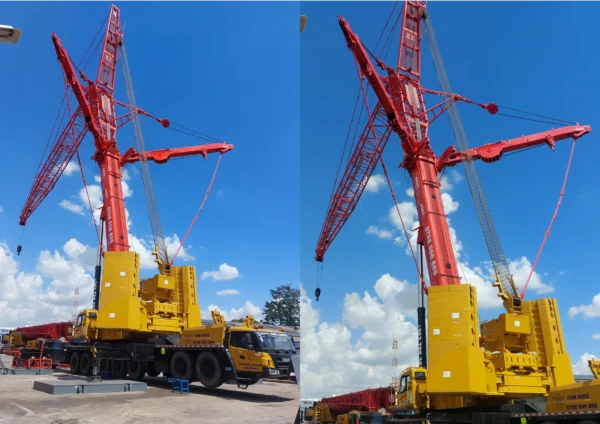
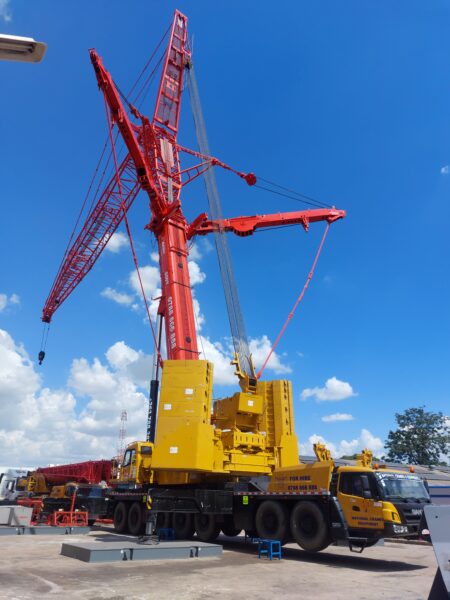
National Cranes and Equipment (NCE), Zimbabwe’s premier lifting and earth-moving solutions provider, has once again redefined the country’s heavy machinery landscape with the acquisition of a 650-tonne crane, the largest in Zimbabwe and among the top three in Southern Africa. This bold move not only reflects NCE’s strategic vision but also its commitment to aligning with Zimbabwe’s economic transformation under Vision 2030.
From Humble Beginnings to National Leadership
Founded in the mid-1990s, NCE began as a workshop focusing on heavy machinery repairs. The founders observed a simple but powerful need: clients whose machines were under repair needed temporary replacements to keep their projects running. This observation evolved into a machinery hire division that today has grown to dominate the Southern African region in terms of lifting capacity, versatility, and nationwide presence.
Over the years, the company expanded its fleet to include an enormous range of machinery, from small access lifts to state-of-the-art cranes, forklifts, bulldozers, and transport trucks. This extensive fleet allows NCE to cater to sectors as varied as mining, agriculture, construction, petrochemicals, power generation, and engineering.
But it is their visionary acquisition of the 650-tonne crane that stands as a bold statement of intent and capability.
The 650-Tonne Crane: Zimbabwe’s Lifting Giant
The 650-tonne crane is more than a piece of equipment – it is a symbol of industrial readiness, a tool designed for national ambition. Until recently, any project requiring such a high-capacity crane would involve lengthy and costly imports from neighbouring countries. The logistics alone often derailed timelines and ballooned budgets.
“It’s a multi-million-dollar investment,” says Moses Mandeya, the Operations Manager at NCE. “But it was necessary. With Zimbabwe setting its sights on Vision 2030, and a lot of big-ticket industrial projects in the pipeline – from lithium processing plants to platinum smelters – this crane is our way of saying, ‘We are ready.'”
This behemoth crane isn’t just the largest in Zimbabwe; it ranks among the biggest in Southern Africa. With this machine, NCE can execute lifts that were previously impossible within the country. Think of installing entire plant modules, raising silo components for agricultural processing, or assembling infrastructure for power generation plants. The possibilities are expansive.
Economic Impacts: Lower Costs, Greater Efficiency
Bringing this crane into Zimbabwe does more than raise lifting capacity; it slashes operational costs across sectors. Prior to its arrival, mines and construction firms had to import such equipment from South Africa, enduring delays, high rental costs, and complicated customs clearances.
“Now, the costs and time involved in mobilisation are significantly reduced,” says Mandeya. “And in some cases, we station equipment directly at mine sites for long-term use. This means clients only pay for usage, not for mobilisation.”
For example, in the mining sector – one of Zimbabwe’s most critical economic drivers – the crane is being used to set up high-capacity processing plants. In agriculture, it’s supporting the construction of larger, more efficient grain silos under the Grain Marketing Board (GMB). In construction, it has been instrumental in major infrastructure projects, including the new parliament bridges in Mount Hampden.
Nationwide Reach and Regional Expansion
National Cranes and Equipment’s 650-ton crane
NCE isn’t content with centralised operations. With a mission to make heavy machinery accessible everywhere in the country, the company has established operational hubs in strategic locations: Mutare, Zvishavane, Masvingo, and Ngezi, with Bulawayo next in line. These hubs ensure that high-capacity machines, including cranes, forklifts, and transport trucks, are available with minimal delay.
But the company’s ambitions do not end at Zimbabwe’s borders.
“Our operations are already active in South Africa, Mozambique, and Botswana,” explains Mandeya. “We’re not just a Zimbabwean company anymore. We’re a regional force in lifting and earthmoving.”
This cross-border footprint is part of a larger strategy: to become a pan-African leader in machinery hire, spreading Zimbabwean excellence across the continent.
Beyond Machines: Expert Personnel and Engineering Support
The scale of NCE’s machinery is matched by the expertise of its personnel. Each project is approached with a full-service mindset, combining machine power with engineering oversight. Whether it’s a mining rig that needs precision installation or a bridge component that must be lifted into place with millimetre accuracy, NCE provides the personnel to manage it.
Services include:
Project planning and engineering integration
Heavy lifting strategy design
Access solutions for hard-to-reach locations
On-site technical support and operation
This comprehensive approach ensures that clients are not simply renting equipment; they are gaining a solutions partner.
Commitment to Safety and Environmental Responsibility
In high-risk industries such as construction and mining, safety is non-negotiable. NCE has embedded a culture of safety into every facet of its operation. This includes rigorous staff training, routine machine inspections, compliance with local and international safety regulations, and on-site hazard assessments.
Mandeya is clear about the company’s safety-first philosophy: “We don’t just send machines into the field. We send complete solutions – machines, operators, engineers, and safety officers. Our clients rely on us, and we owe it to them to be consistent, professional, and safe.”
Environmentally, the company is transitioning its fleet to include more sustainable technology. It was among the first in Zimbabwe to introduce electric forklifts and is exploring electric cranes and hybrid earthmoving machines as the next step.
A Flexible, Client-Centric Business Model
One of the reasons behind NCE’s rapid rise is its responsiveness to client realities. Many Zimbabwean companies, particularly in agriculture and small-to-medium enterprises, face liquidity challenges. NCE responds with flexible pricing structures and payment terms.
“If you can only pay after production, we understand,” says Mandeya. “We work with your timelines. Our contracts are designed to fit client needs, not the other way around.”
This philosophy extends to payment methods as well. NCE accepts bank transfers, cash, local currency, and even structured payments for long-term projects. As long as the deal is clear and feasible, the company is willing to structure it.
Collaborations with Key Sectors
Beyond mining and construction, NCE collaborates with key sectors of the economy, often through public-private partnerships. Their machines have helped build bridges, erect telecom towers, and assist in energy installations across the country. Collaborations with large corporations such as Zimplats, Mimosa, Delta Corporation, and the Dairy Board illustrate NCE’s trusted status.
More recently, NCE has been instrumental in lifting and placement operations at the country’s growing number of lithium and platinum plants. These minerals, critical to the global green energy transition, require heavy industrial setups. The 650-tonne crane is playing a pivotal role in ensuring Zimbabwe doesn’t miss this opportunity.
Training and Job Creation
The company is also investing in local capacity building. Every year, it hires and trains young operators, engineers, mechanics, and support staff. With over 90 cranes, 500+ forklifts, and dozens of other machines, the opportunities for career development are immense.
“We don’t just operate machines. We build people,” says Mandeya. “Our goal is to become a training ground for the next generation of Zimbabwean heavy machinery professionals.”
Looking Ahead: Vision 2030 and Beyond
Zimbabwe’s Vision 2030 aims to transform the country into an upper-middle-income economy. This vision requires large-scale infrastructure, industrialisation, and efficiency across sectors. National Cranes and Equipment is positioning itself as an essential enabler of that transformation.
With its unmatched capacity, particularly through the 650-tonne crane, NCE is enabling the local industry to meet international standards. No longer do Zimbabwean companies need to outsource critical equipment from abroad. NCE has brought the future home.
“Our dream is to see Zimbabwe rise, and we believe lifting the country is both literal and symbolic,” Mandeya reflects. “Through machinery, manpower, and management, we are building the infrastructure that will carry this country into the future.”
Conclusion
National Cranes and Equipment is not merely a machinery hire company. It is a symbol of industrial self-reliance, innovation, and readiness. The acquisition of the 650-tonne crane marks a new chapter in Zimbabwe’s industrial capabilities – one in which the nation can undertake massive projects with confidence, speed, and local expertise.
Whether it’s constructing mines, building bridges, erecting silos, or installing energy infrastructure, NCE is already doing the heavy lifting for Zimbabwe. And with plans to expand deeper into Africa, the company is also lifting the reputation of the Zimbabwean industry beyond borders.
As the nation accelerates toward Vision 2030, the message is clear: Zimbabwe is rising – and National Cranes and Equipment is the muscle behind the movement.
Engineer Everyjoy Ngomamiti, Congratulations on your appointment at Kavango! What was your initial reaction when you were offered the General Manager role?
Thanks for the thoughtful and wide-ranging questions — they really get to the heart of what this new chapter at Kavango means to me. Let’s dive in – When I got the call, I felt a mix of pride, responsibility, and excitement. Coming home to Zimbabwe to lead Kavango’s transition from exploration to full-scale production felt like a full-circle moment. After years in Australia and Tanzania, this was more than a job — it’s a mission. I was excited as I always wanted to come back home and work in Zimbabwe.
What are your immediate priorities in your first 90 days as General Manager?
Kavango is transitioning from an exploration company to a mining company. In the first 90days, I will mainly focus on the following
Building relationships with all stakeholders
Operational Audit – Understand the current production bottlenecks and opportunities at Hillside
Team Alignment – Build trust with the workforce, assess skills, and begin shaping a high-performance culture, embedding a winning DNA on the team.
Technology Integration – Begin implementing systems and softwares for mine planning and QAQC protocols.
Production Ramp-Up – Set realistic, data-driven targets to scale from 30 tonnes/day to sustainable higher throughput by establishing SMART targets and success metrics for the project.
Building processes and systems,
You’ve implemented production ramp-up strategies in the past. What lessons from Bulyanhulu and Meekatharra do you intend to apply at Kavango?
Ramp up the need for detailed planning, coordination, and execution, including agility in decision-making and effective collaboration between stakeholders. All stakeholders need to understand the plan, maintaining clear communication lines. Once the team understand the objective and takes ownership, ramping up is easy. Most ramp-up plans fail as teams tend to work in silos.
At Kavango, I will ensure that we work as a team – ONE TEAM, ONE VISION approach
Create and implement a robust operational planning process which covers all site stakeholders’ full participation and inputs, must have a detailed risk assessment of the plan, clearly show historical performance and outlook, and validation of the plan against outputs.
You’ve significantly reduced stope dilution using technology. What role do you see technology playing at Kavango Mine?
I am sure that at Kavango, we will be able to adopt some of the things we implemented At Bulyanhulu, to reduce stope dilution by
Technology – making use of the Minnovare production Optimiser.
Data analytics using downhole survey to understand the hole deviation trends, and also looking at geotechnical data.
Upskilling of the drillers’ skills.
Transition from ANFO to emulsion, which enabled controlling of the energy with was getting into the ground.
With your experience in both long-hole and air-leg mining, how do you decide the optimal mining method for a given orebody?
It’s all about orebody geometry, ground conditions, and economics. Long-hole mining is efficient for steep, thick orebodies, while air-leg mining offers selectivity in narrow veins. At Kavango, we’ll likely use a hybrid approach, mechanised where possible, selective where necessary.
Judging from our news article, many people are thrilled to hear you are coming back home to lead a new mine. For the sake of those who would want to be part of Kavango, what’s your approach to building high-performance technical and operational teams?
I will focus on having SMART goals, strong, honest and transparent communication to cultivate a culture of trust, collaboration, and accountability, where team members feel empowered to contribute their best work.
Mentorship Culture – Recruiting and Developing the right talent by looking for individuals with not only the necessary technical skills but also the right cultural fit and a growth mindset. Will also invest in continuous learning and development to keep the team’s skills sharp and up-to-date.
Ownership Mindset – From the pit to the plant, we all own the outcome. Delegate tasks and responsibilities effectively, giving team members autonomy and decision-making authority within their roles, providing opportunities for team members to take ownership of their work and contribute to problem-solving.
Responsibility and Accountability Mindset – We do what we say, own our decisions, actions, performance and we are empowered to make choices and learn from our experiences.
Prioritise Well-being and Work-Life Balance by promoting a healthy work-life balance to prevent burnout and maintain high levels of motivation and productivity. High performance is not sustainable without attention to team members’ well-being.
What are the biggest operational innovations you’ve introduced in your career so far, and how did they impact production?
During the transition from bottom-up to top-down mining sequence at Bulyanhulu, the biggest challenge was how to paste fill blind stopes. Coming up with a way for same-level filling was really a big win for the operations. I also then introduced stope opening by smashing against, which took away the need to drill long hole rises, thereby reducing stope opening times and increasing stope tonnes/drill metre.
Eng Everyjoy Ngomamiti, you managed over $26M in capital projects at Bulyanhulu. What’s your process for ensuring projects are delivered on time and within budget?
Front-end loading – 80% of success is in planning. This included clearly defining project scope and objectives, creating detailed project plans, allocating resources effectively, establishing clear communication channels, proactively managing risks, monitoring progress, and adapting to changes as needed
Stakeholder alignment – From procurement to operations, everyone’s on the same page. Implemented a clear and consistent communication protocol, keeping all stakeholders informed of progress, challenges, and changes
Weekly dashboards – Real-time tracking of cost, schedule, and scope.
How do you see the future of underground mining evolving in Africa, and where does Kavango Mine fit into that future?
Africa has the geology — now we need to match it with modern methods through increased automation, technological advancements, and a focus on sustainability. Kavango is positioned to be a model mid-tier operation in Zimbabwe, showcasing how productivity and efficiency of mechanised mining, a move towards more technologically advanced, sustainable, and economically beneficial operations.
What’s your outlook on Zimbabwe’s mining sector and its global competitiveness?
Zimbabwe has world-class geology and a skilled workforce. With the right policy stability and investment in infrastructure, it can absolutely compete globally. Kavango’s success will be proof of that. While there are challenges like power shortages and fluctuating commodity prices, the sector’s overall trajectory remains promising, with the potential to further solidify Zimbabwe’s position as a key player in the global mining market. Continued focus on addressing challenges and leveraging its mineral wealth will be crucial for realizing the sector’s full potential and enhancing its global competitiveness.
If you could change one misconception about mining in Africa, what would it be?
One common misconception about mining in Africa is that it is inherently unethical and exploitative. In reality, while challenges exist, many mining companies are working to improve their practices, prioritise community development, and invest in sustainable mining technologies. Kavango is pioneering this by training local miners on sustainable mining practices.
There was a recent post whereby a Mine needed a Managing Director who has an Engineering degree, preferably from outside of Zimbabwe. As an experienced mine and UZ graduate, what’s your honest opinion on Zim-educated Mining Engineers?
As a proud UZ graduate, I’ll say this: Zimbabwean engineers are among the most adaptable and technically sound professionals I’ve worked with globally. What we sometimes lack in exposure, we make up for in grit, problem-solving, and a hunger to learn. The idea that a foreign degree is inherently superior is outdated.
Any parting words?
Kavango isn’t just building a mine — we’re building a legacy. One that proves Zimbabwe can lead in modern, responsible, and profitable mining. I’m honoured to be part of that journey.
Kuvimba Mining House-owned Shamva Mine’s work in uplifting its host community continues to resonate across Mashonaland Central, with government, local authorities, and legislators all uniting in praise of the mine’s corporate social responsibility (CSR) footprint, Mining Zimbabwe can report.
By Rudairo Mapuranga
Speaking at the recent Chaminuka Rural District Council Service Delivery Equipment Commissioning Ceremony, officials spoke passionately about the mining giant’s contribution to critical infrastructure and social services, saying its example sets a new standard for community development in Zimbabwe’s mining districts.
The Minister of State for Provincial Affairs and Devolution, Hon. Christopher Magomo, was among the first to acknowledge the mine’s role in transforming Shamva District. In his address, he called on other corporates to emulate Shamva’s deliberate efforts in supporting local development.
“I call upon other companies to emulate Shamva Gold Mine’s example,” he said. “By combining internal revenue mobilisation, government support, and corporate investment, Chaminuka RDC is setting a high standard for inclusive and sustainable local development. Let me also commend the hardworking spirit of Shamva leadership.”
That leadership has been tested and proven through genuine partnerships on the ground. The Chairperson of Chaminuka Rural District Council, Mr. S. Matibairakupusa, singled out the Wadzanai Township sewer rehabilitation project as a tangible marker of Shamva Mine’s commitment. With visible pride, he detailed the progress made so far.
“Through our strategic partnership with Shamva Gold Mine, we have managed to trench up to 85% of the 620 metres required, and already 365 metres of piping has been laid,” he said. “This progress, which now stands at 48%, would not have been possible without Shamva’s contribution of US$22,000 for the procurement of pipes. The Council added US$9,000, covering manpower and accessories. As a local authority, we deeply appreciate Shamva Mine’s support, and I invite you, Honourable Minister, to witness the progress on the ground.”
The partnership between the mine and the RDC has become a symbol of what happens when business and local government pull in the same direction.
Also adding her voice was Senator Monica Mavhunga, who represents Shamva District and doubles as the Minister of Veterans of the Liberation Struggle. “There is nothing more important than the dignity of health and the security of clean water,” she said. “Through Shamva Mine’s work in sanitation and hospital upgrades, lives are being protected and futures safeguarded. A healthy community is the foundation of development, and Shamva has recognised this truth. Their investment is not just in infrastructure, it is in the lives of women, men, children, and the elderly who call this district home.”
Her words highlighted what has become the hallmark of Shamva’s CSR model: projects that touch everyday lives. Whether it is rehabilitating a hospital ward, refurbishing ablution facilities, or maintaining the Shamva–Bindura Highway, the mine has consistently invested in initiatives that go beyond mining outputs to strengthen the very fabric of the community.
Behind these efforts stands Engineer Gift Mapakame, General Manager of Shamva Mine, who has long stressed that CSR is not about charity but about strategy. He insists that the mine’s success depends on its ability to secure a social licence from the communities it operates in — a licence that must be renewed not through promises but through action. Guided by four pillars — health, empowerment, education, and environmental stewardship — Shamva’s CSR work is a blueprint for sustainable mining in Zimbabwe.
It is therefore no surprise that at the commissioning ceremony, speaker after speaker stood to recognise the mine’s contributions. The sense of appreciation was unanimous, from government ministers to council leaders and community representatives. Shamva has demonstrated that mining companies can and should be partners in local development, not just extractors of wealth.
In the past two years alone, the mine has invested over US$500,000 in CSR projects across Shamva District — a sum that tells its own story of commitment. From sewer lines to hospital wards, from roads to wellness outreach, that investment has been woven into the daily lives of thousands.
It is for this reason that Shamva Mine was not just thanked at the ceremony; it was celebrated. Celebrated as a company that understands mining is not only about ounces of gold but about building stronger, healthier, and more resilient communities.
Troubled Zimbabwe Stock Exchange-listed mining company RioZim has been forced to halt the planned sale of its gold mines after the High Court granted interim relief to unions opposing the transaction, Mining Zimbabwe can report.
By Ryan Chigoche
RioZim, which operates several struggling gold mines, is now appealing the court decision.
The company had been in advanced talks with prospective investors to secure US$21 million in working capital in exchange for a majority stake.
However, the Zimbabwe Diamond and Allied Workers Union (ZDAMWU), together with other interested parties, approached the courts, arguing that only a court-supervised corporate rescue process could revive RioZim while protecting workers’ interests.
Faced with this legal challenge, RioZim announced that it has frozen the transaction pending the outcome of the appeal.
“The action taken by the Zimbabwe Diamond and Allied Workers Union has prevented the company from taking these much-needed initiatives to restart mining operations and alleviate the current hardships being faced by the workers, as well as to ease operational pressures. The company has, at this stage, taken a decision to put on hold all transactions contemplated in the cautionary statement referred to above, pending the outcome of the appeal.”
In a recent interview with Mining Zimbabwe, ZDAMWU stressed that it is not blocking recapitalisation efforts but instead pushing for a structured and transparent process.
The union maintains that only a court-appointed corporate rescue practitioner can provide credible oversight, safeguard workers and creditors, and prevent further mismanagement.
RioZim’s troubles have deepened in recent years. In 2024, the miner’s gold output plunged by 54%, leaving it unable to capitalise on record-high global bullion prices.
To provide the best experiences, we use technologies like cookies to store and/or access device information. Consenting to these technologies will allow us to process data such as browsing behavior or unique IDs on this site. Not consenting or withdrawing consent, may adversely affect certain features and functions.
Functional
Always active
The technical storage or access is strictly necessary for the legitimate purpose of enabling the use of a specific service explicitly requested by the subscriber or user, or for the sole purpose of carrying out the transmission of a communication over an electronic communications network.
Preferences
The technical storage or access is necessary for the legitimate purpose of storing preferences that are not requested by the subscriber or user.
Statistics
The technical storage or access that is used exclusively for statistical purposes.The technical storage or access that is used exclusively for anonymous statistical purposes. Without a subpoena, voluntary compliance on the part of your Internet Service Provider, or additional records from a third party, information stored or retrieved for this purpose alone cannot usually be used to identify you.
Marketing
The technical storage or access is required to create user profiles to send advertising, or to track the user on a website or across several websites for similar marketing purposes.